
Seattle Apartment Sale Highlights a Trend Boise Multifamily Investors Should Watch
Real estate investors often look to larger West Coast markets for clues about where smaller, fast-growing cities might head next.
And sometimes a single apartment sale can reveal a lot about supply, demand, and investor behavior.
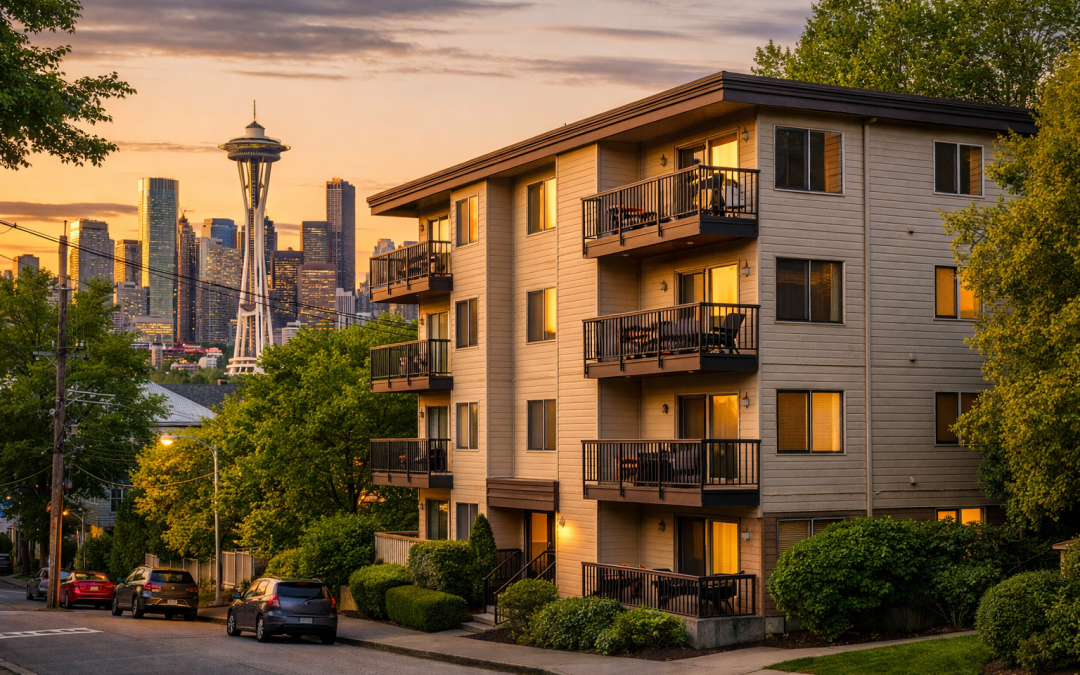
According to reporting from CoStar Group (read the original article here: https://product.costar.com/home/news/943996192), a small multifamily property in Seattle’s Green Lake neighborhood recently changed hands for the first time since it was built more than thirty years ago.
The deal shows how limited housing supply and strong neighborhood demand can keep apartment values high—even in buildings that are decades old.
A Long-Held Property Finally Trades
The transaction involved a 16-unit apartment building located at 6823–6827 Oswego Place in Seattle.
Key details from the sale:
- Sale price: $6.5 million
- Price per unit: about $406,000
- Building size: 33,769 square feet
- Structure: four stories, wood-frame construction
- Year built: early nineteen-nineties
- Unit mix: primarily one-bedroom apartments
- Occupancy: fully leased at the time of sale
The property was purchased by a private investor from another private investor.
The brokerage firm Marcus & Millichap represented both sides of the transaction.
Why This Seattle Neighborhood Still Draws Investors
Seattle’s Green Lake area has remained a strong performer in the multifamily sector.
Market analysts note several reasons:
- Apartment vacancy levels tend to be lower than the broader metro area
- Rental rates per square foot are relatively high
- Limited new apartment development nearby has tightened supply
According to comments from a Seattle market analyst cited in the CoStar report, the lack of new projects around the lake since the mid-twenties has helped keep investor interest strong.
When demand remains steady and new construction slows, older apartment properties can become attractive investment opportunities.
What This Signals About Multifamily Demand
While the transaction itself involves a relatively small building, it highlights a broader investment trend.
In many cities, investors are increasingly targeting smaller, stabilized apartment properties rather than new development projects.
Why?
Several factors are driving this shift:
- Higher construction costs for new housing
- Rising interest rates impacting development feasibility
- Strong demand for existing rental housing
- Limited new supply in established neighborhoods
For investors, that combination often makes existing apartment properties easier to underwrite and finance.
Why Boise Multifamily Investors Should Pay Attention
Although this deal occurred in Seattle, the dynamics are similar to trends emerging in Boise commercial real estate.
In both markets, several forces are shaping the multifamily sector.
Limited Housing Supply
When new construction slows, existing apartment buildings become more valuable. Boise has seen similar patterns as development costs and financing conditions fluctuate.
Strong Demand for Rentals
Population growth and migration into the Treasure Valley continue to support rental housing demand.
Investors Targeting Stabilized Properties
Many buyers today prefer fully leased apartment properties with predictable cash flow, especially smaller buildings in established neighborhoods.
Local Market Impact for Boise Multifamily
Seattle’s example highlights something important for the Boise market.
Older apartment properties—especially smaller complexes built decades ago—can become highly sought after when:
- vacancy stays low
- rent growth continues
- development slows
Boise has many multifamily buildings built in the eighties and nineties that fit this profile.
These properties may attract investors looking for stable income without the risk of ground-up development.
For owners, that can translate into stronger pricing and more buyer interest.
My Take: Smaller Apartment Deals Are Back on Investors’ Radar
For several years, large institutional multifamily projects dominated headlines.
But recently, smaller apartment deals—like this sixteen-unit Seattle property—have started to attract renewed attention.
Investors often see these buildings as:
- easier to manage
- easier to finance
- less exposed to development risk
In markets like Boise, where population growth and housing demand remain strong, this trend could increase competition for smaller apartment properties across the Treasure Valley.
That’s something both investors and property owners should keep an eye on.
Mike Gioioso (joy-OH-so) has for 16+ years been helping companies of all sizes buy, build, and lease perfect places for business in greater Boise, Idaho and beyond. www.streetsmartidaho.com mike@streetsmartidaho.com 208-209-9166
Tags: #Boisecommercialrealestate, #TreasureValleyrealestate, #Boisedevelopment, #Seattlemultifamily, #apartmentbuildingsale, #multifamilyinvestment, #apartmentmarkettrends, #multifamilyrealestate, #GreenLakeSeattle, #PacificNorthwestrealestate, #WestCoastmultifamilymarket