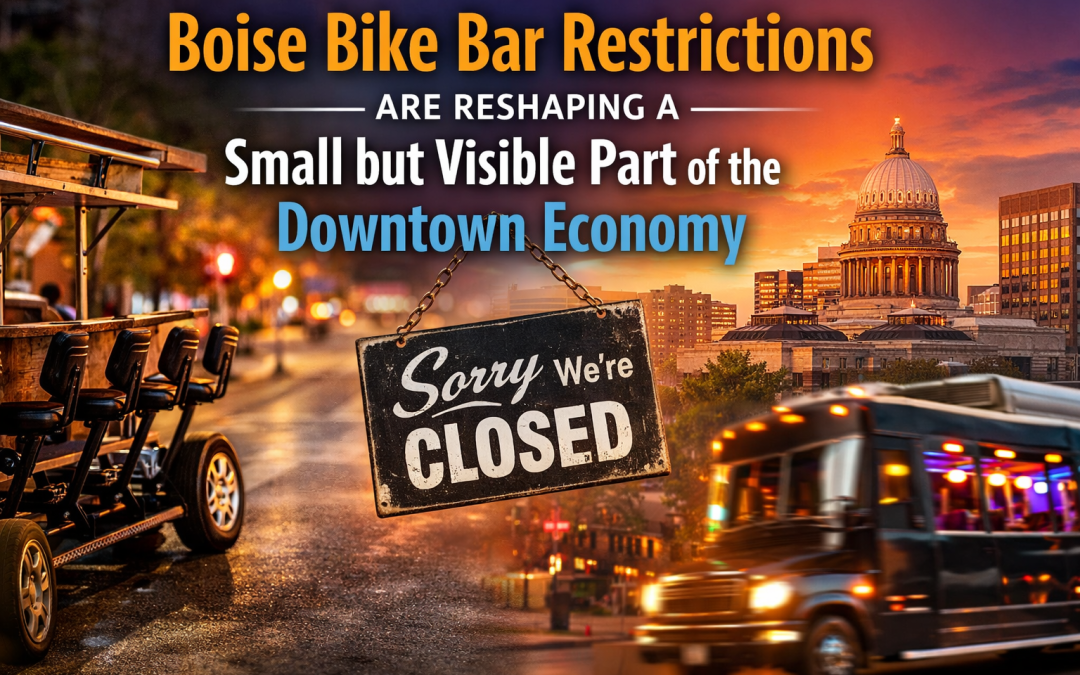
Boise Bike Bar Restrictions Are Reshaping a Small but Visible Part of the Downtown Economy
Downtown entertainment trends often reveal subtle shifts in a city’s economy long before real estate data catches up.
One example currently unfolding in the Treasure Valley involves Boise’s once highly visible bike bar businesses. These pedal-powered bar tours used to be a regular sight rolling through downtown streets. Today, they’re much harder to find.
According to reporting by Kate Noden in the Idaho Press (read the original article here: https://www.idahopress.com/news/local/business-brakes-for-boise-bike-bars-following-alcohol-ban/article_01314f78-bef4-4808-aa64-2e3dea47a1e2.html), a set of city regulations introduced in 2021 — particularly a ban on alcohol consumption during rides — significantly changed how these businesses operate.
While bike bars represent a small slice of Boise’s hospitality scene, the story highlights a bigger conversation about tourism, downtown experiences, and the evolving balance between economic activity and neighborhood concerns.
What Changed for Boise’s Bike Bar Businesses
Bike bars began appearing in Boise around 2010 as a group entertainment activity that combined sightseeing with stops at local bars.
Riders would pedal together through downtown while music played and drinks were served onboard. The concept quickly gained popularity with tourists, birthday groups, and bachelor or bachelorette parties.
However, the regulatory environment changed several years ago.
City leaders introduced rules that included:
- A curfew for nightly operations
- Restrictions during weekday rush hour
- Specific routes limited to the downtown core
- Volume limits for music
- Most importantly, a complete ban on alcohol consumption during rides
Under Idaho open container laws, alcohol is allowed only in enclosed vehicles used for commercial transportation. Because bike bars are open-air vehicles, they fall outside that exception.
As a result, other entertainment options like party buses or trolleys — which operate in enclosed vehicles — can still legally serve drinks during rides.
That difference has had a major impact on demand.
A Small Industry Facing Big Business Challenges
Only a handful of operators remain in Boise today, including:
- Pedals & Pints
- The Boise Bike Bar
- Boise Buzz Bike
Business owners say the alcohol prohibition dramatically changed customer interest.
One operator reported revenue dropping roughly seventy percent after the rule changes took effect. Weekly bookings that once averaged around twenty rides reportedly fell to fewer than ten.
Operating costs have remained significant. Each pedal-powered vehicle can cost tens of thousands of dollars to build and maintain, and operators previously relied on multiple drivers and guides to run tours.
Some entrepreneurs have responded by adapting their business models.
For example:
- One owner launched a party bus service, which can legally serve alcohol.
- Another operator shifted some activity to Garden City, where officials have been more receptive to tourism-focused businesses.
- Others are experimenting with new uses for the bikes that don’t depend on alcohol service.
Despite the challenges, several operators remain committed to keeping the concept alive.
Why This Matters for Downtown Boise Businesses
At first glance, bike bars may seem like a niche entertainment activity. But they play a role in a broader ecosystem that supports Boise’s downtown hospitality economy.
Group entertainment experiences often drive spending at:
- Restaurants
- Bars and breweries
- Event venues
- Hotels
- Retail shops
When those activities decline, it can slightly reduce visitor traffic in certain areas of the city.
For Boise commercial real estate, nightlife and tourism activity help shape the demand for ground-floor retail and entertainment space in downtown districts.
Cities across the country constantly balance two competing priorities:
- Supporting small businesses and tourism
- Addressing quality-of-life concerns from residents
The bike bar debate is one example of how those priorities sometimes collide.
Local Insight: Entertainment Trends Shape Urban Retail Demand
From a Boise commercial real estate perspective, the larger takeaway is about how cities manage their entertainment districts.
Downtown Boise has grown rapidly over the past decade. With more residents living near the urban core, conflicts between nightlife activity and neighborhood concerns are becoming more common.
These types of policy decisions can influence:
- The mix of entertainment concepts allowed downtown
- Tourism-related business models
- The types of tenants attracted to retail spaces
While bike bars themselves may not drive major leasing trends, they represent the kind of experiential businesses that help make downtown districts feel vibrant and active.
Cities that maintain a healthy balance between residents and nightlife often see stronger long-term demand for retail leasing in their urban cores.
Boise continues to evolve in that direction as its population grows and its downtown becomes more active.
Mike Gioioso (joy-OH-so) has for 16+ years been helping companies of all sizes buy, build, and lease perfect places for business in greater Boise, Idaho and beyond. www.streetsmartidaho.com mike@streetsmartidaho.com 208-209-9166
Tags: #Boisecommercialrealestate, #downtownBoisebusinesses, #Boisebikebarregulations, #Boisenightlifeeconomy, #Boisetourismindustry, #Boisehospitalitysector, #Boisesmallbusinesses, #Boisedowntownentertainment, #TreasureValleytourism, #Boisedevelopmenttrends