
Garden City Townhome Proposal Signals Changing Housing Pressure Near Boise’s River Corridor
Growth along the Boise River corridor has been accelerating for years. As demand for housing rises across the Treasure Valley, even long-standing recreational properties are beginning to face redevelopment pressure.
A recent proposal in Garden City highlights that shift.
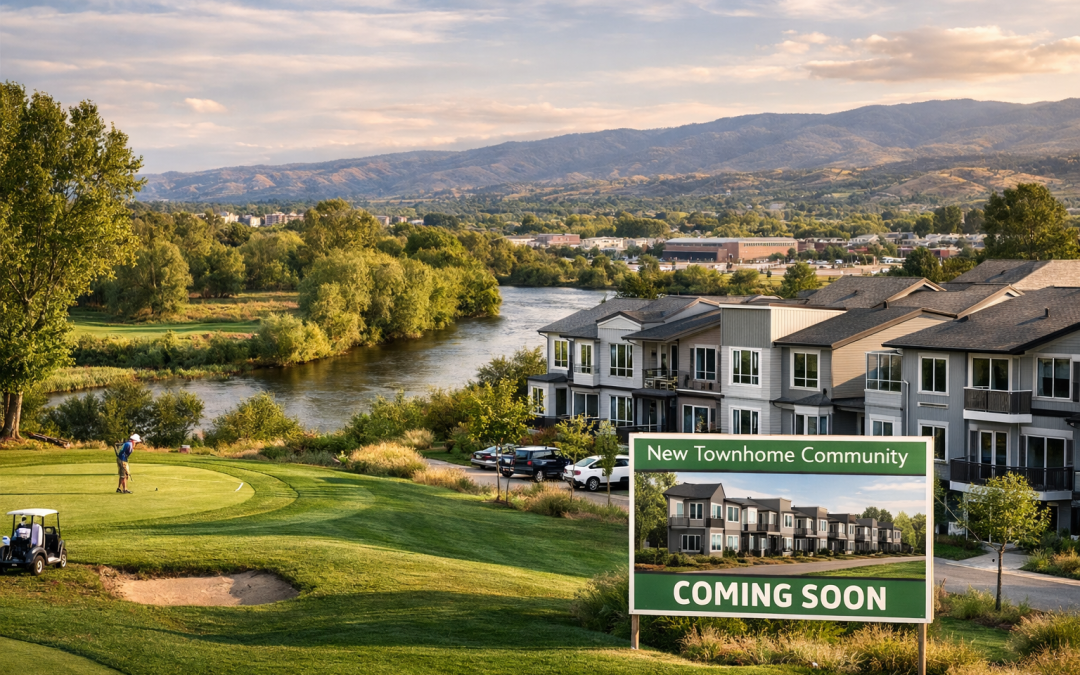
According to reporting by Royce McCandless in the Idaho Press (read the original article here: https://www.idahopress.com/news/local/planning-body-voices-approval-for-townhomes-adjacent-to-garden-citys-river-club/article_1217ddee-e21c-4777-891d-b91f4ebd9186.html), Garden City’s Planning and Zoning Commission recently signaled support for a residential project that would add 134 townhomes on a portion of the River Club Golf Course property.
The decision does not finalize the project yet, but it moves the proposal one step closer to approval — and reflects broader trends affecting Boise commercial real estate, housing development, and land use near the Boise River.
What the Proposed River Club Development Includes
The project is part of a larger redevelopment concept known as The Residences at River Club.
Developers are proposing to build townhomes on approximately 10 acres of the River Club property, a private golf course located along State Street near the Boise River.
Key project details include:
- 134 for-sale townhomes
- Development planned on about 10 acres
- Location adjacent to the existing River Club Golf Course
- Part of redevelopment planning that began in 2023
Garden City’s Planning and Zoning Commission voted to recommend approval of the subdivision plat after a lengthy public meeting that drew strong opinions from both supporters and opponents.
However, the final decision now moves to Garden City’s City Council, which is expected to review the proposal in July.
Community Concerns and Support
Like many redevelopment proposals near established neighborhoods, the project has generated a mix of reactions from residents.
Some homeowners raised concerns during the public hearing about issues such as:
- Stormwater drainage and floodplain requirements
- Emergency access for fire and medical services
- Compatibility with nearby single-family neighborhoods
- Preservation of open space historically associated with the golf course
Opponents also argued that the golf course has served as a long-standing green buffer for surrounding communities.
Supporters, however, pointed to different priorities.
Some residents expressed the belief that additional housing could strengthen the local community, attract younger families, and support the long-term economic sustainability of the golf course itself.
Technical Issues Still Being Sorted Out
One of the key discussions during the hearing focused on how internal roadways within the development should be classified under city code.
Planning staff initially categorized them as private streets, which would require certain design standards — including rules that vehicles must enter roadways moving forward rather than backing out.
Developers argued that the internal access routes should instead be defined as common drives, which are smaller private access ways serving multiple homes and may not require the same vehicle movement restrictions.
Ultimately, the planning commission recommended approval while suggesting that the city council clarify how these roadway rules should apply.
Why This Matters for Boise Commercial Real Estate
Although the proposal centers on housing, projects like this often influence the broader Boise commercial real estate landscape.
Residential growth drives demand for nearby services, including:
- Retail centers
- Restaurants and coffee shops
- Medical offices
- Personal services and neighborhood amenities
Garden City in particular has been evolving rapidly in recent years.
Once dominated by light industrial uses, parts of the city along the Boise River have been transforming into mixed-use neighborhoods that combine housing, recreation, and entertainment.
More housing in the area could further accelerate demand for retail leasing in Boise’s riverfront districts.
Local Insight: River Corridor Growth Is Reshaping the Market
From a Boise commercial real estate perspective, the River Club proposal highlights a bigger shift happening along the Boise River corridor.
Land near the river has become increasingly valuable as the Treasure Valley grows.
Older land uses — including industrial sites, underutilized properties, and even recreational spaces — are gradually being reconsidered for higher-density housing.
For investors and developers, that shift often leads to new opportunities for:
- Mixed-use developments
- Neighborhood retail centers
- Walkable residential communities
At the same time, projects like this remind us that redevelopment in established areas is rarely simple. Community concerns, infrastructure planning, and legal questions can all shape how quickly projects move forward.
But the bigger picture is clear: housing demand in the Boise region continues to reshape how land is used — especially in desirable areas near the river.
Mike Gioioso (joy-OH-so) has for 16+ years been helping companies of all sizes buy, build, and lease perfect places for business in greater Boise, Idaho and beyond. www.streetsmartidaho.com mike@streetsmartidaho.com 208-209-9166
Tags:#Boisecommercialrealestate, #GardenCityIdahodevelopment, #RiverClubGolfCourse, #Boisehousingdevelopment, #BoiseRiverdevelopment, #TreasureValleygrowth, #Boiserealestatemarket, #Boisedevelopmentnews, #GardenCityplanningandzoning, #Boiseresidentialdevelopment, #TreasureValleyhousingmarket, #Boisemixedusedevelopment, #Idahorealestatenews, #Boiseinvestmentproperty