
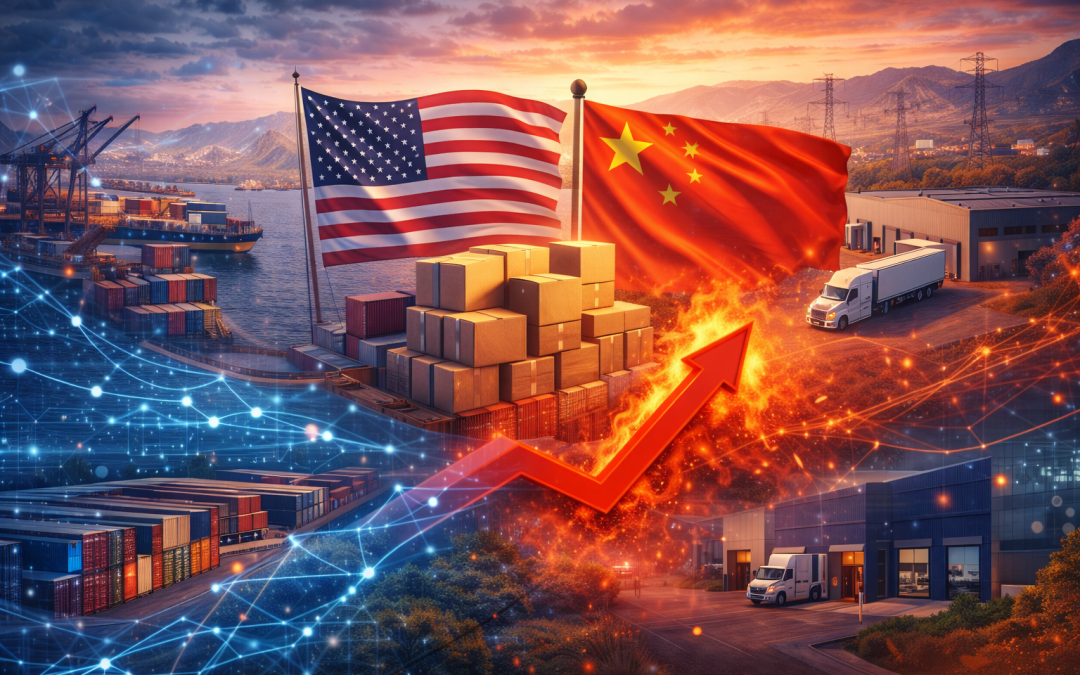
Tariffs Are Creating Uncertainty for Idaho Businesses — What It Could Mean for Boise Commercial Real Estate
Trade policy usually feels like something happening far away in Washington, D.C. But for many Idaho businesses, tariffs are becoming a daily operational challenge.
From manufacturing costs to pricing strategies, shifting trade rules are forcing companies to rethink how they source materials, manage inventory, and plan future growth.
According to reporting by Idaho Press staff in the Idaho Press, small businesses across Idaho are navigating an unpredictable tariff environment as federal trade policies change and global supply chains adjust. You can read the original report here:
https://www.idahopress.com/news/local/for-idaho-small-businesses-tariffs-can-be-a-major-moving-target/article_8b716753-34cd-4229-b2db-b1571099ff6f.html
For those watching Boise commercial real estate and Treasure Valley development, the situation offers an important reminder: economic policy decisions often ripple into local business activity, which ultimately affects real estate demand.
What’s Changing in the Tariff Environment
Over the past year, tariffs on imported goods have shifted frequently as policymakers adjust trade strategy.
These changes were intended to encourage more domestic manufacturing and reduce reliance on foreign production. However, the reality for many businesses has been complicated.
Karen Appelgren, a business advisor with Zions Bank who works with Idaho companies, said the effects can vary dramatically depending on where businesses source their materials and components.
In some cases, companies have attempted to move production from one country to another to avoid tariffs — only to see new tariffs applied to those regions as well.
For some businesses, the result has been significant cost increases and uncertainty about long-term supply chains.
Local Businesses Are Adjusting Their Supply Chains
Several Boise-area companies highlighted in the report illustrate how complex these decisions can become.
A Boise consumer products company facing shifting tariffs
Boise-based company Saalt, which produces menstrual care products, sources some of its manufacturing from Sri Lanka.
At one point, tariffs on products from that country were announced at a high level before later being reduced. Meanwhile, tariffs affecting alternative manufacturing locations shifted as well.
This created a difficult planning environment for the company.
Saalt considered relocating production to other countries but found that tariff rates were constantly changing. At the same time, moving manufacturing entirely to the United States would dramatically increase production costs due to labor differences and specialized manufacturing requirements.
Even some of the company’s products made domestically still rely on imported packaging materials, which can also be subject to tariffs.
To prepare for potential changes, the company increased inventory earlier in the year and began testing price adjustments to see how customers respond.
A Boise startup navigating tariff-related costs
Another example involves Soleni Shoes, a Boise-based orthopedic footwear company founded by medical professional Lindsey Carmichael.
The young company currently manufactures shoes in China. Recent tariff changes significantly increased the cost of one of its production orders, forcing Carmichael to absorb the expense personally.
Because the business is still small, the impact has been significant.
To reduce costs, Carmichael has shifted some operations to a more hands-on approach, including managing distribution directly rather than outsourcing logistics.
The uncertainty around tariffs has also led the company to delay new product development while focusing on maintaining financial stability.
A startup working toward domestic manufacturing
Another Boise startup, Rattler Medical, is taking a different approach.
The company is developing a specialized blood transport system designed for military and emergency medical use. Its founder hopes to manufacture most components in the United States.
However, some electronic parts used in the device are currently sourced from overseas manufacturers, including Taiwan and China.
Tariffs on imported components could increase production costs if the company continues relying on those suppliers.
As a result, the company is exploring ways to license certain components and potentially manufacture them domestically in the future.
Why Tariffs Matter for Boise’s Economy
While tariffs may sound like a policy issue far removed from real estate, they can have real impacts on local economic activity.
Businesses facing higher costs or uncertain supply chains may delay expansion, reduce hiring, or slow investment in new facilities.
From a Boise commercial real estate perspective, several potential impacts stand out.
Manufacturing and industrial space demand
If tariffs ultimately encourage more domestic manufacturing, some companies may expand U.S.-based production.
That could increase demand for industrial space, manufacturing facilities, and warehouse properties in markets like Boise.
Business expansion decisions
When supply chain costs fluctuate, companies often delay decisions about opening new locations, expanding offices, or leasing additional space.
That uncertainty can slow retail leasing Boise activity and broader commercial development.
Startup and small business growth
Many startups rely on global supply chains to remain cost competitive.
If tariffs increase manufacturing costs significantly, some young companies may struggle to scale operations — potentially slowing growth in sectors that contribute to local economic expansion.
Local Insight: Policy and Real Estate Are More Connected Than They Appear
Trade policy often influences real estate markets indirectly.
When businesses face uncertainty about costs, they tend to postpone major decisions like relocating, opening facilities, or signing long-term leases.
At the same time, policies that encourage domestic manufacturing can eventually create demand for new production facilities and logistics infrastructure.
Cities with strong workforce pipelines and growing populations — like Boise — are often well positioned to benefit if companies choose to expand U.S. manufacturing operations.
My Take
Tariffs are designed to reshape global supply chains, but the transition can be messy.
For small businesses especially, constantly changing trade rules can make long-term planning difficult.
From a Boise commercial real estate perspective, the situation highlights how closely local markets are tied to national economic policy.
If tariffs ultimately drive more manufacturing back to the United States, regions like the Treasure Valley could see increased demand for industrial real estate, logistics facilities, and technology manufacturing space.
But until the policy environment stabilizes, many businesses will likely continue taking a cautious approach to expansion.
Mike Gioioso (joy-OH-so) has for 16+ years been helping companies of all sizes buy, build, and lease perfect places for business in greater Boise, Idaho and beyond.
www.streetsmartidaho.com
mike@streetsmartidaho.com
208-209-9166
Tags: #Boisecommercialrealestate, #Boisedevelopmenttrends, #TreasureValleycommercialrealestate, #Boiseindustrialrealestate, #Idahomanufacturingindustry, #Boiseeconomicgrowth, #Boisesmallbusiness, #Boisebusinessexpansion, #Idahotradepolicy, #Supplychainshifts, #Boiseinvestmentproperty, #TreasureValleyeconomicdevelopment