Boise Breaks Ground on Whitney Pool — What the New Community Investment Means for Boise Development and Local Real Estate
Public infrastructure projects don’t always get the same attention as large commercial developments. But in growing cities like Boise, investments in parks, recreation, and neighborhood amenities often play a major role in shaping long-term growth.
A new project in south-central Boise highlights that connection.
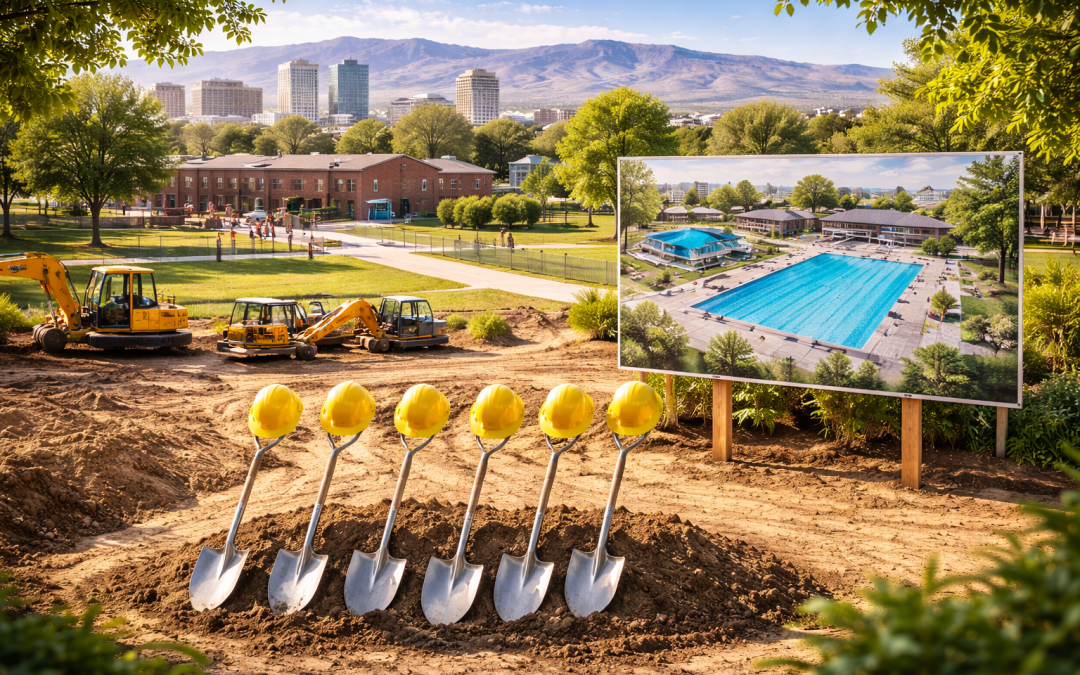
According to reporting by Idaho Press journalist Matthew Neil Wells (you can read the original article here: https://www.idahopress.com/news/local/let-the-dirt-fly-whitney-pool-project-officially-underway/article_6d75e07a-74e7-4f77-a333-08eb5c006f95.html), construction has officially begun on Whitney Pool, the city’s first newly built public swimming facility in nearly three decades.
While it’s primarily a recreational project, the development also reflects broader trends shaping Boise development, neighborhood investment, and long-term community planning.
A Long-Awaited Addition to Boise’s Public Amenities
Whitney Pool will be located beside Whitney Elementary School at 1609 South Owyhee Street, roughly two miles north of the Boise Airport in the city’s south-central area.
The project carries an estimated cost of about nine point six million dollars and is expected to open to the public in summer 2027.
Key elements of the project include:
- An eight-lane main swimming pool
- Areas designed for competitive swimming and swim meets
- Space for lessons and recreational swimming at the same time
- A kiddie pool area with a shallow entry designed for younger swimmers
- Locker rooms, restrooms, and changing areas
- A waterslide feature
- ADA-accessible pool access
Once completed, Whitney Pool will become the sixth public pool in Boise.
City officials say the larger pool size will allow the facility to host a variety of activities simultaneously, including swim competitions, public recreation, and lessons.
Why the Location Matters
City leaders emphasized that the project’s location next to Whitney Elementary School was chosen intentionally.
The goal is to make recreational amenities easier for families and students to reach on foot.
Boise Mayor Lauren McLean highlighted how the project supports the city’s broader goal of improving neighborhood access to parks and recreational spaces.
City planners estimate that more than four thousand Boise residents will be able to walk safely to the new pool once it opens.
That kind of accessibility can play an important role in strengthening neighborhood activity and community connection.
For cities experiencing steady population growth like Boise, projects that expand public amenities often become important anchors for surrounding neighborhoods.
The Bigger Picture: Boise’s Growth and Community Infrastructure
The fact that Boise hasn’t built a new public pool in twenty-seven years says a lot about how the city has evolved.
Over the past three decades, Boise has experienced:
- major population growth
- expanding neighborhoods
- increased demand for public recreation
- greater focus on community wellness and youth programs
As cities grow, infrastructure investments often follow.
New amenities like parks, recreation centers, and pools help support quality of life — something that increasingly influences where people choose to live.
For people watching Boise commercial real estate, these kinds of public investments may not directly involve office buildings or retail centers, but they still shape neighborhood desirability.
And in real estate, desirability often translates to demand.
Local Market Impact
Projects like Whitney Pool can influence surrounding neighborhoods in several subtle but meaningful ways.
Community amenities often help support:
- stronger residential demand
- improved neighborhood walkability
- increased family-oriented development
- enhanced appeal for nearby retail and service businesses
Areas that offer convenient access to schools, parks, and recreation tend to remain attractive to both residents and developers.
In markets like Boise, where population growth continues to drive Boise development, these amenities often become part of the broader ecosystem that supports long-term economic expansion.
My Take: Community Projects Often Support Real Estate Value
Large commercial developments often dominate the headlines, but cities grow in more nuanced ways.
Neighborhood investments — like schools, parks, and recreation facilities — often shape how communities evolve over time.
Whitney Pool is a good example of that dynamic.
While it’s primarily a recreational facility, it also reinforces Boise’s broader strategy of building neighborhoods that support families, walkability, and community engagement.
Those qualities are part of what has helped make Boise attractive to both residents and investors.
For those tracking Boise commercial real estate, projects like this may seem small compared to office towers or industrial developments — but they play a meaningful role in maintaining the quality of life that continues attracting people to the Treasure Valley.
Mike Gioioso (joy-OH-so) has for 16+ years been helping companies of all sizes buy, build, and lease perfect places for business in greater Boise, Idaho and beyond.
www.streetsmartidaho.com
mike@streetsmartidaho.com
208-209-9166
Tags: #boisecommercialrealestate, #boisedevelopment, #boiseparksandrecreation, #whitneypoolboise, #boisepublicpoolproject, #boiseinfrastructureinvestment, #boisecommunitydevelopment, #southboisedevelopment, #boiseneighborhoodgrowth, #boisepublicamenities, #boisefamilyneighborhoods, #boisequalityoflife, #boiseeconomicgrowth, #treasurevalleydevelopment, #boiseinvestmentproperty