
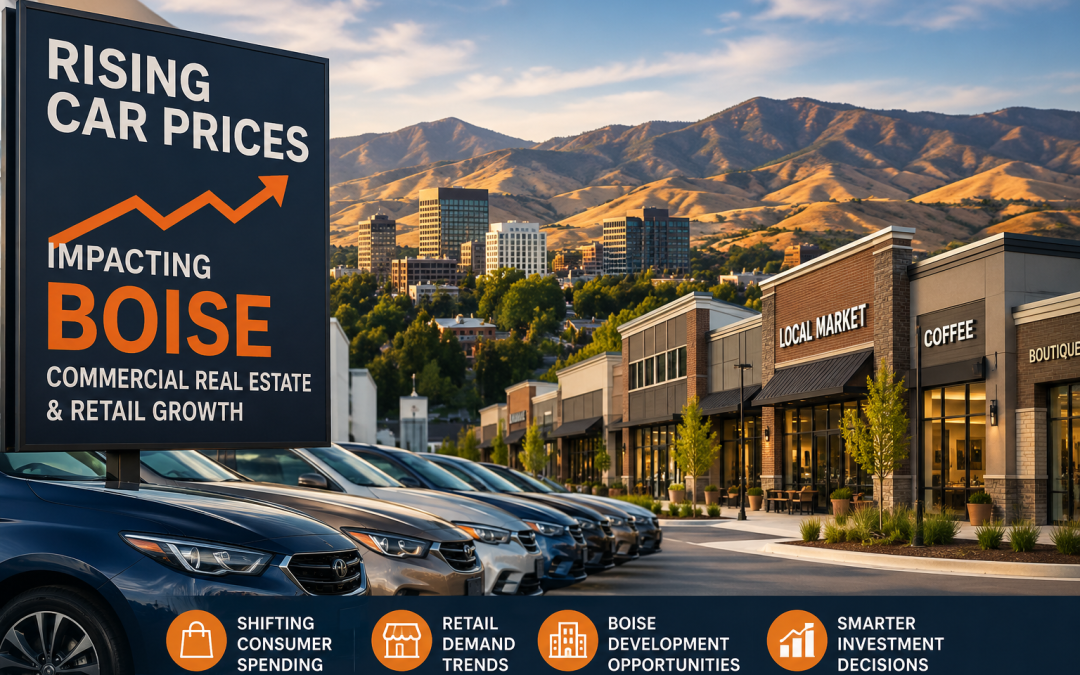
Why Rising New Car Prices Could Influence Boise Commercial Real Estate and Retail Growth
Buying a new vehicle has become a much bigger financial decision than it was just a few years ago. With the average price of a new car now reaching about $50,000 nationwide, many households are thinking twice before making a purchase.
According to reporting by IBR Staff in the Idaho Business Review, using pricing data from Kelley Blue Book and Cars.com, new vehicle prices continue to climb while several manufacturers are introducing lower-priced models to help attract budget-conscious buyers. You can read the original Idaho Business Review article here: https://idahobusinessreview.com/2026/07/08/average-new-car-price-affordable-american-brands/. This article is based on that reporting while exploring what higher vehicle costs could mean for Boise commercial real estate, retail spending, and future development across the Treasure Valley.
Consumers Are Becoming More Selective With Big Purchases
When large purchases become more expensive, consumers often adjust their budgets elsewhere.
For many families, a vehicle is one of the biggest purchases they make after buying a home. As average new vehicle prices move past $50,000, monthly payments, insurance costs, and financing expenses also increase. Even though vehicle prices increased only about 1.2% from a year ago, today’s prices remain historically high.
Manufacturers recognize this challenge.
Several American brands, including Chrysler, Jeep, and Ram, have announced plans to introduce new models priced below $30,000, giving buyers additional lower-cost options.
At the same time, automakers continue offering affordable vehicles that appeal to practical buyers looking for value rather than luxury features.
Some of Today’s Lowest-Priced New Vehicles Include:
- Toyota Corolla LE — approximately $24,420
- Honda Civic LX — just under $26,000
- Toyota Corolla Cross L — approximately $26,830
- Subaru Crosstrek Base — approximately $28,415
- Nissan Altima SV — approximately $28,825
Many of these vehicles also offer strong fuel economy, helping reduce long-term ownership costs in addition to lower purchase prices.
Why This Matters for Boise Commercial Real Estate
Vehicle affordability may not seem directly connected to commercial real estate, but consumer spending habits affect nearly every retail business.
When households dedicate more of their income toward transportation, they often become more cautious about discretionary spending. That can influence restaurants, entertainment venues, furniture stores, specialty retailers, and other businesses that depend on consumer confidence.
For landlords and investors involved in retail leasing Boise, understanding these spending patterns becomes increasingly important.
Retailers focused on value, discount shopping, automotive services, grocery stores, and essential goods often remain resilient during periods when consumers carefully manage their budgets. Those businesses may continue expanding while higher-end retailers experience slower sales growth.
Developers evaluating new retail projects should also pay attention to these shifts, since tenant demand frequently follows changing consumer priorities.
Boise Development Continues to Benefit From Population Growth
Although national affordability challenges remain, Boise continues attracting new residents and businesses.
Population growth supports demand for shopping centers, service businesses, healthcare providers, restaurants, and neighborhood retail throughout the Treasure Valley.
However, successful projects increasingly depend on matching the right tenants with local consumer demand.
As household budgets tighten, many expanding retailers are emphasizing convenience, affordability, and everyday necessities rather than luxury experiences.
That trend could influence future tenant mixes in neighborhood shopping centers and mixed-use developments across Boise, Meridian, Nampa, Caldwell, Eagle, and Kuna.
My Take
As someone involved in Boise commercial real estate, I believe rising vehicle prices are another reminder that retailers must understand today’s consumer.
Even small changes in household expenses can reshape where people shop and how often they spend money.
For landlords, investors, and developers, the opportunity isn’t necessarily shrinking demand—it’s recognizing which businesses solve everyday needs. Those tenants often perform well regardless of broader economic uncertainty and can become long-term anchors for successful retail centers.
Watching consumer affordability trends alongside local population growth can provide valuable insight into where the next retail leasing opportunities may emerge across the Boise market.
Mike Gioioso (joy-OH-so) has for 16+ years been helping companies of all sizes buy, build, and lease perfect places for business in greater Boise, Idaho and beyond. www.streetsmartidaho.com mike@streetsmartidaho.com 208-209-9166
Tags: #boisecommercialrealestate, #boisedevelopment, #retailleasingboise, #boiseretailmarket, #treasurevalleyrealestate, #consumerspending, #retaildevelopment, #shoppingcenters, #commercialrealestateinvestment, #kelleybluebook, #carsdotcom, #chrysler, #jeep, #ram, #toyotacorolla, #hondacivic, #idahobusinessreview, #boiseeconomy, #retailtrends, #commercialproperty, #idahobusiness