Record Idaho Tourism Funding Could Drive New Commercial Real Estate Demand in Boise
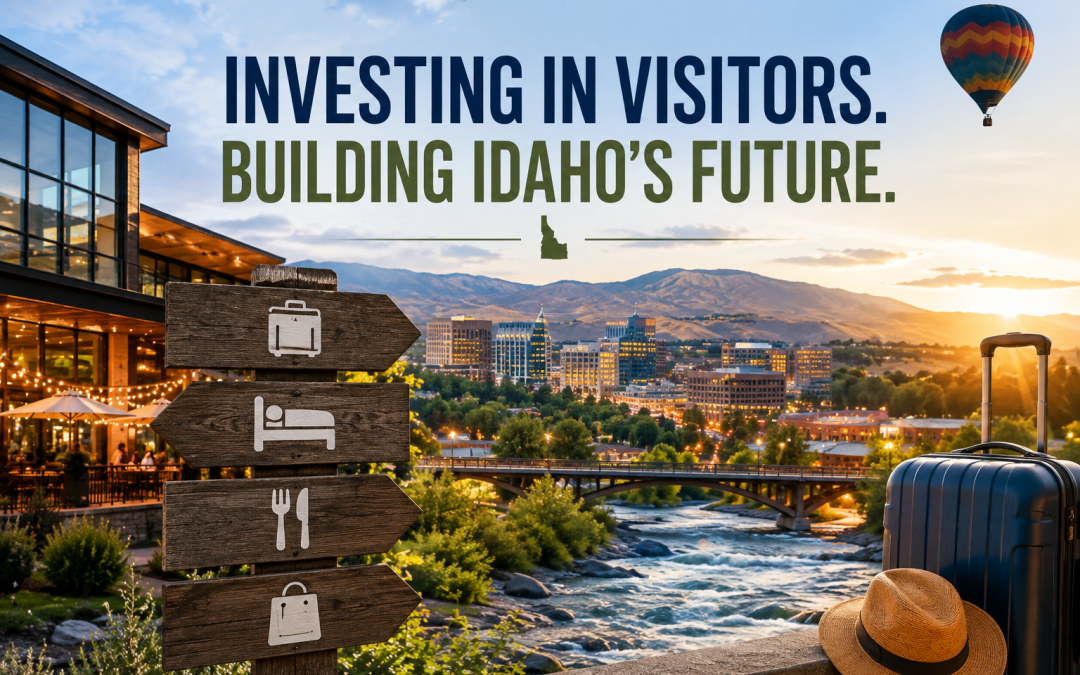
Idaho isn’t just attracting more residents and businesses. The state is also investing heavily in attracting more visitors—and that can have a direct impact on commercial real estate.
More than $11 million in tourism grants is being distributed across Idaho, with Boise-area organizations receiving a significant share. For Boise commercial real estate, the bigger story is what increased visitor spending can mean for hotels, restaurants, retail centers, entertainment concepts and future development.
According to reporting by IBR Staff in the Idaho Business Review, the Idaho Travel Council approved a record level of funding through the state’s Regional Travel and Convention Grant Program. You can read the original Idaho Business Review article here.
Boise and Southwest Idaho Get a Major Tourism Push
The statewide numbers are impressive, but the allocation to the Boise region deserves special attention.
Visit Boise, operated through the Boise Metro Chamber of Commerce, received approximately $1.84 million. The Southwest Idaho Travel Association received another $1.25 million, while the Nampa Chamber of Commerce was awarded about $143,450.
The McCall Area Chamber of Commerce & Visitors Bureau also received $500,000.
Combined, those four Southwest Idaho organizations were awarded more than $3.7 million.
The money isn’t primarily intended for construction. It supports efforts such as advertising, video production, visitor information and other tourism marketing programs.
But marketing can eventually influence real estate.
If campaigns bring more visitors into Boise, Meridian, Nampa, McCall and surrounding communities, those visitors need places to stay, eat, shop and spend their time.
That’s where tourism promotion starts connecting with commercial property.
Rising Lodging Taxes Point to a Larger Trend
One of the most interesting numbers in the report isn’t the grant total.
It’s the revenue behind it.
Idaho’s lodging tax collections approached $25 million for fiscal 2026, according to the Idaho Travel Council. That was approximately 6.5% higher than the prior year.
Those taxes are generated through visitor stays at hotels, motels, vacation rentals and private campgrounds.
For anyone following Boise commercial real estate, increasing lodging-tax revenue is another useful indicator of activity in Idaho’s visitor economy.
Tourism isn’t limited to traditional vacation destinations such as Sun Valley, McCall or Coeur d’Alene.
Boise increasingly functions as a destination for business travel, sporting events, conventions, concerts, recreation and weekend trips. Visitors coming into the Treasure Valley create spending that can support multiple commercial property types.
That includes:
- Hotels and hospitality development
- Restaurants, breweries and entertainment concepts
- Downtown Boise retail
- Shopping centers and mixed-use projects
- Event and recreation businesses
- Short-term lodging and hospitality services
- Retail development near major travel corridors
For landlords involved in retail leasing in Boise, visitor traffic can become an important part of the sales equation for certain tenants.
Tourism Dollars Can Eventually Become Real Estate Demand
Commercial real estate follows customers.
Restaurants don’t lease space because tourism marketing budgets increased. They lease when they believe enough customers will walk through their doors.
Hotels aren’t developed because an organization launched an advertising campaign. Developers build them when occupancy, room rates and projected demand justify the investment.
That’s why the connection between these grants and Boise development should be viewed over the longer term.
Successful tourism promotion can bring additional dollars into a market. Those dollars circulate through restaurants, hotels, retailers, transportation companies and entertainment businesses.
As those businesses grow, their real estate requirements can grow with them.
For property owners, this can strengthen certain retail and hospitality locations.
For developers, sustained visitor growth can help support new hotel, restaurant, entertainment and mixed-use projects.
And for investors evaluating Boise investment property, tourism provides another source of demand beyond the Treasure Valley’s resident population.
Idaho Is Marketing Every Corner of the State
The funding isn’t concentrated only in Boise.
Tourism organizations across North Idaho, eastern Idaho, central Idaho and other regions received substantial awards.
Yellowstone Teton Territory received approximately $2.06 million, the largest individual award listed. The Coeur d’Alene Convention & Visitors Bureau received roughly $1.33 million, while the Twin Falls Area Chamber of Commerce received approximately $770,000.
Other funding went to organizations promoting Sun Valley, Sandpoint, Pocatello, Moscow, Stanley, Bear Lake, the Lewis-Clark Valley and additional destinations.
There were also statewide and multi-region awards supporting Idaho ski areas, outfitters and guides, and the lodging and restaurant industry.
That broad distribution is important because Idaho tourism doesn’t operate as a collection of completely separate markets.
Someone who flies into Boise may continue to McCall or Stanley. A visitor to Yellowstone may extend a trip through other parts of Idaho. Outdoor recreation, skiing, conventions and regional road trips can connect multiple communities.
Boise benefits from being one of the state’s primary transportation, business and service hubs.
Local Insight: Watch Visitor Spending, Not Just Visitor Counts
From a Boise commercial real estate perspective, the number I’ll be watching isn’t simply how many people visit Idaho.
It’s how much they spend—and where they spend it.
Visitor growth becomes particularly meaningful for commercial real estate when it translates into stronger restaurant sales, hotel occupancy, retail traffic and entertainment spending.
Those fundamentals influence whether tenants expand, whether landlords can fill vacancies and whether developers can justify new projects.
There’s another reason this matters.
Boise’s commercial market has traditionally benefited from population and employment growth. Tourism adds another customer base that doesn’t show up in local population counts.
A restaurant in Downtown Boise, for example, isn’t limited to customers living within a five-mile radius. Its potential customer base can include convention attendees, business travelers, tourists, sporting-event visitors and people passing through the Treasure Valley.
The same principle applies to hotels, entertainment venues and certain retailers.
More than $11 million in tourism promotion won’t transform Idaho commercial real estate overnight.
But record tourism funding combined with rising lodging-tax collections suggests Idaho continues to build its visitor economy.
For Boise landlords, developers and investors, that’s another demand driver worth keeping on the radar.
Mike Gioioso (joy-OH-so) has for 16+ years been helping companies of all sizes buy, build, and lease perfect places for business in greater Boise, Idaho and beyond.
www.streetsmartidaho.com mike@streetsmartidaho.com 208-209-9166
Tags: #boisecommercialrealestate, #idahocommercialrealestate, #boisetourism, #idahotourism, #idahotourismgrants, #idahotravelcouncil, #visitboise, #boisedevelopment, #boiseeconomicdevelopment, #boiseretailrealestate, #retailleasingboise, #boisehoteldevelopment, #boisehospitalityrealestate