
Boise Industrial Real Estate Is Becoming a Three-Market Story
Boise’s industrial market can no longer be explained with one vacancy rate or one rent-growth number.
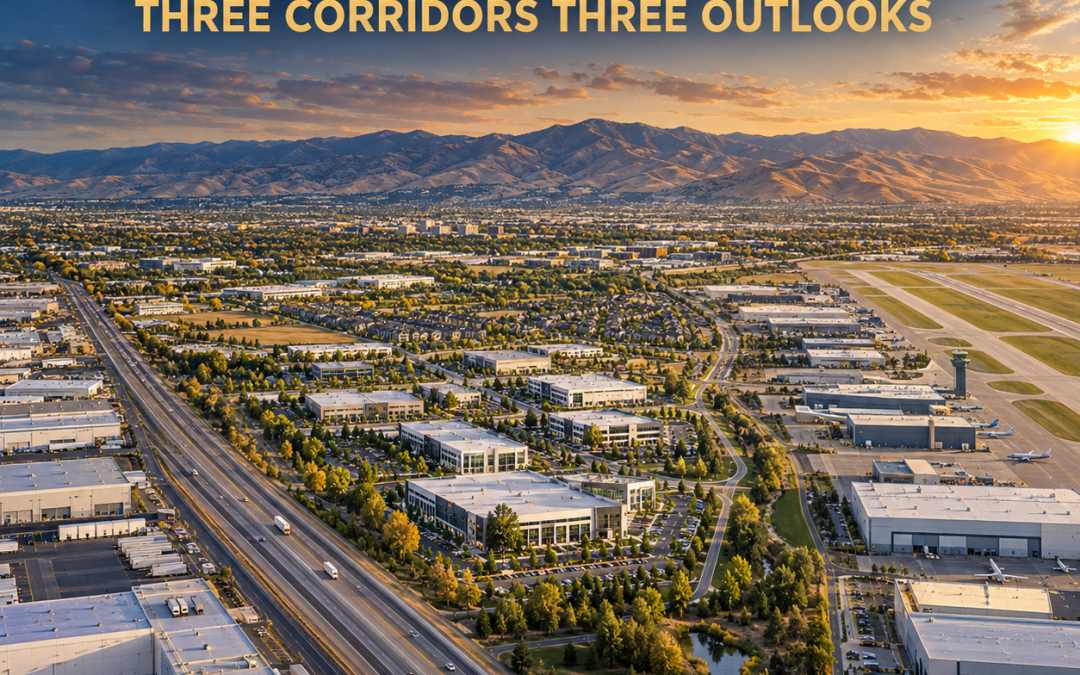
The Airport, Nampa, and Meridian corridors are absorbing new construction at different speeds. Each location also offers a different mix of transportation access, workforce availability, operating costs, and future development potential.
According to reporting by John Gillem of CoStar Analytics, Boise’s three largest industrial submarkets are producing distinct results as the Treasure Valley works through a wave of new supply. This article relies on CoStar for the market data and adds local commercial real estate analysis; it is not original reporting.
One Metro Area, Three Investment Profiles
The Boise Airport industrial corridor currently offers the greatest long-term potential—and the highest short-term vacancy risk.
Vacancy has reached 21.4%, nearly three times the area’s historical average. More than 1.3 million square feet was completed during the past year, and approximately 994,000 square feet remains under construction.
That is a large amount of new space for the market to absorb.
Still, asking rents increased 2.4% over the past year. CoStar’s forecast calls for growth of 3.1% by year-end, the strongest outlook among Boise’s three largest industrial corridors.
The Airport area continues to attract interest because of its location. Tenants receive direct access to Interstate 84, Boise Airport, and major freight routes. Those advantages are difficult to reproduce elsewhere in the Treasure Valley.
The corridor could also benefit from Micron Technology’s ongoing investment in manufacturing and research facilities. As Micron’s expansion moves forward, suppliers, contractors, equipment companies, and service providers may seek industrial space nearby.
That demand will not necessarily arrive all at once. The Airport area may need time to absorb its current construction pipeline before vacancy returns to a more typical level.
Nampa offers a more balanced combination of expansion and affordability.
Industrial vacancy is approximately 13%, but the submarket recorded more than 320,000 square feet of net absorption during the past year. Approximately 378,000 square feet remains under construction, representing a more manageable pipeline than the Airport corridor.
Nampa asking rents increased 1.3% over the year and are expected to continue improving gradually.
The area’s appeal extends beyond lower real estate costs. Nampa has an expanding population, more attainable housing than many closer-in communities, and direct access to Interstate 84. Those factors create a growing workforce and support industrial users that need room to operate at a lower cost.
Manufacturing, food processing, logistics, construction-related businesses, and regional service companies may find Nampa especially attractive.
Meridian currently has the tightest conditions of the three markets.
Vacancy is only 7.1%, with approximately 247,000 square feet under construction. CoStar expects vacancy to move toward 4.6% by year-end as recently delivered buildings lease up.
Annual rent growth has been modest at 1%, but a tighter vacancy rate could eventually give landlords more leverage—especially for modern buildings in strong locations.
Meridian benefits from its central position between Boise and Canyon County. It also has one of the Treasure Valley’s strongest residential and employment bases. That makes the area convenient for companies trying to reach workers, customers, and suppliers across the metro.
What the Differences Mean for Real Estate Decisions
Each corridor creates a different strategy for investors, landlords, tenants, and developers.
Boise Airport: Opportunity With Patience
The Airport corridor may offer attractive leasing opportunities for tenants because multiple new buildings are competing for occupancy.
Companies looking for distribution, warehouse, or manufacturing space may have more choices and greater negotiating leverage. Depending on the project, tenants may be able to secure concessions, improvement allowances, phased occupancy, or favorable expansion rights.
For investors, the Airport area requires a longer view. Current vacancy creates lease-up risk, but the corridor’s infrastructure and proximity to Micron could support future demand.
Landlords should focus on tenant quality, deal structure, and the cost of filling vacant space. Keeping asking rents firm may protect long-term value, but effective rents can still fall when concessions increase.
Nampa: Growth Supported by Affordability
Nampa may appeal to companies focused on operating costs, labor access, and future expansion.
Its growing housing base helps employers recruit workers who already live in Canyon County. That can reduce commute times and make Nampa more practical than a Boise location for certain businesses.
Investors may find opportunities in smaller industrial buildings, owner-user properties, flex projects, and sites that can serve regional companies. However, individual properties should still be evaluated carefully. Access to Interstate 84, truck circulation, power, yard space, and nearby infrastructure can vary greatly from site to site.
Industrial growth may also support retail leasing in Nampa. More jobs and daytime workers can increase demand for restaurants, convenience retail, automotive services, childcare, healthcare, and other nearby businesses.
Meridian: Strong Demand With Limited Availability
Meridian offers a different challenge. Lower vacancy is positive for property owners, but it can make it harder for tenants to find suitable space.
Companies may need to begin their searches earlier, consider build-to-suit options, or accept locations outside their preferred area. Tenants with future expansion plans should negotiate rights to adjacent space whenever possible.
For developers, low vacancy can support new construction. However, rising land values and competing uses may make industrial development difficult in some parts of Meridian. Residential, retail, office, and medical projects often compete for the same well-located sites.
The result may be continued rent pressure for smaller, functional industrial buildings that cannot easily be replaced.
Local Insight: Vacancy Alone Does Not Tell the Story
A high vacancy rate can signal oversupply, but it can also reflect the timing of a major development cycle.
The Airport corridor has substantial vacancy because a large amount of space arrived within a short period. That does not mean the location has lost its long-term appeal. It means demand needs time to catch up.
Likewise, Meridian’s low vacancy does not automatically make every industrial investment a good one. Investors still need to consider the age of the building, lease rollover, tenant credit, replacement costs, and whether current rent is above or below the market.
Nampa’s position in the middle may look safer, but its performance will depend on continued population growth, infrastructure improvements, and the ability of new projects to attract real users.
The most useful questions are:
- What types of tenants are actively leasing?
- How much competing space will deliver nearby?
- Are landlords offering free rent or improvement allowances?
- Can the property accommodate multiple types of businesses?
- Is housing growth creating a reliable labor pool?
- Will the location remain competitive if vacancy rises?
My Take
Boise industrial real estate is becoming more specialized by submarket.
The Airport corridor is a long-term infrastructure and technology-growth play, but investors must be comfortable with current vacancy and lease-up time. Nampa offers affordability, workforce growth, and room for industrial expansion. Meridian provides the tightest market conditions but also faces land constraints and higher barriers to new development.
For tenants, this creates choices. Companies that need immediate access to modern space may find favorable options near the Airport. Cost-conscious users may see more value in Nampa. Businesses prioritizing a central Treasure Valley location may be willing to pay more for Meridian.
For landlords and developers, the key is to match the building to the submarket. A large logistics facility may fit the Airport corridor, while a smaller manufacturing or flex project may perform better in Nampa or Meridian.
Boise’s industrial vacancy may be approaching a peak, but the recovery will not happen everywhere at the same speed. The best decisions will come from studying each corridor independently rather than treating Greater Boise as one uniform industrial market.
Mike Gioioso (joy-OH-so) has for 16+ years been helping companies of all sizes buy, build, and lease perfect places for business in greater Boise, Idaho and beyond.
www.streetsmartidaho.com mike@streetsmartidaho.com 208-209-9166
Tags: #boisecommercialrealestate, #boiseindustrialrealestate, #boiseindustrialmarket, #boiseairportindustrial, #nampaindustrialrealestate, #meridianindustrialrealestate, #treasurevalleycommercialrealestate, #idahocommercialrealestate, #boiseinvestmentproperty, #boisedevelopment, #industrialleasingboise, #industrialvacancyboise, #industrialrentgrowth