
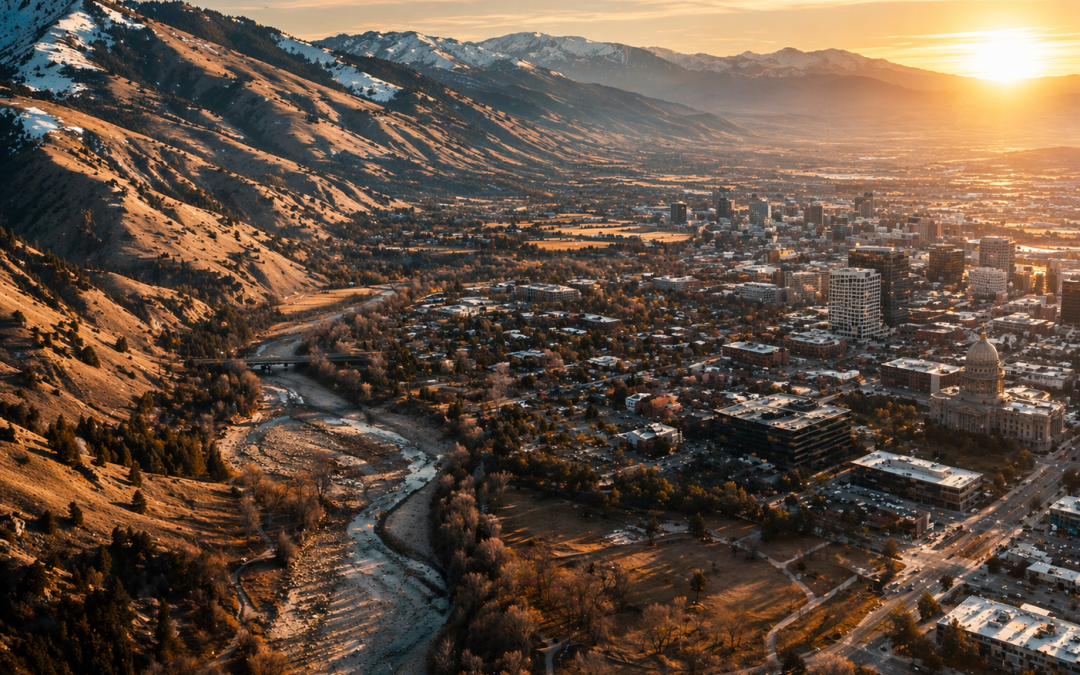
Idaho Snowpack Hits Historic Lows — What It Means for Boise Commercial Real Estate and Development
Most people don’t connect snowpack levels to commercial real estate.
But in Idaho, they should.
Because what happens in the mountains directly impacts what gets built, leased, and invested in across the Treasure Valley.
According to reporting by Idaho Business Review staff (read the original article here: https://idahobusinessreview.com/2026/04/13/lower-snowpack-impact-idaho-officials/), state officials are warning that this year’s snowpack is among the lowest ever recorded—setting the stage for widespread impacts across Idaho’s economy.
For anyone tracking Boise commercial real estate, this is more than a weather story. It’s a supply-and-demand story.
What’s Happening: A Drier Year Is Already Taking Shape
The data points are hard to ignore:
- Snowpack peaked weeks earlier than normal
- Conditions rank among the lowest on record
- River flows are expected to drop to unusually low levels
- Officials are preparing for reduced water availability statewide
Experts from the Natural Resources Conservation Service warn that runoff timing and volume are shifting—meaning less water will be available during peak summer demand.
And this doesn’t just affect agriculture—it touches nearly every sector tied to Idaho’s growth.
Why It Matters: Water Drives Growth More Than You Think
In fast-growing markets like Boise, water is a foundational resource.
It impacts:
- Residential development timelines
- Industrial operations and cooling needs
- Landscaping and site planning for retail and office
- Energy production and costs
When water supply tightens, the ripple effects show up in Boise development decisions.
For example:
- Developers may face stricter approvals or delays
- Construction costs can rise due to mitigation requirements
- Some land parcels may become less viable for certain uses
At the same time, businesses evaluating relocation or expansion often look at long-term sustainability—including water reliability.
That makes this a strategic issue, not just a seasonal one.
Secondary Impact: Wildfire Risk and Air Quality
Another key concern tied to low snowpack is wildfire activity.
Drier conditions typically mean:
- A longer fire season
- Higher احتمال of regional fires
- Increased smoke drifting into Idaho from surrounding states
Even if Boise avoids direct fire damage, smoke can still impact:
- Outdoor retail and restaurant traffic
- Construction timelines
- Quality of life (which affects workforce attraction)
For retail leasing Boise, that can translate into softer foot traffic during peak summer months in certain years.
Local Market Impact: Reading Between the Lines
So what does this mean on the ground for Boise commercial real estate?
Here are a few trends to watch:
More scrutiny on development
- Water availability may become a bigger factor in entitlements
- Municipalities could take a more cautious approach to approvals
Shift toward efficiency
- Projects that use less water (or incorporate conservation) may gain an edge
- Higher-density and infill development could become more attractive
Investor awareness increasing
- Long-term sustainability factors are starting to influence investment decisions
- Institutional capital is paying closer attention to environmental risks
Operational adjustments
- Businesses may adapt operations based on water and seasonal conditions
- Industrial users, in particular, will be watching supply closely
Key Takeaways
- Idaho is experiencing one of its lowest snowpack years on record
- Water supply challenges could affect multiple industries
- Wildfire risk and smoke may impact seasonal business activity
- Development and investment decisions may increasingly factor in water availability
My Take: This Is a Long-Term CRE Variable, Not a One-Year Issue
From a Boise commercial real estate perspective, this isn’t just about one dry year.
It’s about a pattern.
If low snowpack conditions become more frequent, water will move higher on the list of factors shaping:
- Where growth happens
- How projects are designed
- Which assets perform best long term
Here’s how I’d think about it locally:
- Developers: Plan for water efficiency and longer entitlement timelines
- Investors: Evaluate environmental resilience alongside location and returns
- Landlords: Consider how seasonal conditions impact tenant performance
- Tenants: Factor in operational stability—not just rent and location
Bottom line: in Boise, growth is still strong—but the variables influencing that growth are evolving.
And water is quietly becoming one of the most important ones to watch.
Mike Gioioso (joy-OH-so) has for 16+ years been helping companies of all sizes buy, build, and lease perfect places for business in greater Boise, Idaho and beyond.
www.streetsmartidaho.com mike@streetsmartidaho.com 208-209-9166
Tags: #boisecommercialrealestate, #boisedevelopment, #idahosnowpack, #watersupplyidaho, #boiserealestate, #treasurevalleydevelopment, #idahodroughtimpact, #boiseinvestmentproperty, #wildfireriskidaho, #boisegrowthtrends, #environmentalfactorsrealestate, #idahowatershortage, #boiseconstructiontrends, #climateimpactboiserealestate, #boiselanddevelopment