
Nature-Inspired Apartment Communities Offer a Clue to Where Boise Housing May Be Headed
As cities grow, developers face a balancing act: adding housing while still preserving the lifestyle that attracted people to the area in the first place.
One recently completed apartment project in Washington shows how developers are trying to solve that challenge by blending urban living with nature-focused design.
According to reporting by Randyl Drummer and Alexander Fairlie in CoStar News, a new multifamily community near Seattle has drawn attention for its design, location strategy, and phased development approach.
You can read the original article here:
https://product.costar.com/home/news/1609120938
While the story focuses on a project in Kirkland, Washington, the underlying concept is highly relevant for markets like Boise commercial real estate, where population growth and quality-of-life amenities are shaping residential development.
A Multifamily Project Designed Around Nature
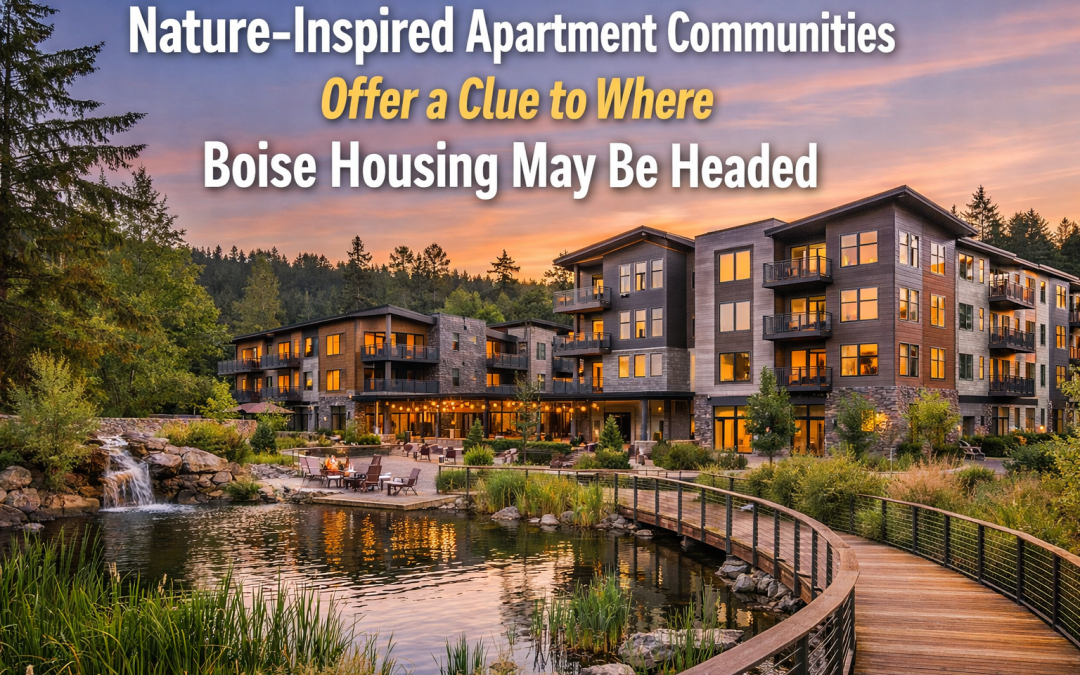
The development, called The Brynn, was created with a goal that might sound unusual for an apartment complex near a busy retail district.
Instead of emphasizing density or urban energy, the project was designed to feel like a wooded retreat connected to nearby wetlands and waterfront landscapes.
The development ultimately delivered:
- 486 apartment units
- Buildings opened in phases over several months
- Ground-floor retail space
- Extensive resident amenities
Amenities include roughly 18,000 square feet of shared spaces, highlighted by a two-story fitness center and gathering areas designed to encourage social interaction among residents.
The project sits on a hillside surrounded by greenery, creating views and a setting that feels more relaxed than a typical urban apartment environment.
Strategic Location Near Jobs and Retail
One of the key ideas behind the development was creating a place where residents could enjoy both urban convenience and natural surroundings.
The site sits just outside the Totem Lake retail district in Kirkland, offering access to shopping, restaurants, and services while avoiding the busiest traffic zones.
At the same time, the location provides access to major regional transportation routes, including Interstate 405.
For renters working in the region’s expanding technology sector, the combination of accessibility and quality-of-life amenities proved attractive.
Developers intentionally designed the project so residents could live near employment centers while still feeling connected to parks, trails, and natural landscapes.
Phased Construction Helped Manage Demand
Another notable aspect of the project was its construction strategy.
Rather than delivering all apartments at once, the developer released units in multiple phases over about six months.
This allowed residents to begin moving into completed buildings while other portions of the development were still under construction.
Phased delivery can help developers respond to market demand more effectively and manage leasing risk during large multifamily projects.
Industry observers noted that the strategy helped the development maintain strong momentum throughout the lease-up process.
Design Storytelling and Placemaking
The architectural approach also helped distinguish the project.
Each building incorporated design elements inspired by the surrounding natural environment, including wetlands, shorelines, and forest landscapes.
Developers described the concept as “design storytelling”, using materials and color palettes to create a unified identity across the entire property.
The approach helped establish a strong sense of place while reinforcing the connection between the buildings and the surrounding landscape.
Real estate professionals reviewing the project recognized it as a standout example of thoughtful multifamily development.
Local Insight: What Boise Developers Can Learn
From a Boise commercial real estate perspective, several lessons from this project stand out.
First, quality-of-life design is becoming a major driver of apartment demand. Residents increasingly want access to trails, parks, and outdoor environments alongside urban conveniences.
Second, placemaking matters more than ever. Multifamily developments that feel unique and connected to their surroundings often outperform generic apartment projects.
Third, strategic phasing can help developers manage large projects more effectively. Delivering units gradually can support steady leasing activity while reducing financial risk.
Boise already benefits from many of the same advantages that developers are highlighting in other Northwest cities: access to nature, strong population growth, and expanding employment opportunities.
As a result, projects that blend housing, walkability, and outdoor lifestyle amenities may continue shaping the future of Boise development and multifamily housing.
The Bigger Picture for Boise’s Housing Market
The Treasure Valley continues to attract new residents and businesses, which means demand for housing will likely remain strong.
Developers exploring new multifamily projects may increasingly focus on environments that combine:
- Proximity to jobs
- Walkable access to retail
- Outdoor recreation opportunities
- High-quality amenities
These factors have become defining characteristics of many successful apartment communities across the western United States.
For investors and developers watching Boise commercial real estate, projects like this demonstrate how thoughtful design and location strategy can influence the next generation of housing developments.
Mike Gioioso (joy-OH-so) has for 16+ years been helping companies of all sizes buy, build, and lease perfect places for business in greater Boise, Idaho and beyond.
www.streetsmartidaho.com
mike@streetsmartidaho.com
208-209-9166
Tags: #BoiseCommercialRealEstate, #BoiseDevelopment, #BoiseMultifamily, #TreasureValleyHousing, #ApartmentDevelopment, #RealEstateTrends, #NorthwestRealEstate, #HousingDevelopment, #UrbanDevelopment, #BoiseHousingMarket