
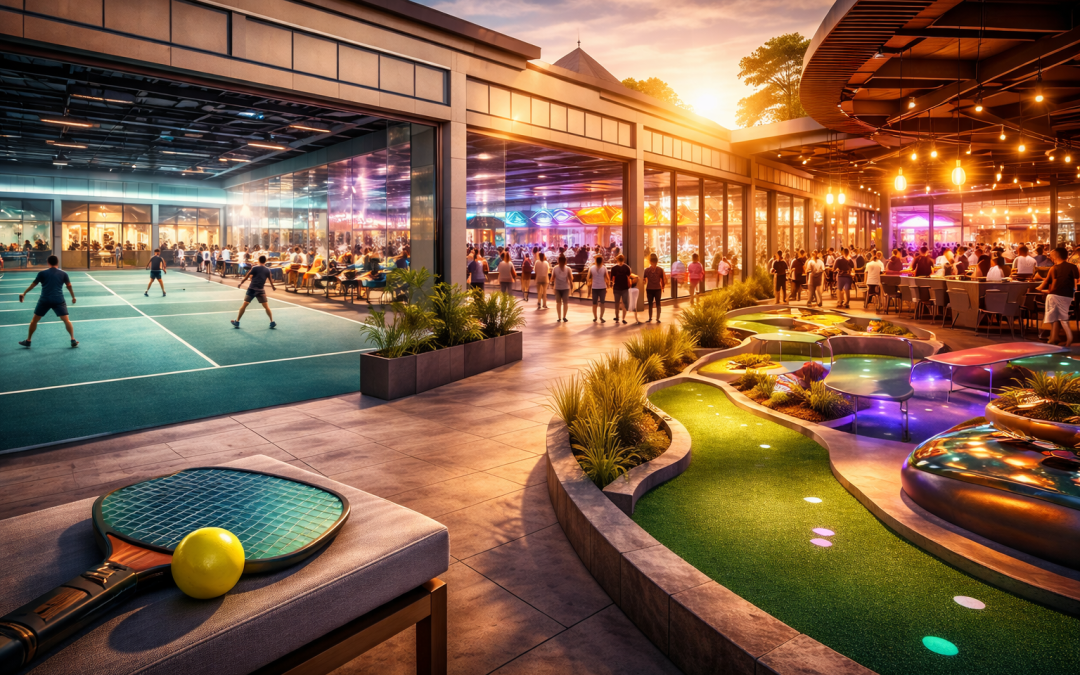
Why Pickleball and Experiential Tenants Are Becoming Major Drivers of Retail Leasing
Walk through many retail centers today and you’ll notice something changing. Traditional stores are still there, but more and more space is being filled by businesses built around experiences — places people go to play, socialize, or stay active.
That shift is becoming increasingly visible across the country.
According to reporting by Elliott Krivenko in CoStar Group (you can read the original article here: https://product.costar.com/home/news/1595397002), activity-focused tenants such as pickleball clubs, entertainment venues, and recreation concepts are taking a growing share of large retail spaces across the Puget Sound region.
While the report focuses on the Seattle area, the broader trend offers useful insight into how Boise commercial real estate may continue evolving — especially when it comes to filling larger retail spaces.
The Rise of Experiential Retail
Retail demand is no longer driven only by traditional stores. Businesses centered on physical experiences are becoming some of the most active tenants in larger retail footprints.
These “experiential” users include:
- recreation concepts
- fitness operators
- entertainment venues
- interactive food and beverage concepts
One category drawing particular attention is pickleball.
Over the past year, several large leases tied to the sport have been signed across the Seattle region. Clubs dedicated to the rapidly growing game have taken spaces ranging from roughly fifteen thousand to more than forty thousand square feet.
In total, about one hundred forty thousand square feet of leasing activity in the region has been tied to pickleball facilities alone.
Other experiential concepts are also expanding into retail environments, including indoor golf venues, recreation centers, and entertainment-focused dining concepts.
Why Larger Retail Spaces Are Attracting Activity-Based Tenants
Retail leasing patterns are becoming increasingly segmented by space size.
According to the analysis, small storefronts remain scarce in many retail corridors. Units under about five thousand square feet make up the majority of lease transactions.
But larger spaces tell a different story.
As some traditional big-box users shrink or relocate, more large retail boxes and open-floor-plan buildings have become available. Those properties are often ideal for experiential tenants that need wide layouts for courts, recreation areas, or entertainment spaces.
In the Seattle region, this shift is already influencing both leasing and investment activity. For example, a former grocery store property was recently acquired by a fitness brand that plans to convert the building into a large athletic club.
That type of repositioning is becoming more common across U.S. retail markets.
What This Trend Could Mean for Boise Retail Leasing
Although the Puget Sound market is larger than the Treasure Valley, many of the same retail trends are beginning to appear in Boise development patterns.
In particular, experiential tenants are gaining traction across the Boise metro area.
Examples already visible in the local market include:
- indoor recreation facilities
- boutique fitness studios
- entertainment-based dining concepts
- sports-focused venues
These users often seek spaces that traditional retailers once occupied — large footprints, high ceilings, and flexible layouts.
For landlords with vacant big-box space, that shift can create new leasing opportunities.
At the same time, smaller neighborhood storefronts across the Boise metro continue to lease quickly due to limited supply and steady population growth.
Local Market Impact
For investors and developers watching Boise commercial real estate, the rise of experiential tenants highlights an important structural shift in retail.
Rather than competing directly with e-commerce, many newer retail concepts are designed around experiences that cannot be replicated online.
That dynamic is supporting demand for space tied to:
- recreation
- entertainment
- social gatherings
- food and beverage
As Boise’s population continues to grow, those uses may play a larger role in filling retail centers and repositioning older properties.
Large vacant spaces that once relied on department stores or traditional retailers could increasingly attract activity-based tenants looking for room to create something new.
My Take: Retail Is Becoming More Social
Retail has always been about more than just transactions. But the balance is clearly shifting toward experiences.
For Boise investors and landlords, that means thinking differently about how retail space is used.
Tenants that bring people together — whether through sports, entertainment, or interactive dining — are becoming some of the strongest drivers of leasing activity in many markets.
As population growth continues across the Treasure Valley, I expect experiential retail concepts to play an expanding role in retail leasing in Boise, especially in larger spaces that require creative reuse.
For owners of big retail boxes or flexible warehouse-style buildings, that trend could represent one of the most interesting opportunities in the next phase of the market cycle.
Mike Gioioso (joy-OH-so) has for 16+ years been helping companies of all sizes buy, build, and lease perfect places for business in greater Boise, Idaho and beyond.
www.streetsmartidaho.com mike@streetsmartidaho.com 208-209-9166
Tags: #boisecommercialrealestate, #boiseretailleasing, #boiseretailrealestate, #boisedevelopment, #treasurevalleyretailmarket, #experientialretailtrends, #boiseentertainmentvenues, #boisefitnessbusinesses, #boisecommercialproperty, #boiseinvestmentproperty, #boiseretailtenants, #treasurevalleycommercialrealestate, #boiseeconomicgrowth, #boiseretaildevelopment, #boisebusinessgrowth