
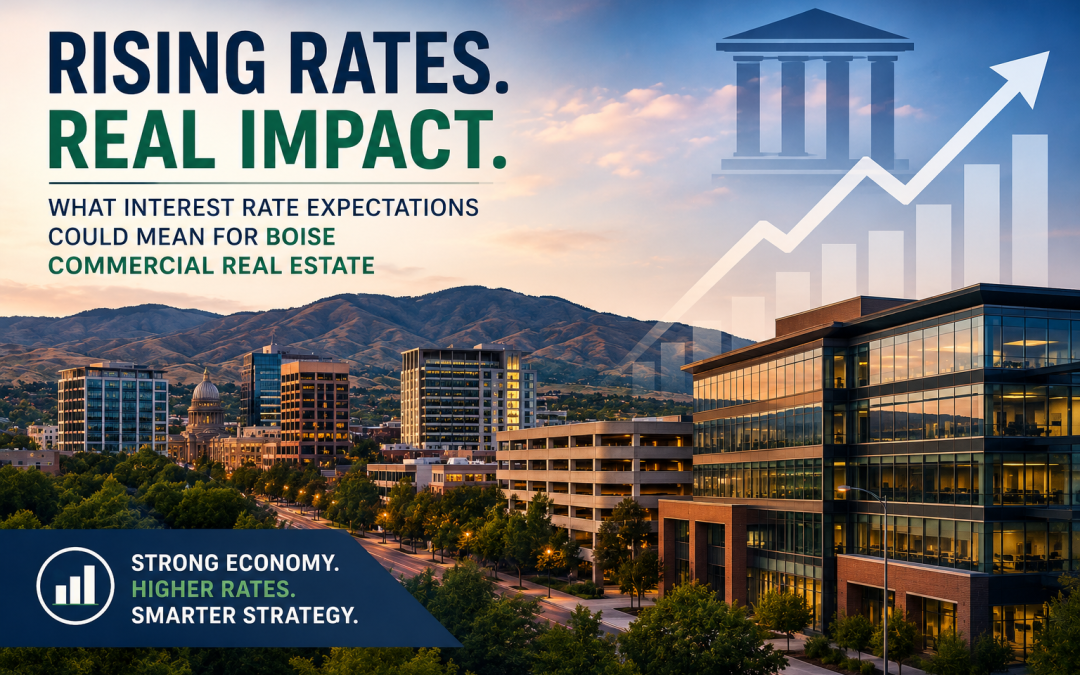
What Rising Interest Rate Expectations Could Mean for Boise Commercial Real Estate in 2026
Commercial real estate doesn’t just react to today’s interest rates.
It reacts to where investors, lenders, and businesses think rates are headed next.
A recent shift in financial markets suggests that borrowing costs may remain elevated longer than many had hoped. For Boise commercial real estate investors, developers, landlords, and business owners, that could influence everything from property values to development activity during the second half of 2026.
According to Reuters reporting published by the Idaho Business Review, investors significantly increased expectations for a Federal Reserve rate increase later this year after a stronger-than-expected U.S. jobs report. You can read the original Idaho Business Review article here:
https://idahobusinessreview.com/2026/06/05/us-rate-futures-increase-fed-hike-odds-december/
While the story focuses on national economic data, the potential effects could eventually reach commercial real estate markets throughout Idaho.
A Strong Economy May Delay Lower Borrowing Costs
For much of the past year, many investors anticipated the Federal Reserve would eventually begin lowering interest rates.
The latest employment data may have complicated that outlook.
According to the report, employers added approximately 172,000 jobs during May, far exceeding economist forecasts. Previous months were also revised higher, suggesting the labor market remains stronger than expected.
As a result, futures markets increased the probability of another Federal Reserve rate increase before year-end.
The Fed is still expected to leave rates unchanged at its upcoming meeting, but expectations for future policy have shifted considerably.
Key Takeaways
- U.S. job growth remains stronger than expected
- Markets increased the probability of a December rate hike
- Expectations for rate cuts have weakened
- Inflation remains a major concern for policymakers
- Commercial borrowing costs could remain elevated longer
For commercial real estate professionals, these trends matter because financing costs influence nearly every segment of the market.
Why Commercial Real Estate Watches the Federal Reserve So Closely
Interest rates affect much more than mortgage payments.
Higher rates can influence:
- Commercial property values
- Investor acquisition activity
- Development feasibility
- Construction financing
- Small business expansion plans
- Tenant leasing decisions
When borrowing becomes more expensive, buyers often require higher returns. That can place downward pressure on asset pricing, particularly in markets where valuations rose rapidly during periods of low interest rates.
At the same time, strong employment growth is generally positive for commercial real estate demand.
More jobs often create additional need for office space, industrial facilities, retail locations, healthcare properties, and housing.
That creates an interesting dynamic.
A healthy economy supports occupancy and leasing activity, while higher interest rates can create challenges for financing and development.
What Boise Investors Should Be Watching
The Boise market continues benefiting from population growth, business formation, and migration trends that have supported commercial real estate demand for years.
However, financing conditions remain one of the biggest variables facing the market.
If rates stay higher for longer, several trends may continue:
Development May Remain Selective
Projects with strong fundamentals and favorable locations will likely continue moving forward.
More speculative developments may face greater scrutiny from lenders and investors.
Investment Sales Could Stay Disciplined
Many buyers have adjusted underwriting assumptions to account for elevated borrowing costs.
Cap rates may continue to experience pressure in certain sectors as investors seek additional yield.
Leasing Activity Could Outperform Sales Activity
In some markets, tenants choose leasing flexibility rather than property ownership when financing costs remain elevated.
This could continue supporting retail leasing, office leasing, and industrial leasing activity across the Treasure Valley.
Owner-Users May Face Tougher Decisions
Businesses considering property purchases may find themselves comparing higher ownership costs against increasingly competitive leasing opportunities.
Local Insight
One of the most important lessons from the past several years is that commercial real estate fundamentals and interest rates do not always move in the same direction.
Boise continues benefiting from many of the factors that attract long-term investment: population growth, business expansion, a diversified economy, and a relatively affordable cost structure compared with larger western markets.
The challenge is that capital remains expensive.
If the labor market stays strong and inflation remains stubborn, the Federal Reserve may have less flexibility to reduce rates than many investors anticipated earlier this year.
For Boise commercial real estate professionals, that likely means continuing to focus on properties with strong cash flow, quality tenants, and realistic development assumptions.
The market may not see the financing relief many hoped for in 2026, but strong economic growth could continue supporting leasing demand and long-term investment opportunities throughout the Treasure Valley.
Mike Gioioso (joy-OH-so) has for 16+ years been helping companies of all sizes buy, build, and lease perfect places for business in greater Boise, Idaho and beyond.
www.streetsmartidaho.com mike@streetsmartidaho.com 208-209-9166
Tags: #boisecommercialrealestate, #commercialrealestate, #boisedevelopment, #interestrates, #federalreserve, #boiseinvestors, #commercialproperty, #realestateinvestment, #economicdevelopment, #boisebusiness, #retailleasingboise, #officeleasing, #industrialrealestate, #commerciallending, #caprates