
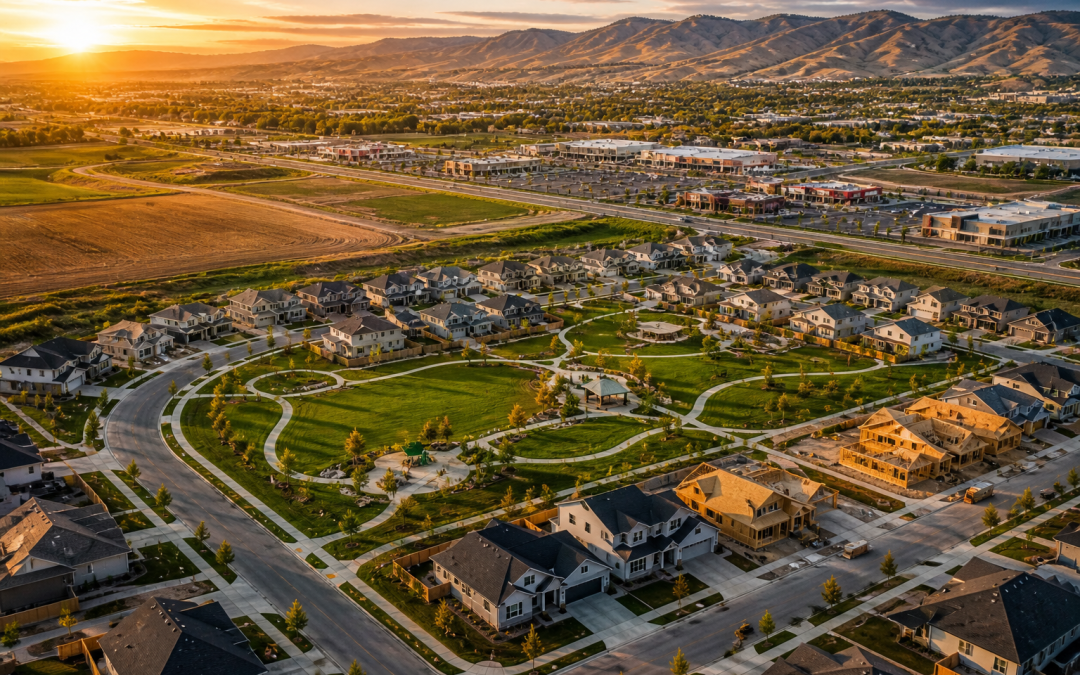
Caldwell Growth Moves Forward: What a 194-Home Approval Signals for Boise Commercial Real Estate
Growth in the Treasure Valley doesn’t slow down quietly—it shows up in decisions like this.
A recent subdivision approval in Caldwell is more than just new rooftops. It’s a signal about where growth is heading, how cities are managing it, and what it means for Boise commercial real estate moving forward.
A Fast Look at the Project
According to reporting by Mariela Esquivel-Rodriguez in the Idaho Press (read the original article here: https://www.idahopress.com/news/local/new-194-home-subdivision-approved-in-split-city-council-vote/article_a0a63511-a22d-49a8-af14-05d82ee0f955.html), a sizable new residential community is officially moving ahead in Caldwell after a closely divided city council vote.
Here are the key details:
- 194 single-family homes planned
- Located in southwest Caldwell near Lake Avenue and Cirrus Drive, close to Karcher Road
- Total project size: about 66 acres
- Nearly 10 acres dedicated to open space, including parks, paths, and amenities
- Development will roll out in multiple phases through the early 2030s
- Construction expected to begin next year, with early move-ins projected around 2027–2028
The project required annexation and rezoning, shifting land use to support higher-density residential growth.
What’s Changing: Growth Is Pushing West
This project highlights a trend that’s been building for years:
Caldwell and the western Treasure Valley are absorbing a larger share of regional growth.
Why this location matters:
- Close to State Highway 55, a major corridor for commuters and commerce
- Surrounded by a mix of existing neighborhoods, apartments, schools, and planned commercial uses
- Positioned near expanding employment zones
In other words, this isn’t isolated housing—it’s part of a larger growth ecosystem.
And that matters for everything from retail leasing in Boise to long-term land values across the region.
Why It Matters for Boise Commercial Real Estate
Residential growth is the foundation of almost every commercial real estate trend.
When rooftops increase, demand follows.
1. Retail and service demand will expand
194 homes may not sound massive—but developments like this stack up quickly.
More households mean:
- Increased need for grocery, restaurants, and neighborhood retail
- Demand for medical office and service-based businesses
- More traffic supporting future commercial pads nearby
This is exactly how retail corridors grow over time.
2. Developers are building “communities,” not just subdivisions
This project includes:
- Central parks
- Walking paths
- Recreation features like courts and a pool
That’s intentional.
Today’s buyers expect lifestyle-driven neighborhoods, and that influences nearby commercial development—especially experiential retail and service uses.
3. Infrastructure is becoming the limiting factor
Not everyone supported the project—and that’s important.
Concerns raised included:
- Traffic access and future road design
- School capacity within the Vallivue School District
- Timing of infrastructure improvements like a future roundabout
This is becoming a recurring theme across Boise development trends:
👉 Growth is happening—but infrastructure is trying to catch up.
For investors and developers, that creates both risk and opportunity, depending on timing and location.
Local Market Impact: What to Watch Next
This project is part of a bigger story.
Here’s what I’m paying attention to:
Commercial follow-through
Residential projects like this almost always lead to retail and office demand nearby—but timing is everything.
Phased development = phased opportunity
With buildout stretching into the 2030s, this isn’t a quick hit.
It creates long-term demand pipelines for:
- Retail leasing
- Land development
- Investment property acquisitions
Westward expansion pressure
As Boise and Meridian continue to fill in, Caldwell becomes more attractive for both housing and commercial users looking for affordability and space.
My Take: This Is How Growth Compounds
One subdivision doesn’t change a market.
But dozens of projects like this? That’s how an entire region shifts.
In Boise commercial real estate, the smart players are already watching:
- Where rooftops are going
- Where infrastructure is planned (or delayed)
- Where commercial demand will show up next
This Caldwell project checks a lot of boxes:
- Location near growth corridors
- Integration with future commercial uses
- Long-term phased delivery
That combination tends to create predictable, compounding demand.
If you’re thinking about retail, land, or investment property in the Treasure Valley, the question isn’t just:
“What’s happening today?”
It’s:
“Where will the rooftops be in five years?”
Mike Gioioso (joy-OH-so) has for 16+ years been helping companies of all sizes buy, build, and lease perfect places for business in greater Boise, Idaho and beyond.
www.streetsmartidaho.com mike@streetsmartidaho.com 208-209-9166
Tags: #boisecommercialrealestate, #caldwellidahodevelopment, #treasurevalleygrowth, #boisedevelopmenttrends, #residentialgrowthboise, #retailleasingboise, #mixedusedevelopmentboise, #boiseinvestmentproperty, #caldwellsubdivisions, #idahorealestatedevelopment, #boisehousinggrowth, #commerciallanddevelopmentboise, #vallivueschooldistrictgrowth, #suburbanexpansionboise, #boiserealestatetrends