
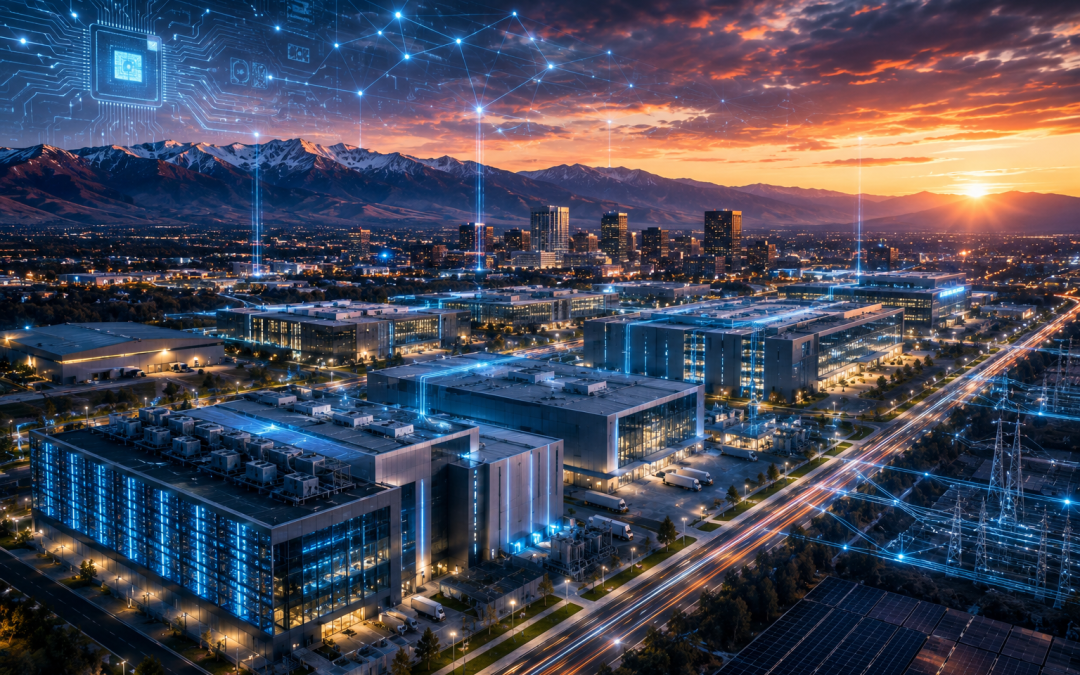
Why the AI Semiconductor Boom Could Eventually Shape Boise Commercial Real Estate
Wall Street’s obsession with artificial intelligence is no longer just a stock market story.
It is increasingly becoming an infrastructure story — and that could eventually create major ripple effects for Boise commercial real estate, industrial development, energy demand, and technology investment across the Mountain West.
According to reporting by Idaho Business Review, which republished a Reuters analysis by Lewis Krauskopf, semiconductor stocks have surged dramatically in 2026 as investors continue pouring money into AI-related infrastructure and computing systems.
You can read the original article here: Semiconductor surge risks cooling US stock rally
But underneath the stock market excitement is a much larger economic trend that Boise developers, investors, and commercial real estate professionals should probably be paying attention to.
The AI Boom Is Becoming a Real Estate Story
Much of the national conversation has focused on soaring stock prices for companies like NVIDIA, Advanced Micro Devices, Intel, and Micron Technology.
But the bigger long-term trend may be the enormous amount of physical infrastructure required to support artificial intelligence growth.
The Reuters report notes that semiconductor companies are benefiting from huge spending tied to:
- AI data centers
- Advanced computing systems
- Networking infrastructure
- Memory and storage expansion
- Cloud computing growth
- High-performance processing demand
That matters because AI is not just software.
It requires massive buildings, power capacity, cooling systems, fiber connectivity, warehouse distribution, manufacturing space, and specialized industrial infrastructure.
And many secondary markets — including parts of Idaho — are increasingly positioning themselves to benefit from that growth.
Why Boise Could Eventually Benefit
Boise already has several advantages that align with long-term technology infrastructure trends:
- Existing semiconductor history through Micron Technology
- Lower operating costs than many coastal markets
- Growing industrial development pipelines
- Expanding population and workforce growth
- Increasing regional data infrastructure
- Proximity to western logistics corridors
- Available land compared to larger tech metros
As AI-related industries expand nationwide, secondary growth markets could see increased demand for:
- Industrial real estate
- Flex buildings
- Office campuses
- Power-intensive development sites
- Data infrastructure facilities
- Research and manufacturing space
That does not mean Boise suddenly becomes Silicon Valley.
But it does mean Idaho commercial real estate may increasingly participate in broader national technology supply chains.
Investors Are Watching for a Market Pullback
One of the more important themes in the Reuters report is growing concern that semiconductor stocks may be overheating after massive gains this year.
The article notes:
- The Philadelphia Semiconductor Index has climbed roughly 64% since late March
- Semiconductor stocks now represent a major share of the S&P 500
- Some investors are comparing current momentum to the dot-com era
- Technical indicators suggest the sector may be overbought
Even bullish investors quoted in the story acknowledged the possibility of short-term volatility.
From a Boise commercial real estate perspective, this matters because rapid technology expansion cycles often create uneven development patterns.
When capital floods into one industry quickly, some markets experience aggressive construction activity, followed by periods of slower absorption or recalibration.
That is something industrial developers, land investors, and office owners across growth markets continue monitoring carefully.
AI Infrastructure Could Drive Industrial Growth
One of the most overlooked aspects of the AI economy is how physical it actually is.
Artificial intelligence requires enormous energy consumption, specialized facilities, and highly connected infrastructure networks.
That creates opportunities far beyond just software companies.
Industries that may benefit include:
- Industrial development
- Energy infrastructure
- Construction
- Advanced manufacturing
- Logistics
- Fiber and communications networks
- Cooling and HVAC systems
- Data center support services
For Boise development, this could support long-term demand for industrial land, flex space, and infrastructure-oriented commercial projects.
Local Insight
The stock market headlines grab attention, but the more important story may be what happens underneath the surface economy.
Large AI investment cycles tend to reshape real estate markets over time because technology growth eventually requires physical expansion.
Boise has already spent years building momentum in technology, advanced manufacturing, and industrial development. If the AI infrastructure race continues accelerating nationally, Idaho could benefit from some of the secondary demand tied to those industries.
The biggest winners may not only be chip companies themselves.
They may also include the regions capable of supporting the infrastructure those companies depend on.
Mike Gioioso (joy-OH-so) has for 16+ years been helping companies of all sizes buy, build, and lease perfect places for business in greater Boise, Idaho and beyond.
www.streetsmartidaho.com mike@streetsmartidaho.com 208-209-9166
Tags:#boisecommercialrealestate, #boisedevelopment, #industrialrealestate, #boiseindustrial, #commercialrealestate, #idahocommercialrealestate, #artificialintelligence, #aiinfrastructure, #semiconductorindustry, #microntechnology, #nvidia, #amd, #intel, #datacenters, #industrialdevelopment, #technologyinfrastructure