
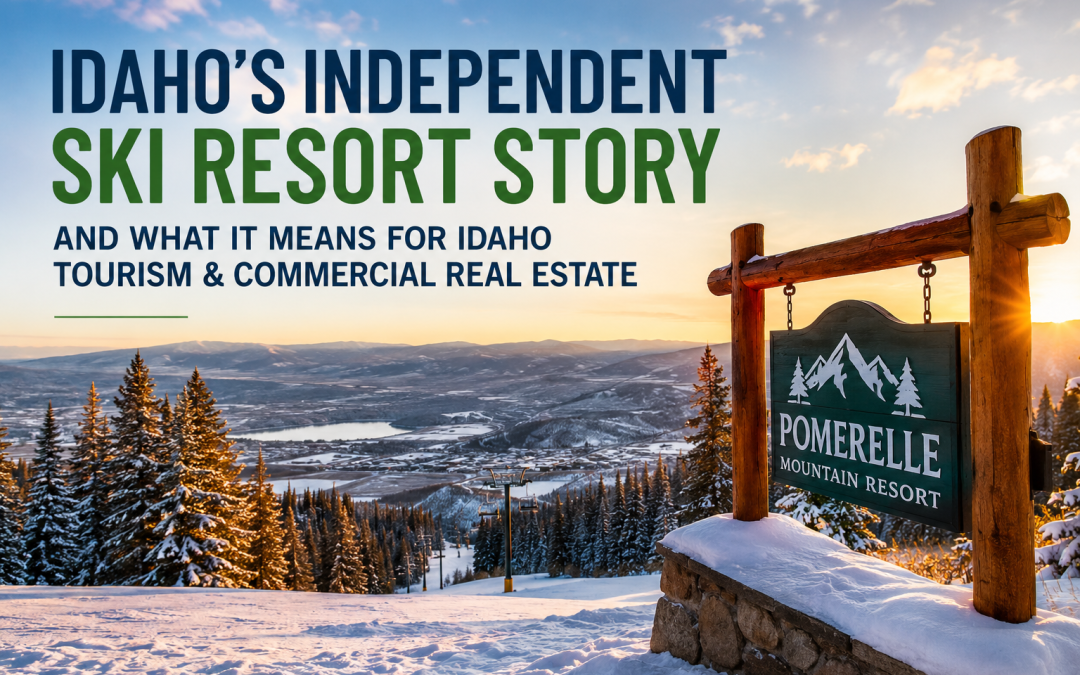
Idaho’s Independent Ski Resort Story Reflects a Bigger Trend in Idaho Tourism and Commercial Real Estate
There is a growing divide happening across the recreation and hospitality world.
Many ski resorts around the country are becoming larger, more expensive, and increasingly corporate. But at the same time, smaller independent destinations are finding a loyal audience by focusing on affordability, authenticity, and community connection.
That trend is becoming more important across Idaho commercial real estate and tourism-driven development.
According to reporting by Idaho Business Review journalist Brooke Strickland, longtime mountain manager Zack Alexander recently purchased Pomerelle Mountain Resort after years of working at the resort and growing deep family ties to the mountain. You can read the original article here: From family ties to business ownership, a lifelong dream is realized with Pomerelle Mountain Resort
What makes the story especially interesting is not just the ownership transition itself.
It is what the resort represents in today’s changing recreation economy.
Idaho’s Outdoor Economy Continues Expanding
Idaho’s population growth and tourism visibility have reshaped how investors and developers think about recreation-based properties.
Over the last several years, Idaho has seen rising interest in:
- Destination hospitality
- Outdoor recreation businesses
- Resort-area housing
- Adventure tourism
- Experience-driven retail and dining
- Short-term rental markets
That creates ripple effects throughout Idaho commercial real estate, especially in resort and tourism corridors.
Pomerelle may not compete directly with larger national ski destinations, but that is exactly the point. The resort reportedly attracts roughly 45,000 to 50,000 skier visits annually while maintaining a more approachable and family-oriented experience. The operation also supports around 100 seasonal workers during peak winter months in addition to year-round staff.
For smaller Idaho communities, operations like this can become major regional economic anchors.
Why Independent Resorts Matter
One of the more important themes in the Idaho Business Review story is Alexander’s emphasis on staying independent and avoiding the highly corporate direction many ski operators have taken.
That matters more than many people realize.
Across the western United States, recreation users are increasingly looking for experiences that feel local, affordable, and less commercialized. Independent ski resorts can often create stronger emotional loyalty because they feel tied to the surrounding community instead of functioning like interchangeable national brands.
That can influence surrounding commercial real estate activity in several ways:
Tourism Spending Supports Local Business Growth
Visitors spending money on skiing often support:
- Restaurants
- Lodging
- Retail shops
- Gas stations
- Equipment rentals
- Vacation properties
Even modest-sized resorts can create meaningful economic activity for nearby communities.
Workforce and Seasonal Employment Impact Smaller Markets
The resort’s seasonal staffing needs also highlight how recreation businesses contribute to local employment ecosystems. In smaller Idaho markets, even seasonal labor demand can help support housing activity, service businesses, and local retail spending.
Experience-Based Travel Is Growing
Consumers increasingly prioritize experiences over traditional retail spending. That trend has already influenced Boise development patterns, hospitality projects, and mixed-use concepts across the Treasure Valley.
Outdoor recreation destinations help strengthen Idaho’s overall tourism brand, which indirectly benefits larger regional markets including Boise and the broader Treasure Valley.
What This Means for Idaho Commercial Real Estate
From a commercial real estate perspective, this story reflects a broader statewide trend:
People are increasingly choosing Idaho not only for affordability or job growth, but for lifestyle access.
That lifestyle component is becoming a larger economic driver.
Outdoor recreation, hospitality, tourism, and destination-oriented businesses are now influencing:
- Land values
- Hospitality investment
- Retail demand
- Resort-area development
- Mixed-use projects
- Vacation housing demand
- Regional tourism infrastructure
Even though Pomerelle Mountain Resort operates far outside the Boise metro, stories like this still matter to investors and developers tracking Idaho growth trends.
The state’s identity as an outdoor recreation destination continues strengthening, and that creates long-term economic implications well beyond ski slopes alone.
Local Insight
One of the most interesting parts of this story is that the new ownership did not center around massive expansion plans or luxury repositioning.
Instead, the focus appears to be preserving affordability and maintaining the culture that made the resort successful in the first place.
That approach may actually become a competitive advantage.
In many industries right now — including hospitality, retail leasing, and entertainment-focused real estate — consumers are showing stronger interest in businesses that feel authentic and community-rooted.
As Idaho continues growing, there will likely be increasing demand for destinations that still feel personal instead of overbuilt or overly corporate.
That may become one of the biggest long-term opportunities across Idaho tourism and commercial real estate.
Mike Gioioso (joy-OH-so) has for 16+ years been helping companies of all sizes buy, build, and lease perfect places for business in greater Boise, Idaho and beyond.
www.streetsmartidaho.com mike@streetsmartidaho.com 208-209-9166
Tags: #idahocommercialrealestate, #boisecommercialrealestate, #idahotourism, #outdoorrecreation, #skiresort, #pomerellemountainresort, #idahodevelopment, #boisedevelopment, #hospitalityrealestate, #tourismeconomy, #idahobusiness, #magicvalley, #albionidaho, #destinationdevelopment, #experienceeconomy