
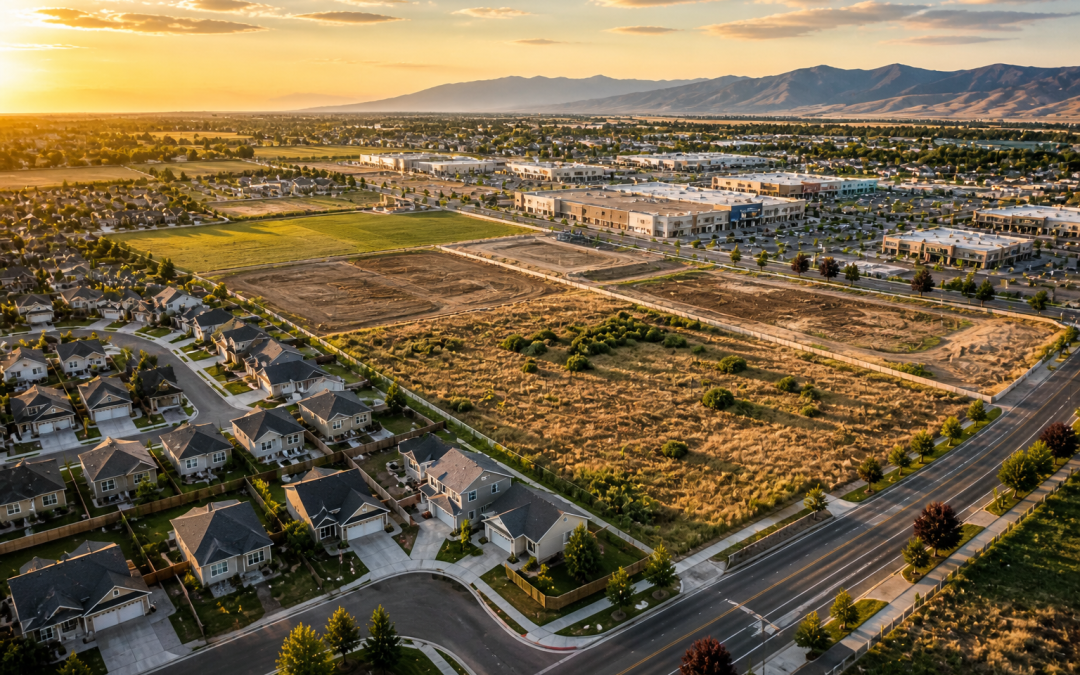
Caldwell Growth Tension: Housing vs. Commercial Land — What It Means for Boise Commercial Real Estate
Growth is rarely simple.
And in fast-moving markets like the Treasure Valley, one of the biggest questions isn’t if development should happen—it’s what kind.
A recent debate in Caldwell highlights a challenge we’re seeing more often in Boise commercial real estate: how to balance housing demand with the need for long-term commercial space.
What’s Happening — A Split Decision on Land Use
According to reporting by Mariela Esquivel-Rodriguez in the Idaho Press (read the original article here: https://www.idahopress.com/news/local/caldwell-city-council-divided-on-rezone-request-for-mixed-use-subdivision/article_8a36cac9-24de-43c1-a695-729f9ed2ca4d.html), the Caldwell City Council is currently divided over a proposed mixed-use development near South 10th Avenue and Ustick Road.
Here’s what’s on the table:
- A 16+ acre project combining residential and commercial uses
- Proposal includes 56 single-family homes
- Roughly half the land would shift from commercial to residential zoning
- Plans still include seven commercial lots
- The council ended in a 3-3 tie vote, delaying a final decision
- The mayor will cast the deciding vote at a future meeting
The bigger story isn’t just this project—it’s the uncertainty around land priorities.
What’s Changing — The Fight for Commercial Land Is Real
This debate reflects a growing tension across the Treasure Valley:
1. Housing Demand Is Pressuring Commercial Zoning
Developers are pushing for more residential because:
- It’s often easier to finance
- Demand is immediate and strong
- It can be built and sold faster
But every acre shifted to housing is one less acre available for future retail, office, or services.
2. Commercial Demand Exists—But Timing Is the Issue
One key detail: the developer didn’t have committed commercial tenants yet.
That’s common.
Retail and service users often follow rooftops—not the other way around.
Still, cities are asking:
Do we protect commercial land now… or trust it will come later?
That’s a critical question for Boise development trends.
3. Community Concerns Are Shaping Projects More Than Ever
Neighbors raised concerns about:
- Traffic and access points
- Noise from future commercial users
- Building heights and privacy
At the same time, others supported the project, pointing out a lack of nearby services like:
- Coffee shops
- Daycares
- Fitness spaces
That push-and-pull is becoming standard in growing submarkets.
Why This Matters for Boise Commercial Real Estate
This isn’t just a Caldwell issue—it’s a regional signal.
For Investors:
Land designated for commercial use is becoming more valuable—not less.
If cities start limiting rezoning, existing commercial parcels could:
- Increase in scarcity
- Command higher prices
- Become more strategic long-term holds
For Developers:
Mixed-use projects are getting more complex.
Success now depends on:
- Thoughtful site planning
- Balancing residential density with usable commercial space
- Phasing development to match demand
Simply proposing “mixed-use” isn’t enough anymore—the details matter.
For Retail and Service Tenants:
There’s opportunity here.
As more neighborhoods grow without immediate commercial development, it creates:
- Underserved pockets
- Strong future leasing demand
- First-mover advantages
That’s a big deal for retail leasing Boise and surrounding markets like Caldwell and Nampa.
Local Market Impact — Where This Shows Up Next
Expect to see more of these debates across the Treasure Valley, especially in:
- Caldwell growth corridors
- Nampa expansion areas
- Meridian fringe development zones
Key trends to watch:
- Cities becoming more protective of commercial zoning
- More conditions placed on mixed-use approvals
- Increased focus on traffic and infrastructure planning
- Greater scrutiny of residential density vs. service access
My Take — The Real Risk Is Short-Term Thinking
It’s easy to prioritize housing because the demand is immediate.
But here’s the risk:
If too much land shifts to residential, you end up with neighborhoods that lack essential services.
That leads to:
- Traffic congestion (people driving farther for basics)
- Missed retail opportunities
- Lower long-term property values
The best projects—and the smartest cities—are the ones that plan for both today and tomorrow.
Bottom line:
This Caldwell decision is about more than one project—it’s about how the Treasure Valley manages growth. And for anyone involved in Boise commercial real estate, these land-use decisions will shape where the next wave of opportunity shows up.
Mike Gioioso (joy-OH-so) has for 16+ years been helping companies of all sizes buy, build, and lease perfect places for business in greater Boise, Idaho and beyond.
www.streetsmartidaho.com mike@streetsmartidaho.com 208-209-9166
Tags: #boisecommercialrealestate, #caldwellidahodevelopment, #boisedevelopmenttrends, #mixedusedevelopmentboise, #retailleasingboise, #commercialzoningidaho, #landuseplanningboise, #treasurevalleygrowth, #caldwellsubdivisions, #boiseinvestmentproperty, #commerciallanddevelopment, #residentialvscommercialzoning, #idahorealestatetrends, #nampadevelopmentgrowth, #meridianidahoexpansion