
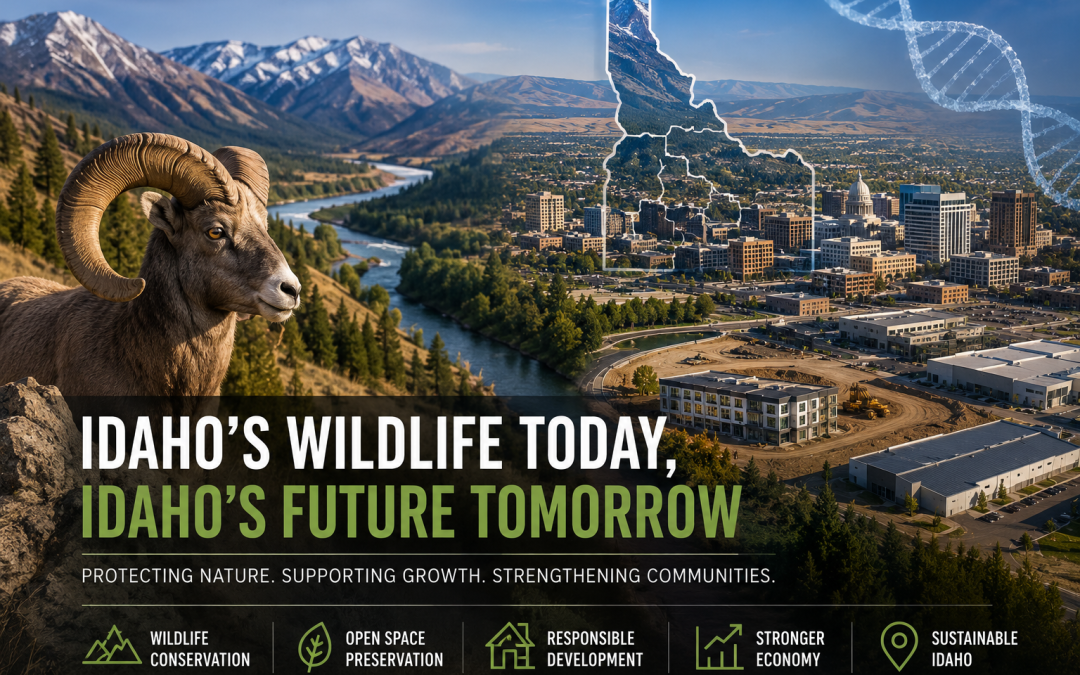
Idaho’s Wildlife Decline Could Quietly Affect Land, Development, and Outdoor Real Estate Across the State
When people think about Boise commercial real estate, wildlife conservation is probably not the first thing that comes to mind.
But long-term environmental shifts can have major ripple effects on land values, recreation economies, tourism, rural development, and even future growth planning across Idaho.
A newly released study involving Idaho bighorn sheep highlights just how much the state’s natural landscape has changed over the past century — and why those changes matter beyond wildlife management alone.
According to reporting published in the Idaho Business Review from the University of Idaho, researchers found that Idaho’s Rocky Mountain bighorn sheep populations have lost substantial genetic diversity over the last 100 years due to population decline, habitat fragmentation, and reduced connectivity between herds. You can read the original coverage here: Idaho Business Review article
What the Research Found
The study examined DNA from historical bighorn sheep samples dating back to the late 1800s and compared them with modern populations.
Researchers discovered several important findings:
- Idaho’s historical sheep populations were far more genetically connected
- Desert bighorn lineage DNA once appeared in roughly 35% of sheep studied
- Today, that genetic signal is nearly gone
- Modern populations are now separated into several isolated groups
- Some herds show increasing signs of long-term isolation
The report also noted that habitat fragmentation and historic population losses likely played a major role in reducing movement and genetic mixing between populations.
While the topic may seem centered on wildlife science, the broader issue connects directly to how Idaho manages growth, land use, recreation, and environmental pressure.
Why This Matters Beyond Wildlife
Idaho’s outdoor identity plays a major role in the state’s economy and long-term growth appeal.
People move to Idaho for:
- Open space
- Recreation access
- Public lands
- Hunting and fishing
- Scenic landscapes
- Outdoor lifestyle quality
Those same qualities help fuel:
- Residential migration
- Tourism spending
- Recreation-based business growth
- Hospitality demand
- Rural investment activity
- Land development interest
As Idaho continues growing rapidly, balancing development with environmental preservation is becoming a bigger issue statewide.
That conversation increasingly affects:
- Land entitlement discussions
- Infrastructure expansion
- Rural development approvals
- Recreation corridor planning
- Conservation policy
- Long-term land values
The Growing Pressure on Idaho Land
The Treasure Valley has experienced major population growth over the past decade, and that expansion continues pushing farther outward into previously undeveloped areas.
That includes growth near:
- Mountain corridors
- River systems
- Agricultural land
- Wildlife habitat zones
- Recreation areas
For developers and investors involved in Boise development, this creates both opportunity and complexity.
Demand for housing, industrial development, and commercial expansion remains strong.
But environmental considerations are also becoming more important in planning discussions — especially in Idaho communities where outdoor access and conservation remain central to local identity.
What This Could Mean for Future Development Trends
One of the biggest themes emerging across western states is the increasing intersection between growth and environmental management.
In Idaho, that could eventually influence:
- Zoning decisions
- Public land policy
- Infrastructure placement
- Recreation-driven development
- Tourism investment
- Rural land pricing
- Conservation partnerships
Areas with strong outdoor recreation appeal often experience higher long-term demand from both residents and investors.
That is one reason why environmental quality and habitat preservation increasingly matter to real estate markets — even in commercial development conversations.
Local Insight: Idaho’s Natural Landscape Is Part of Its Economic Value
One reason Boise and the Treasure Valley continue attracting growth is because Idaho offers something many larger metros no longer can:
access to nature, open land, and outdoor recreation.
That lifestyle advantage has real economic value.
It supports tourism, migration, small business growth, and long-term real estate demand.
As Idaho grows, preserving parts of that environmental identity may become increasingly important not just for wildlife — but for the long-term competitiveness of Idaho real estate itself.
For investors, developers, and landowners, the bigger takeaway is simple:
Growth and conservation are no longer separate conversations.
In many parts of the West, they are becoming part of the same long-term economic strategy.
Mike Gioioso (joy-OH-so) has for 16+ years been helping companies of all sizes buy, build, and lease perfect places for business in greater Boise, Idaho and beyond.
www.streetsmartidaho.com mike@streetsmartidaho.com 208-209-9166
Tags: #boisecommercialrealestate, #idaholanddevelopment, #boisedevelopment, #idahorealestatetrends, #environmentalplanningidaho, #boiselanduse, #treasurevalleydevelopment, #idahoconservationland, #boiseinvestmentproperty, #idahogrowthtrends, #outdoorrecreationeconomy, #idahowildlifeconservation, #boiserealestatetrends, #landdevelopmentidaho, #ruralidahodevelopment