
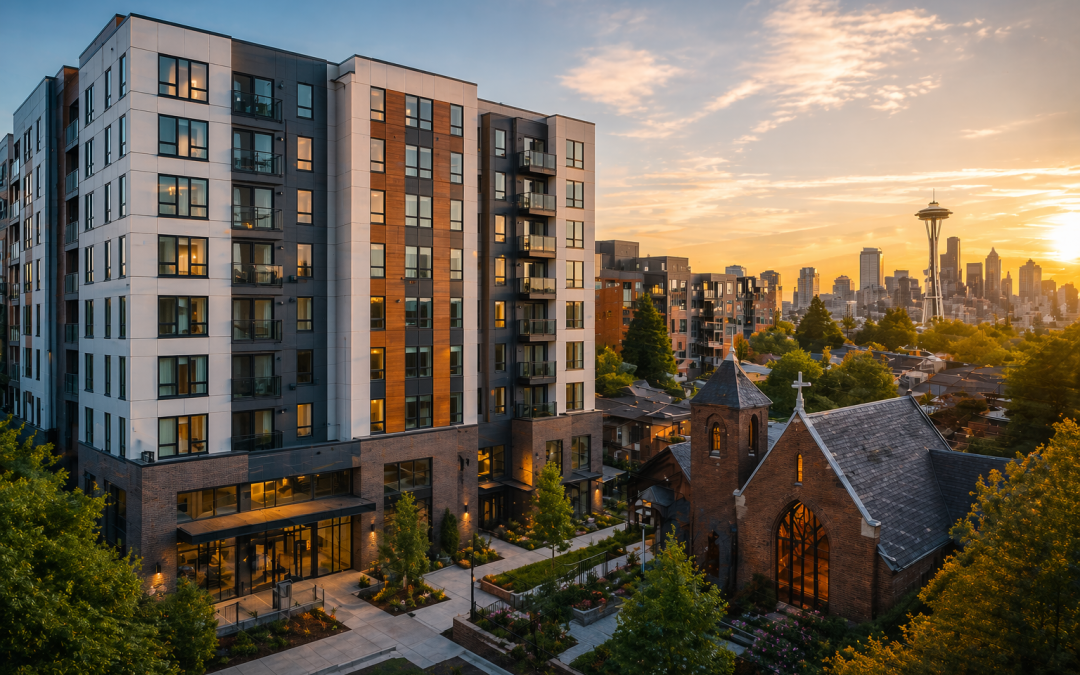
Affordable Housing Breakthrough in Seattle — What It Signals for Boise Development and Commercial Real Estate
Affordable housing doesn’t show up all at once.
It shows up project by project—usually after years of pressure, policy changes, and creative partnerships finally come together.
That’s what’s happening right now in Seattle. And while this story is unfolding in the Ballard neighborhood, the implications reach far beyond the Pacific Northwest—especially for anyone watching Boise commercial real estate.
According to reporting by CoStar News journalist Randyl Drummer (read the original article here: https://product.costar.com/home/news/1628627436), a nonprofit developer has delivered the first new affordable apartment project in Ballard in more than 20 years.
That kind of gap—and what it takes to close it—is where the real story begins.
What’s Changing: Policy + Partnerships Are Unlocking Housing
After decades without new affordable units in Ballard, a new project is finally online—and it didn’t happen by accident.
Key facts from the development:
- An eight-story, 84-unit affordable housing building has been completed
- It’s part of a larger plan totaling nearly 300 apartments
- Built on church-owned land through a ground lease structure
- Targets households earning 50%–60% of area median income
- Backed by a mix of public agencies, private capital, and institutional lenders
This is the result of a very intentional strategy:
Use underutilized land + policy incentives + layered financing to make deals pencil again.
One major catalyst? A city ordinance allowing religious organizations to partner with developers and build denser housing than zoning would normally allow.
That single policy shift helped move this project from concept to reality.
Why It Matters: The Real Constraint Isn’t Demand—It’s Feasibility
Ballard isn’t lacking demand. It’s lacking feasible projects.
Rents in the area are still relatively high—hovering around the low $2,000 range—but rising construction costs and financing challenges have slowed new development.
That’s a dynamic Boise developers know well.
Here’s the bigger takeaway:
- Demand alone doesn’t create housing
- Feasibility does
- And feasibility today often requires policy support + creative land strategies
Without those, even high-demand markets can go decades without meaningful affordable housing delivery.
The Land Play: A Model Boise Should Watch Closely
One of the most important pieces of this deal wasn’t the building—it was the land.
The project sits on property owned by a long-standing religious institution, structured through a ground lease.
That matters because:
- It lowers upfront land acquisition costs
- It allows mission-driven organizations to activate underused land
- It aligns long-term community goals with development outcomes
For Boise development, this is a big idea.
Think about the number of:
- Churches
- Nonprofits
- Legacy landowners
…sitting on well-located land across the Treasure Valley.
That’s not just land—it’s potential housing supply, if the right framework exists.
Local Market Impact: What This Means for Boise Commercial Real Estate
Boise is facing many of the same pressures:
- Rising construction costs
- Workforce housing shortages
- Increasing demand near walkable, amenity-rich areas
So what lessons translate?
1. Policy Can Unlock Projects
Zoning flexibility and density incentives can turn stalled sites into viable developments.
2. Partnerships Are Becoming Essential
The future of housing—especially affordable—will rely on collaboration between private developers, nonprofits, and public agencies.
3. Land Strategy Is Everything
Ground leases and alternative ownership structures could become more common in Boise as developers search for ways to reduce basis.
4. Mixed-Income Projects Are the New Normal
Projects combining affordable, workforce, and market-rate units will likely dominate future pipelines.
My Take: Boise Needs Its Own Version of This Playbook
This isn’t just a Seattle success story—it’s a roadmap.
Boise doesn’t need to copy it exactly. But it does need to adapt the principles:
- Unlock underutilized land
- Encourage flexible zoning where it makes sense
- Support financing structures that bridge feasibility gaps
Because here’s the reality:
If markets like Seattle can go 20 years without delivering affordable housing in a high-demand neighborhood…
Boise isn’t immune to the same outcome.
The difference will come down to how proactive the market is—before the gap gets that wide.
Local Insight: Watch for Quiet Opportunities
In Boise, the biggest opportunities in the next cycle may not come from obvious development sites.
They’ll come from:
- Church-owned land
- Infill properties near downtown Boise, Meridian, and Garden City
- Sites where traditional development hasn’t penciled—yet
That’s where the next wave of Boise commercial real estate innovation is likely to happen.
And the groups that figure out how to structure those deals first?
They’ll have a serious advantage.
Mike Gioioso (joy-OH-so) has for 16+ years been helping companies of all sizes buy, build, and lease perfect places for business in greater Boise, Idaho and beyond.
www.streetsmartidaho.com mike@streetsmartidaho.com 208-209-9166
Tags: #boisecommercialrealestate, #boisedevelopment, #affordablehousingboise, #workforcehousingboise, #boisemultifamilydevelopment, #housingsupplyboiseidaho, #boiserealestatetrends, #mixedincomehousing, #groundleasedevelopment, #churchlanddevelopment, #adaptivelanduseboise, #urbaninfillboise, #treasurevalleydevelopment, #boisehousingshortage, #commercialrealestateboiseidaho