
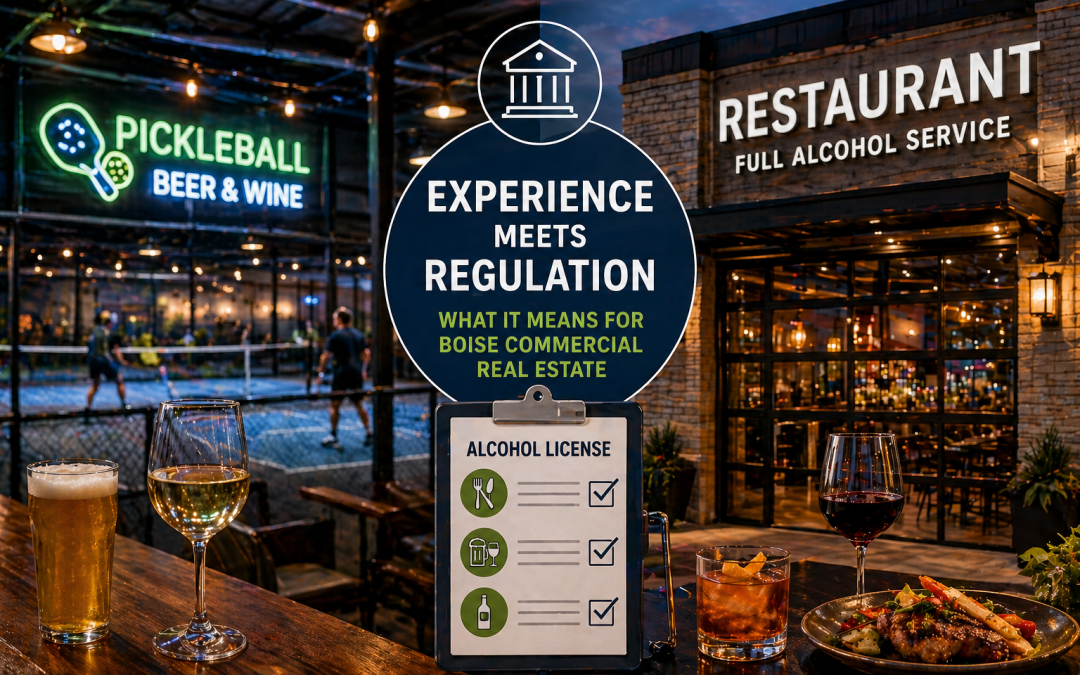
Experience Meets Regulation in Nampa — What New Alcohol Licenses Signal for Boise Commercial Real Estate
Sometimes, the biggest signals in commercial real estate don’t come from groundbreakings or big leases—they come from policy decisions that shape what tenants can actually do inside a space.
And that’s exactly what’s happening in Nampa right now.
Two Businesses, Two Different Outcomes
According to reporting by Matthew Neil Wells in the Idaho Press (read the original article here: https://www.idahopress.com/news/local/nampa-city-council-greenlights-alcohol-sales-at-two-businesses/article_d17f4272-315b-40c7-ae81-e3e867d41aa0.html), the Nampa City Council recently approved alcohol sales for two local businesses—but under very different conditions.
Here’s the breakdown:
- The Flying Pickle (pickleball venue) → approved for beer and wine only
- Berracos Grill (Colombian restaurant) → approved for full alcohol service (beer, wine, liquor)
The difference? It comes down to how the city defines a restaurant.
What’s Changing: Experience Tenants vs. Traditional Restaurants
Nampa isn’t just approving licenses—it’s reinforcing a policy that separates experience-based businesses from food-driven establishments.
1. Alcohol Access Is Tied to Food Revenue
Under current city rules:
- Only businesses classified as restaurants can serve liquor
- Restaurants must generate at least 60% of revenue from food
- Facilities without kitchens or full food programs are limited
👉 That’s why an entertainment concept like The Flying Pickle couldn’t qualify for a full license.
2. The Rise of “Eatertainment” Hits a Policy Wall
Across the country, we’re seeing growth in:
- Pickleball clubs
- Golf simulators
- Social gaming venues
These concepts often rely on food + alcohol + activity to drive revenue.
👉 But in Nampa, zoning and licensing rules mean:
- You either evolve into a restaurant model
- Or operate with limited alcohol offerings
That’s a big deal for tenant design and pro formas.
Why This Matters for Boise Commercial Real Estate
If you’re involved in Boise commercial real estate, retail leasing, or development, this isn’t just a Nampa story—it’s a blueprint for how municipalities shape tenant demand.
1. Tenant Mix Is Being Regulated, Not Just Market-Driven
Cities are actively influencing:
- What types of tenants can thrive
- How much revenue comes from food vs. entertainment
- The overall vibe of retail corridors
👉 For landlords, this means:
- Not every concept fits every city—even if demand exists
- Lease strategy must account for local code, not just tenant strength
2. Restaurant Spaces Gain a Competitive Advantage
Because full alcohol licenses are tied to restaurants:
- True restaurant spaces become more valuable
- Second-generation restaurant buildings become easier to lease
- Non-restaurant users may face limitations unless they retrofit
👉 In markets like Boise and Nampa, this can tighten supply for restaurant-ready spaces.
3. Experience-Based Retail Must Adapt
Concepts like pickleball or social venues still work—but they may need to:
- Add kitchen components
- Partner with food operators
- Adjust their business model to meet licensing thresholds
👉 That impacts:
- Buildout costs
- Space requirements
- Site selection strategy
Local Market Impact: What to Watch Next
For the Treasure Valley, this decision highlights a few key trends:
- More scrutiny on alcohol licensing tied to use type
- Increased demand for restaurant-zoned retail spaces
- Potential slowdown of pure entertainment concepts without food
- Growth of hybrid models combining food, beverage, and experience
This isn’t just regulation—it’s shaping the next generation of retail development.
My Take: This Is Where Leasing Strategy Gets More Sophisticated
From a boots-on-the-ground perspective, this is where deals get interesting.
The demand is there for:
- Pickleball
- Social venues
- Experience-driven retail
But the success of those deals now depends on how well the concept fits within local policy frameworks.
For Boise commercial real estate investors and developers, that means:
👉 You can’t just chase trends—you have to understand the rules behind them.
The winners in this next cycle will be the ones who:
- Align tenant concepts with city requirements early
- Design flexible spaces that can accommodate food + beverage
- Anticipate regulatory friction before it becomes a deal killer
Because in today’s market, leasing isn’t just about location—it’s about compliance, creativity, and adaptability.
Mike Gioioso (joy-OH-so) has for 16+ years been helping companies of all sizes buy, build, and lease perfect places for business in greater Boise, Idaho and beyond.
www.streetsmartidaho.com mike@streetsmartidaho.com 208-209-9166
Tags: #boisecommercialrealestate, #nampaidahodevelopment, #boiseretailleasing, #alcohollicensingidaho, #restaurantzoningidaho, #boisedevelopmenttrends, #treasurevalleyretailmarket, #experiencebasedretail, #pickleballfacilityrealestate, #restaurantspaceboise, #retailtenantmixboise, #idaholiquorlicenserules, #mixedusedevelopmentboise, #retailzoningregulationsidaho