
How New Federal Transportation Funding Could Create Long-Term Opportunities for Boise Commercial Real Estate
Transportation improvements rarely make headlines for commercial real estate investors—but they probably should.
New roads, safer intersections, and future transportation corridors often shape where businesses expand, developers build, and investors buy land years before major growth occurs.
According to reporting by IBR Staff in the Idaho Business Review, the U.S. Department of Transportation has awarded nearly $28.6 million in federal BUILD grants to projects in Boise and Nampa. You can read the original Idaho Business Review article here: https://idahobusinessreview.com/2026/07/09/nampa-boise-secure-federal-transportation-grants/. This article is based on that reporting while exploring what these transportation investments could mean for Boise commercial real estate, Boise development, and future investment opportunities throughout the Treasure Valley.
Infrastructure Often Leads Commercial Growth
Commercial real estate follows infrastructure.
When cities invest in roads, bridges, sidewalks, and traffic improvements, they aren’t simply making travel easier. They’re laying the foundation for future residential neighborhoods, retail centers, industrial development, office projects, and employment growth.
The newest federal BUILD grants continue that pattern.
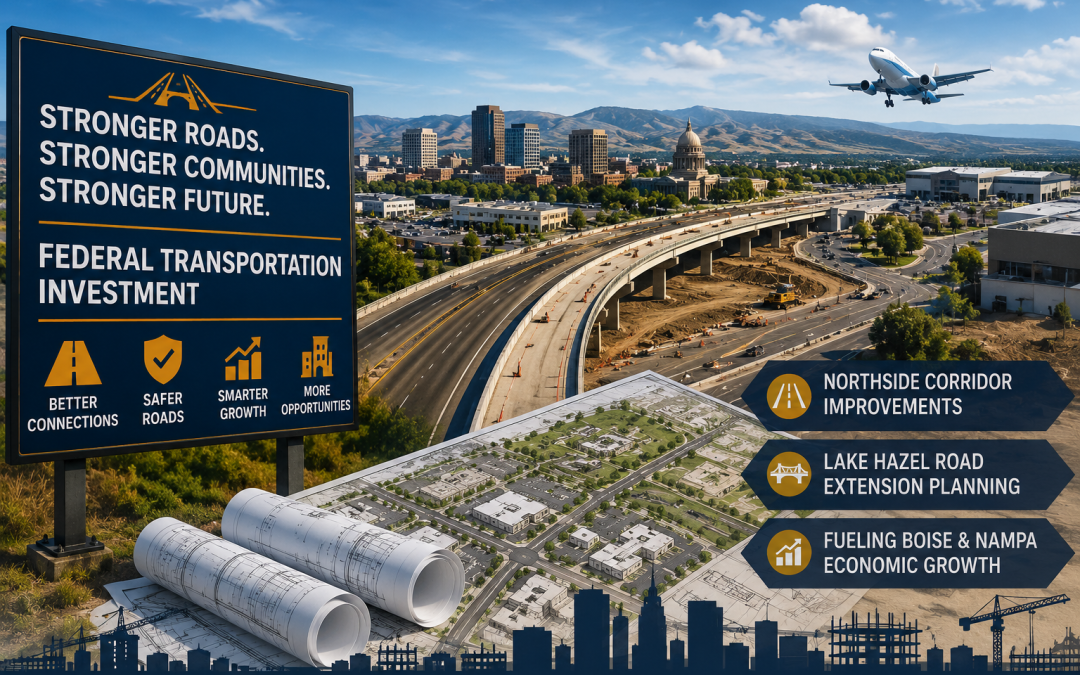
The funding supports one major construction project in Nampa while helping Boise prepare for future transportation improvements near one of the region’s fastest-growing employment centers.
Although construction timelines extend several years into the future, planning begins influencing development decisions much sooner.
Where the Funding Is Going
The federal awards include two separate transportation projects across the Treasure Valley.
Nampa
Nampa received approximately $22.99 million to improve the Northside Corridor.
Planned upgrades include:
- Roadway reconstruction
- Sidewalk and ADA accessibility improvements
- Bridge widening across Indian Creek
- New traffic signals
- Safety improvements along a corridor that has experienced hundreds of crashes during the past five years
Construction could begin as early as fiscal year 2027, with completion anticipated in 2030.
Boise
Boise received approximately $5.6 million for planning work on a future extension of Lake Hazel Road south of the Boise Airport.
Planning efforts will include:
- Determining the preferred roadway alignment
- Environmental review
- Railroad crossing evaluations
- A phased implementation strategy for future construction
While this funding does not build the roadway today, it moves the project significantly closer to becoming reality.
Why This Matters for Boise Commercial Real Estate
Transportation improvements often create opportunities that extend far beyond the roadway itself.
Improved access typically increases the attractiveness of surrounding land for commercial uses, particularly where population growth and employment continue expanding.
For investors, these projects may influence future land values well before construction finishes.
For developers, improved transportation can make previously overlooked sites more attractive for retail centers, industrial facilities, medical offices, hotels, and mixed-use projects.
Businesses evaluating new locations also benefit from improved traffic flow, safer intersections, and better connectivity between growing communities.
The planned Lake Hazel Road work deserves particular attention because the Boise Airport area continues evolving into an important employment and logistics hub. Better east-west connectivity could support future commercial development across southern Boise for years to come.
Meanwhile, Nampa continues experiencing rapid residential and commercial expansion. Improving the Northside Corridor helps create infrastructure capable of supporting additional business investment while addressing long-standing safety concerns.
Regional Planning Is Becoming More Important
One noteworthy aspect of these awards is the role played by the Community Planning Association of Southwest Idaho (COMPASS).
According to Idaho Business Review, COMPASS supported the successful applications by providing transportation data, identifying high-risk corridors, and assisting with grant preparation.
Regional collaboration like this is becoming increasingly important as communities compete for limited federal infrastructure dollars.
As Ada and Canyon counties continue growing, transportation planning will likely become an even bigger factor influencing future commercial development patterns.
My Take
From a Boise commercial real estate perspective, transportation projects should never be viewed simply as road improvements.
They are long-term economic development investments.
History shows that businesses often follow improved infrastructure because better accessibility creates stronger customer traffic, more efficient logistics, and additional development opportunities.
While these projects may take several years to complete, developers, investors, and property owners frequently begin positioning themselves long before the ribbon-cutting ceremony.
For anyone following Boise commercial real estate, Boise development, and retail leasing Boise, these transportation investments are worth watching because today’s planning decisions often become tomorrow’s growth corridors.
Mike Gioioso (joy-OH-so) has for 16+ years been helping companies of all sizes buy, build, and lease perfect places for business in greater Boise, Idaho and beyond. www.streetsmartidaho.com mike@streetsmartidaho.com 208-209-9166
Tags: #boisecommercialrealestate, #boisedevelopment, #nampadevelopment, #treasurevalleyrealestate, #commercialrealestateinvestment, #retailleasingboise, #transportationinfrastructure, #federalbuildgrants, #boiseairport, #lakehazelroad, #northsidecorridor, #compass, #commercialdevelopment, #idahobusinessreview, #economicdevelopment