
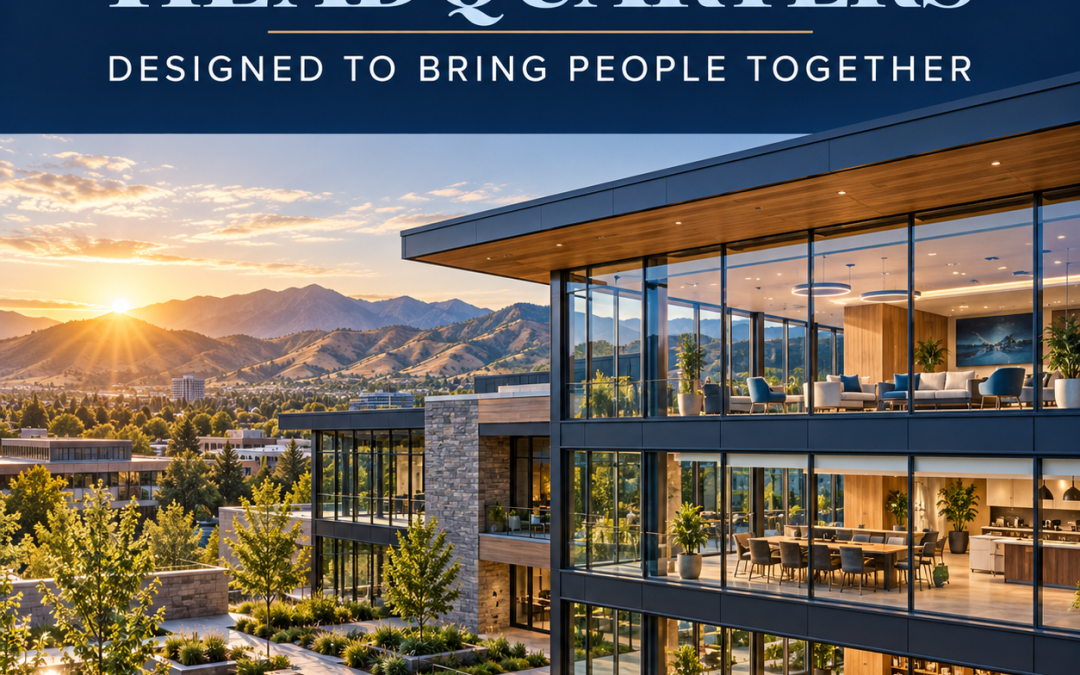
Purpose-Built Headquarters Show Why Quality Still Matters in the Office Market
The office market is not disappearing. It is becoming more selective.
Companies may no longer need rows of desks packed into generic buildings, but they still need places where employees can collaborate, build culture, and solve problems together. That shift is creating demand for offices designed around the employee experience instead of maximum density.
A new corporate headquarters in Provo, Utah, offers a clear example—and some useful lessons for Boise commercial real estate.
According to reporting by Richard Lindholm of CoStar Research, TaxHawk, the company behind FreeTaxUSA, has moved into a newly constructed, 70,000-square-foot headquarters at 1255 S. State St. in Provo.
From Home-Based Startup to Custom Headquarters
TaxHawk was founded in Provo 25 years ago and has grown from a home-based business into a national tax-software company.
Its FreeTaxUSA platform provides online federal tax filing and customer support. The company reports that its workforce has helped process more than 82 million federal returns without charging customers a federal filing fee.
The headquarters is not a walk-in tax preparation center. It supports the employees who operate and improve the company’s online services.
TaxHawk moved from its previous location at 1166 E. 1120 S. into a building designed specifically for its current workforce and future growth.
The decision to remain in Provo is also important. Rather than leaving the community where it began, the company invested in a new headquarters within the same city.
For local leaders and property owners, retaining a growing employer can be just as valuable as recruiting a company from another market. Established employers already have local employees, community relationships, and a reason to stay.
The Modern Office Is Competing on Experience
TaxHawk’s new headquarters was designed to prioritize employees rather than fit as many desks as possible into the building.
The workplace includes:
- Private offices
- Collaborative team areas
- A large multipurpose space
- An indoor golf simulator
- A virtual reality room
- Indoor sports courts
These amenities may sound unusual, but they reflect a major change in how companies think about office space.
Employees can complete many individual tasks from home. The office must therefore offer something that is difficult to duplicate remotely. That may include teamwork, mentoring, training, social interaction, advanced technology, or specialized spaces.
The strongest office buildings are increasingly becoming tools for recruitment and employee retention. Design, comfort, location, parking, natural light, technology, and shared amenities can influence whether workers want to spend time there.
That creates a widening gap between commodity office space and high-quality workplaces.
Older buildings with small windows, dated finishes, limited amenities, or inflexible layouts may struggle even when they offer lower rent. Well-designed properties can continue attracting companies willing to invest in their people and brand.
What This Means for Boise Commercial Real Estate
Boise and Provo share several characteristics. Both markets have growing technology and professional-service sectors, expanding populations, nearby universities, and a strong quality-of-life message.
That makes TaxHawk’s decision relevant to the Boise office market.
Companies evaluating Boise office space are not simply asking how many employees can fit inside a suite. They are also considering:
- Will employees want to work here?
- Does the space support focused and collaborative work?
- Can the layout change as the company grows?
- Is there convenient parking?
- Are restaurants and services nearby?
- Can the company control its signage and identity?
- Does the building help recruit talented employees?
- Is the technology infrastructure dependable?
- Can the company expand without moving again?
These questions matter whether a company is leasing an existing office, buying a building, or pursuing a Boise development project.
Opportunities for Office Landlords
Landlords do not need to install sports courts or virtual reality rooms in every building. The larger lesson is that tenants want spaces built around how their employees work.
Practical improvements can make a meaningful difference:
- Better common areas
- Modern conference rooms
- Outdoor seating
- Improved lighting
- Updated heating and cooling systems
- Secure bicycle storage
- Showers and fitness facilities
- Flexible meeting areas
- Faster internet service
- Improved landscaping and building entrances
Even modest upgrades can help an older office building compete if they address real tenant needs.
Landlords should also consider offering flexible improvement packages. Some businesses may want more private offices, while others need open collaboration areas, training rooms, or secure technology space.
A standard buildout will not work for every company.
Owner-User Opportunities
TaxHawk’s new headquarters also demonstrates why established companies sometimes choose ownership or custom construction instead of leasing.
An owner-user can design a building around its operations, control future occupancy costs, create a permanent brand presence, and build equity in the real estate.
However, custom headquarters projects require careful planning. Business owners should consider:
- Land and construction costs
- Financing terms
- Future employee growth
- Resale and leasing potential
- Parking needs
- Building flexibility
- Construction timing
- Furniture and technology expenses
- Whether capital would earn more inside the business
A highly specialized headquarters may work well for its original owner but be difficult to sell or lease later. The best owner-user buildings balance customization with layouts that could serve another company in the future.
My Take
The office market is not simply a contest between working from home and working in a building. It is becoming a competition between offices that provide a reason to be there and offices that do not.
TaxHawk’s investment shows that a growing technology company still sees value in bringing employees together. The difference is that the company built a workplace focused on collaboration, experience, and long-term identity.
For Boise commercial real estate, that creates both opportunity and risk.
High-quality office properties can continue attracting growing companies. Well-located buildings with good parking, flexible layouts, modern systems, and thoughtful amenities should remain competitive.
Properties that offer only desks and walls may face more pressure unless owners improve the space, adjust rents, or consider another use.
Boise developers should also be careful not to build office space based only on historic demand. New projects need a clear target user and a strong reason for that company to choose the building over existing options.
The next successful Boise headquarters may not be the building with the most square footage. It may be the one that best helps a company recruit employees, strengthen its culture, and prepare for its next stage of growth.
Mike Gioioso (joy-OH-so) has for 16+ years been helping companies of all sizes buy, build, and lease perfect places for business in greater Boise, Idaho and beyond.
www.streetsmartidaho.com mike@streetsmartidaho.com 208-209-9166
Tags: #boisecommercialrealestate, #boiseofficemarket, #boiseofficespace, #officeleasingboise, #boisecorporateheadquarters, #boiseinvestmentproperty, #boisedevelopment, #treasurevalleycommercialrealestate, #idahocommercialrealestate, #purposebuiltoffice, #customofficebuilding, #corporatecampusdevelopment, #owneruserrealestate, #officebuildinginvestment, #workplacedesign