
Portland’s Industrial Divide Offers Important Lessons for Boise Investors
Industrial real estate can look healthy at the regional level while individual submarkets tell very different stories.
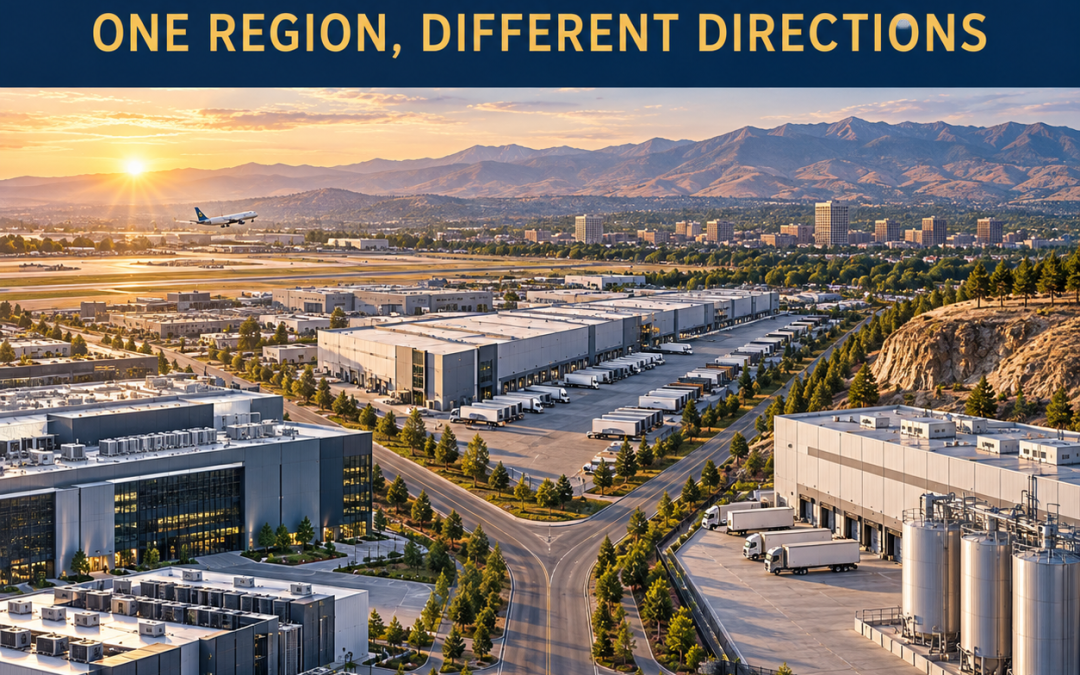
That is happening in Portland, where three major industrial areas are moving in separate directions. One is absorbing a large development pipeline. Another has stopped building despite strong transportation access. A third is growing carefully because developable land is difficult to find.
According to reporting by John Gillem of CoStar Analytics, the differences are being shaped by construction, industry clusters, transportation routes, labor access, and land availability. Those same forces are important when evaluating Boise commercial real estate and industrial opportunities across the Treasure Valley.
One Region, Three Different Industrial Stories
Portland’s industrial market cannot be explained by one vacancy rate or one rent-growth figure. Each of its major submarkets serves a different group of tenants and faces a different development outlook.
Hillsboro: Strong Demand Meets a Large Pipeline
The Sunset Corridor-Hillsboro area has more than 1.7 million square feet under construction. Even with that development wave, its vacancy rate is only 4.6%, making it the tightest of the three submarkets.
Average asking rents exceed $14 per square foot, although annual rent growth has slowed to 2.5%. Vacancy is expected to move higher as new buildings are completed.
Hillsboro’s strength comes from more than normal warehouse demand. Its economy is connected to Intel’s supplier network, advanced manufacturing, data centers, and technology employment. High-capacity fiber and other digital infrastructure also give the area advantages that traditional distribution locations may not offer.
Large data center projects are absorbing development sites, further limiting the land available for speculative logistics buildings.
For investors, Hillsboro offers long-term growth but also carries the greatest construction risk. Demand remains strong, yet a large pipeline can change leasing conditions quickly if projects deliver faster than tenants can absorb them.
East Columbia: Higher Vacancy but Little New Competition
The East Columbia Corridor is moving in the opposite direction. Industrial construction has nearly stopped, while vacancy has reached 9.4%.
The area has also experienced negative net absorption as some large logistics users reconsider their space requirements or explore locations across the Columbia River in Vancouver, Washington.
Despite those challenges, annual rent growth is 3.6%, the strongest of the three areas. Limited future supply appears to be supporting rents even while current leasing activity remains soft.
East Columbia still offers valuable location advantages. It is close to Portland International Airport and connected to major freight routes. Those features should continue to matter for distribution, transportation, and airport-related tenants.
The short-term numbers may look weaker, but a lack of new construction could help the submarket recover without adding another wave of competing space.
Clackamas-Milwaukie: Specialized Demand and Limited Land
Clackamas-Milwaukie sits between the other two markets.
Its vacancy rate is 5.9%, rents are growing by approximately 2.9% annually, and about 586,000 square feet is under construction. Several proposed or active logistics developments could increase competition during the next few years.
This area is supported by food production, refrigerated storage, and regional distribution tied to the Willamette Valley’s agricultural economy. Highway 212 and Interstate 205 provide freight access while keeping businesses close to Portland’s workforce.
The amount of developable land remains limited, which may restrict long-term supply. However, the projects currently moving forward could test how much additional space the market can absorb.
Why Submarket Details Matter More Than Regional Averages
Portland’s experience offers a useful reminder: industrial properties should not be evaluated only through metro-wide statistics.
Two warehouses in the same metropolitan area can have very different investment profiles based on:
- Highway and airport access
- Available labor
- Nearby housing growth
- Tenant industry clusters
- Building size and configuration
- Clear height and loading capacity
- Power and utility infrastructure
- Competing projects under construction
- Availability of industrial land
Hillsboro’s technology infrastructure supports advanced manufacturing and data centers. East Columbia depends more heavily on airport access and traditional logistics. Clackamas-Milwaukie benefits from food-related production and regional distribution.
Each submarket has a reason for existing. Understanding that reason is often more valuable than simply comparing rental rates.
A low vacancy rate may signal strong demand, but it can also attract development and create future supply risk. A higher vacancy rate may appear concerning, but a construction slowdown can eventually improve conditions. Limited land can protect existing owners, while also making it harder for growing tenants to find suitable buildings.
Local Insight: The Same Pattern Is Developing Across the Treasure Valley
The Boise industrial market is smaller than Portland’s, but it is also becoming more specialized by location.
Boise’s airport area appeals to logistics, service, manufacturing, and companies that need access to Interstate 84. Meridian offers central access to the region’s growing population, but industrial users face competition from office, medical, multifamily, and retail development.
Nampa and Caldwell generally provide more land and may offer better opportunities for larger buildings, outdoor storage, production facilities, and regional distribution. However, access, infrastructure, labor availability, and travel times can vary significantly from one site to another.
This means investors should avoid treating Boise, Meridian, Nampa, and Caldwell as interchangeable industrial locations.
A new warehouse in Nampa may compete for a different tenant than an industrial property near the Boise Airport. A flex building in Meridian may attract contractors, service companies, medical suppliers, or showroom users rather than large distribution tenants. A Caldwell property may offer land and expansion potential that would be difficult to find closer to Boise.
Industrial growth also affects retail leasing in Boise and surrounding communities. New employment centers create demand for restaurants, fuel stations, childcare, personal services, and neighborhood retail. In that way, industrial and residential growth can support additional Boise development well beyond warehouses alone.
My Take
The most important lesson from Portland is that supply must be measured against the specific demand drivers of each location.
Developers should know which tenants a project is designed to serve before breaking ground. Building speculative industrial space because the regional vacancy rate appears low is not enough. The building’s size, loading, power, parking, yard area, and location must match real users in that submarket.
Landlords should monitor competing construction and begin renewal discussions early. Keeping a quality tenant may be more valuable than pushing for the highest possible rent, especially when new buildings are approaching completion.
Tenants should look beyond the quoted rental rate. Transportation access, labor availability, operating costs, delivery times, and future expansion needs can have a much larger impact on the business.
Investors should also examine what limits future competition. Land constraints, zoning, infrastructure costs, and neighborhood opposition can protect existing industrial properties. At the same time, those barriers can make redevelopment and expansion more expensive.
Boise commercial real estate is increasingly becoming a collection of specialized submarkets. The strongest industrial opportunities will be the properties that fit their location, serve a clear tenant group, and remain useful as the Treasure Valley continues to grow.
Mike Gioioso (joy-OH-so) has for 16+ years been helping companies of all sizes buy, build, and lease perfect places for business in greater Boise, Idaho and beyond.
www.streetsmartidaho.com mike@streetsmartidaho.com 208-209-9166
Tags: #boisecommercialrealestate, #boiseindustrialrealestate, #boiseindustrialmarket, #treasurevalleycommercialrealestate, #idahocommercialrealestate, #boiseinvestmentproperty, #boisedevelopment, #industrialpropertyboise, #industrialleasingboise, #warehousespaceboise, #boiseairportindustrial, #meridianindustrialrealestate, #nampaindustrialrealestate, #caldwellindustrialrealestate, #treasurevalleyindustrialdevelopment