
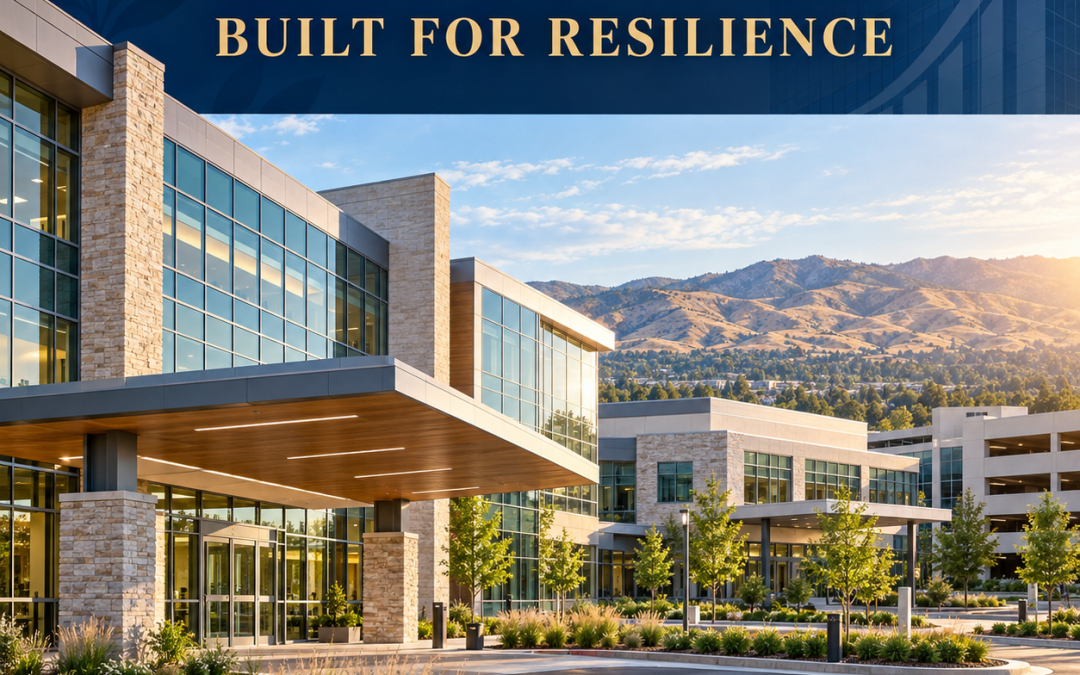
Medical Office Real Estate Shows Its Strength as Health Systems Expand
Traditional office properties continue to face questions about vacancy, remote work, and long-term demand. Medical office real estate is following a different path.
Healthcare buildings near major medical campuses remain attractive because they serve a growing patient base, require specialized improvements, and are difficult to replace. A recent sale near Seattle shows how valuable the right medical property can become when location, tenancy, and health system strategy align.
According to reporting by Randyl Drummer in CoStar News, EvergreenHealth purchased a nearly 100,000-square-foot medical office complex next to its main Kirkland, Washington, campus for just under $70 million.
The transaction offers several useful lessons for Boise commercial real estate investors, healthcare tenants, landlords, and developers.
Medical Office Is Separating From Traditional Office
EvergreenHealth Plaza is a five-story medical complex built in 2005. It includes an adjoining parking garage and houses medical and dental practices in fields such as dermatology, gastroenterology, dentistry, and pediatric eye care.
Harrison Street Asset Management acquired the property for $51.4 million about a decade ago. Its sale to EvergreenHealth for nearly $70 million represents an increase of roughly 36%.
That gain is especially notable because many conventional office buildings across the country have lost value. The difference comes down to the property’s use, location, tenant base, and relationship to a major healthcare campus.
Medical outpatient vacancy in the greater Seattle region began the year at 4.3%, according to CoStar data cited in the article. That compares with a national medical office vacancy rate of 8.9% and a broader Puget Sound office vacancy rate of 17.1%.
Those numbers show that medical office should not be grouped automatically with the traditional office market. Both may contain exam rooms, desks, and professional employees, but their demand drivers are very different.
Healthcare services generally require patients and providers to meet in person. Medical practices also invest heavily in plumbing, power, equipment, specialized layouts, and regulatory requirements. Those improvements can make relocation expensive and encourage tenants to remain in place longer.
Health Systems Are Buying Strategic Locations
EvergreenHealth’s purchase appears to be about more than collecting rent.
The complex sits next to the health system’s main medical campus, giving EvergreenHealth greater control over nearby space, parking, future expansion, and the patient experience. Ownership may also protect the organization from future rent increases or a sale to another investor.
EvergreenHealth is expanding throughout its service area. Its plans include a $115 million surgical facility in Kirkland, expected to open in September 2027. The health system also leased 14,000 square feet for an urgent care clinic in Snohomish and purchased a medical building in Monroe for nearly $25 million to house imaging and specialty services.
Other healthcare providers in the Seattle area are also expanding. Kaiser Permanente completed a $270 million project in Everett, while Providence Swedish, Seattle Children’s Hospital, and Harborview Medical Center have announced additional investments.
The Kirkland transaction is part of a larger national trend. U.S. investment volume for medical outpatient properties reached $6.7 billion during the first half of 2026, according to Cushman & Wakefield data referenced by CoStar. That was 21% higher than the same period a year earlier.
Single-property medical office sales increased by 42%, while larger portfolio transactions also helped lift total activity.
For investors, these figures suggest that capital remains available for well-located healthcare real estate even while lenders and buyers remain cautious about ordinary office assets.
What This Could Mean for Boise Medical Real Estate
The Treasure Valley has many of the same demand drivers supporting medical office activity in larger markets.
Population growth, an aging resident base, expanding neighborhoods, and longer travel times across the valley create demand for medical services closer to where people live. Health systems and independent providers need locations that offer visibility, parking, easy access, and proximity to patients.
In Boise, Meridian, Eagle, Nampa, and Caldwell, medical real estate demand can take several forms:
- Outpatient clinics near established hospital campuses
- Neighborhood urgent care locations
- Dental and orthodontic offices
- Physical therapy and rehabilitation facilities
- Imaging and diagnostic centers
- Behavioral health practices
- Ambulatory surgery centers
- Specialty medical groups
- Medical office condominiums
- Converted retail or office space
Medical tenants do not all need to be directly beside a hospital. Many routine services are moving closer to residential growth, retail centers, and major commuter routes.
That creates opportunities for Boise development as well as retail leasing in Boise and surrounding communities. Former banks, restaurants, neighborhood retail suites, and traditional offices may sometimes be adapted for medical use.
However, conversions are not always simple. Medical users may require more parking, upgraded electrical service, additional plumbing, reinforced floors, backup power, wider hallways, specialized ventilation, or expensive imaging improvements.
Landlords should understand those requirements before quoting tenant-improvement allowances or promising a delivery schedule.
Local Insight: Location and Control Can Be Worth a Premium
The EvergreenHealth transaction shows why healthcare organizations may pay more for strategically important real estate.
A building next to a hospital campus is not just another investment. It can help a healthcare system organize services, improve referrals, control parking, support future growth, and keep competing providers from gaining a key location.
The same thinking applies in Boise commercial real estate.
Properties close to major hospitals, medical campuses, and fast-growing residential areas may attract buyers who value control and long-term utility more than a traditional investor would. A medical group may also evaluate ownership differently because it can occupy the building, build equity, and avoid future lease uncertainty.
For sellers, that means the best buyer may not always be the investor offering a standard capitalization-rate valuation. A healthcare owner-user could place additional value on location, signage, expansion potential, and operational efficiency.
For tenants, the larger issue is flexibility. Medical improvements are expensive, so providers should negotiate enough lease term to recover their investment. Options to renew, exclusivity protections, signage rights, parking, assignment language, and landlord contribution toward improvements can be just as important as the rental rate.
For investors, medical office can offer durable demand, but it is not automatically low-risk. Buyers should review:
- Tenant credit and operating history
- Remaining lease terms
- Cost of specialized improvements
- Referral patterns and nearby competition
- Parking capacity
- Provider concentration
- Reimbursement and regulatory risks
- Whether the space can be reused by another medical tenant
- Proximity to hospitals and population growth
My Take
Medical office is one of the clearest examples of why investors need to look beyond broad property labels.
Calling a property “office” does not explain the strength of its demand. A general administrative building and a fully occupied medical complex beside a hospital may perform very differently, even if both are technically classified as office properties.
In the Treasure Valley, the strongest healthcare real estate opportunities will likely combine convenient access, strong demographics, adequate parking, modern systems, and flexible layouts. Buildings that can serve several types of medical users should generally be more resilient than highly specialized properties with only one possible occupant.
Health systems will continue to make strategic real estate decisions as they bring more care into outpatient settings. Boise-area landlords, developers, and investors who understand those decisions will be better positioned to identify where the next medical office opportunities may emerge.
Mike Gioioso (joy-OH-so) has for 16+ years been helping companies of all sizes buy, build, and lease perfect places for business in greater Boise, Idaho and beyond.
www.streetsmartidaho.com mike@streetsmartidaho.com 208-209-9166
Tags: #boisecommercialrealestate, #boisemedicaloffice, #boisehealthcarerealestate, #medicalofficespaceboise, #medicalofficebuildings, #treasurevalleycommercialrealestate, #idahocommercialrealestate, #boiseinvestmentproperty, #boisedevelopment, #healthcarepropertyinvestment, #medicalofficeinvesting, #outpatientmedicalfacilities, #ambulatorycarerealestate