
Boise-Based Mobility Repair Expansion Highlights Growing Need for Accessible Services Across Idaho
For most people, a broken piece of equipment means an inconvenience. For someone who relies on a wheelchair or mobility device every day, it can mean losing access to work, medical appointments, shopping and basic independence.
That challenge is creating new demand for services across Idaho—and a Boise-based nonprofit is expanding its reach to help fill the gap.
According to reporting by Heide Brandes in the Idaho Business Review, the Living Independence Network Corporation, better known as LINC, has expanded its mobility equipment repair program with help from a $20,000 grant from the Molina Healthcare Charitable Foundation in collaboration with Molina Healthcare of Idaho.
The original Idaho Business Review article details how the funding is helping LINC bring repair resources closer to Idaho residents who may otherwise face long waits and significant travel.
For the Boise commercial real estate market, the story also points to a broader trend: as the Treasure Valley and surrounding communities grow, specialized health, accessibility and community services need physical spaces—and increasingly need flexible ways to reach customers outside traditional brick-and-mortar locations.
Idaho’s Geography Creates a Service Gap
Idaho’s growth is spread across a large geographic area. That can make specialized services difficult to deliver efficiently.
The Idaho Business Review reports that 35 of Idaho’s 44 counties are considered rural and that people needing mobility equipment repairs can sometimes face waits of two weeks or longer. The shortage is influenced by travel distances, parts availability, growing demand and a limited pool of qualified repair providers.
LINC’s response combines two different real estate and service-delivery models.
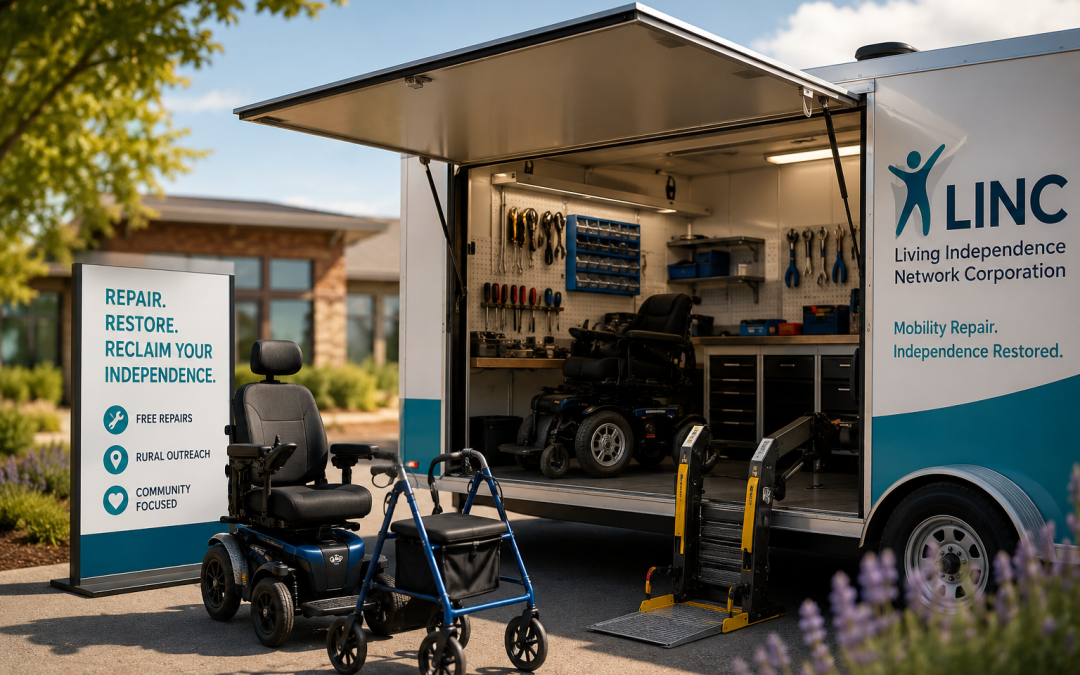
The organization has established a do-it-yourself mobility repair space in Canyon County while also outfitting a mobile repair trailer capable of taking services directly into communities.
The trailer is designed to operate throughout LINC’s 16-county service territory, covering roughly 30,000 square miles. Instead of following one permanent route, LINC can deploy it alongside health fairs, resource events, emergency preparedness programs and other community gatherings.
That flexibility is important.
It shows how organizations serving a rapidly growing region don’t always need to solve expansion challenges by opening another full-sized location.
Smaller Spaces and Mobile Services Can Extend Real Estate Reach
From a Boise commercial real estate perspective, this is where the story becomes especially interesting.
Traditional service providers generally expand by leasing or purchasing another building. But specialized health care, nonprofit and community organizations may not have enough demand in every town to support a permanent facility.
A hub-and-spoke model can offer another solution.
An organization can maintain established locations in larger population centers while using smaller facilities, shared spaces or mobile units to reach more distant communities.
LINC is headquartered in Boise and also operates an office in Caldwell. Its expanded mobility program now adds the Canyon County repair location and mobile service capability to that network.
That approach could become increasingly relevant throughout the Treasure Valley and southern Idaho.
For landlords working on retail leasing in Boise, Meridian, Nampa and Caldwell, organizations providing medical, wellness, rehabilitation, senior and community services can be an important tenant category.
Many of these users don’t necessarily need premium storefronts.
Instead, they may prioritize:
- Affordable and accessible ground-floor space
- Convenient parking and vehicle access
- ADA-friendly entrances and interiors
- Flexible workshop or service areas
- Storage for equipment and supplies
- Locations near senior housing, medical offices and community services
Those requirements can create opportunities for second-generation retail, flex buildings, neighborhood office properties and other spaces that may not fit more traditional tenants.
A Relatively Small Investment Can Expand a Large Service Network
Another notable part of the program is its cost structure.
According to the Idaho Business Review, roughly half of the $20,000 grant supports training, administration, education and participant resources. The other half helps cover technology, tools, supplies and other operating equipment.
LINC Executive Director Jeremy Maxand explained that much of the investment is focused on startup infrastructure. Once the repair space and trailer are equipped, ongoing expenses are expected to center more on fuel, maintenance, travel and supplies.
LINC estimates the expanded program could assist about 100 people during its first year. Routine work involving manual wheelchairs, walkers, scooters and many powered devices can be addressed through the program, while repairs involving specialized or proprietary components may still require an authorized provider.
The program is part of the broader MolinaCares for Idaho Families initiative, which represents more than $250,000 in support for over 10 community organizations addressing areas including health care access, transportation, mobility, caregiver resources and education.
Why This Matters for Boise Development
Population growth gets most of the attention when discussing Boise development and commercial real estate.
But population growth alone doesn’t explain how a market changes.
Every new household creates additional demand for services: doctors, physical therapists, pharmacies, senior care, rehabilitation, transportation, accessibility services and dozens of other businesses and organizations.
As Boise, Meridian, Nampa, Caldwell and surrounding communities expand, commercial development needs to respond to those less-visible needs too.
This can affect tenant demand in neighborhood shopping centers, medical office buildings and flex properties.
It can also influence development decisions.
Projects near senior communities, hospitals, medical campuses and growing residential neighborhoods may benefit from considering a wider range of health and community-service tenants instead of relying entirely on restaurants, traditional retailers and office users.
The LINC program provides a good example of how service delivery itself is evolving. A physical location remains important, but the building doesn’t necessarily have to do all the work.
Mobile services can dramatically expand the territory supported by a relatively small real estate footprint.
Local Insight
One of the biggest changes I see in Boise commercial real estate is that the definition of a “retail tenant” continues to expand.
Shopping centers aren’t just about stores anymore.
Medical providers, physical therapy groups, wellness concepts, personal services, educational users and community organizations are increasingly part of the tenant mix. These businesses often want the same things retailers want: visibility, parking, convenient access and locations close to residential growth.
For landlords, that means an older retail or flex space that isn’t ideal for a national retailer may still have significant value to a service-oriented tenant.
For developers, it means demographic analysis needs to go deeper than population and household income. Age, health care access, transportation, nearby senior housing and availability of specialized services can all help identify unmet demand.
And for investors evaluating Boise investment property, tenant demand tied to essential services can be particularly interesting because many of these uses aren’t dependent on discretionary consumer spending in the same way as traditional retail.
The larger lesson is simple: growth creates infrastructure needs beyond roads and housing.
It creates demand for the everyday services that allow people to live independently and participate in their communities. As the Treasure Valley keeps expanding, commercial real estate will play an important role in providing the spaces where those services happen.
Mike Gioioso (joy-OH-so) has for 16+ years been helping companies of all sizes buy, build, and lease perfect places for business in greater Boise, Idaho and beyond.
www.streetsmartidaho.com mike@streetsmartidaho.com 208-209-9166
Tags: #boisecommercialrealestate, #boisedevelopment, #idahocommercialrealestate, #treasurevalleycommercialrealestate, #retailleasingboise, #boisemedicalrealestate, #meridiancommercialrealestate, #nampacommercialrealestate, #caldwellcommercialrealestate, #healthcarerealestate, #accessiblecommercialspace, #idahohealthcare, #boiseinvestmentproperty, #canyoncountydevelopment, #southernidahodevelopment