
Children’s Museum Leadership Change Highlights the Growing Role of Family Amenities in Boise
Boise’s growth story isn’t only about new homes, apartments, offices and retail centers.
It is also about the community amenities that make a growing metro area a place where families want to stay.
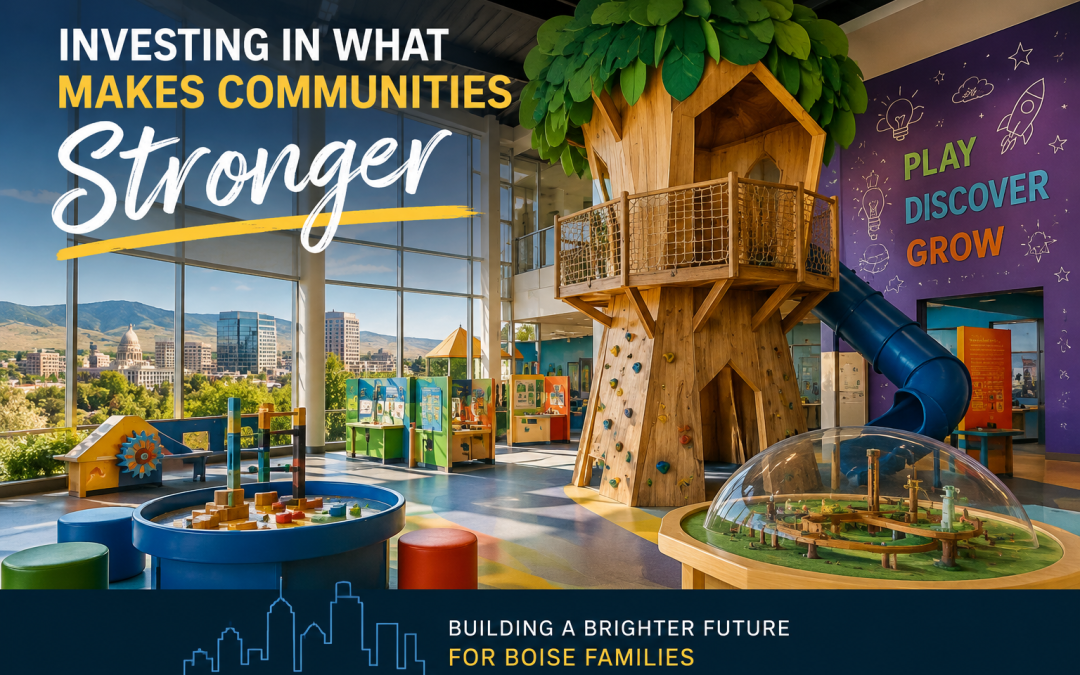
The Children’s Museum of Idaho is entering a new chapter with Ada Page selected as its next executive director. While this may look like a straightforward leadership announcement, the museum’s growth and reach point to a bigger issue for Boise commercial real estate: successful cities need more than buildings. They need destinations that support the people living in them.
According to reporting by the Idaho Business Review staff, Page will succeed Jan Lynch, who is preparing to retire after years of leadership at the Boise-area organization. The original Idaho Business Review article provides additional details on the leadership transition.
A Boise-Area Institution Enters Its Next Chapter
The Children’s Museum of Idaho was founded in 2018 by Pat Baker, who served as its first executive director.
Jan Lynch was also involved from the beginning as museum director and later moved into the organization’s top leadership position after Baker stepped down. Baker remains involved as secretary of the museum’s board.
Now another transition is underway.
Ada Page joined the museum earlier in 2026 as education director and brings approximately three decades of education and leadership experience to the executive director position.
She is taking responsibility for an organization that now serves more than 100,000 children and family members each year from southwest Idaho and surrounding areas.
That attendance figure is particularly interesting when viewed through a commercial real estate lens.
More than 100,000 annual visitors means the museum isn’t simply a small neighborhood amenity. It is a regional destination generating repeat trips from families throughout the Treasure Valley and beyond.
The museum plans to introduce Page to the broader community during an open house on Sept. 24.
Why Family Amenities Matter to Boise Development
The connection between a children’s museum and Boise commercial real estate might not be obvious at first.
But community destinations play an important role in how cities grow.
Families deciding where to live look beyond housing prices. They consider schools, parks, recreation, healthcare, entertainment and educational opportunities.
Employers think about many of the same things when recruiting workers.
Developers should be thinking about them, too.
As Boise, Meridian, Eagle, Nampa and other Treasure Valley communities continue to grow, commercial development increasingly follows population patterns. New rooftops create demand for grocery stores, restaurants, medical offices, childcare, fitness facilities and entertainment.
Family-oriented destinations are part of that ecosystem.
They generate trips.
Those trips can support nearby retail and restaurants. They can create opportunities for complementary businesses. And when clustered with other destinations, they can help turn an area into somewhere people visit rather than simply drive through.
That distinction matters for retail leasing in Boise.
A shopping center surrounded by strong residential growth is good. A shopping center surrounded by residential growth plus schools, parks, entertainment and other destinations can be even more interesting.
The reason is simple: commercial real estate ultimately follows people.
Boise Is Building More Than Real Estate
There is another lesson here for Boise development.
Rapid population growth gets most of the attention, but mature communities need infrastructure beyond roads, utilities and housing.
They need what could be called social infrastructure.
That includes museums, libraries, recreation centers, parks, cultural organizations and other places where residents gather.
These facilities don’t always fit neatly into traditional commercial real estate categories, but they can have meaningful effects on surrounding property.
A strong community destination can generate traffic and visibility while helping nearby neighborhoods become more desirable.
That can influence:
- Retail leasing and restaurant demand
- Nearby development opportunities
- Residential desirability
- Employer recruitment and retention
- Tourism and regional visitation
- Demand for complementary family-oriented businesses
For developers evaluating emerging Boise-area neighborhoods, it is worth looking beyond population counts and household income.
Ask what people actually have to do nearby.
The answer can reveal a lot about where future commercial demand may develop.
Local Insight: Follow Families, Not Just Rooftops
When I evaluate growth areas around the Treasure Valley, residential construction is obviously one of the first things I watch.
But rooftops are only the beginning.
The next question is what those households need.
A growing concentration of families creates demand for far more than grocery stores and restaurants. Think childcare, tutoring, pediatric healthcare, youth sports, swim schools, dance studios, martial arts, entertainment, indoor recreation and educational experiences.
Those uses increasingly matter in Boise retail leasing.
They can also fill spaces that traditional retailers might overlook.
A former big-box store, flex building or large retail suite may not attract another conventional retailer, but it could work extremely well for recreation, education or family entertainment.
That shift is already changing how commercial properties should be evaluated.
Landlords shouldn’t automatically ask, “What retailer replaces this retailer?”
Sometimes the better question is, “What experience can replace this retailer?”
Organizations such as the Children’s Museum of Idaho demonstrate the scale that family-focused destinations can achieve in a growing market.
Serving more than 100,000 visitors annually also creates an economic ripple effect. Families traveling to a destination may combine that trip with lunch, shopping, errands or other activities.
For nearby commercial properties, those additional trips matter.
The leadership transition from Jan Lynch to Ada Page therefore comes at an interesting time for the Boise metro.
The Treasure Valley is continuing to evolve from a smaller regional market into a larger metropolitan economy. As that happens, the amenities supporting families, employers and quality of life become increasingly important pieces of the growth equation.
Commercial real estate is ultimately about where people choose to spend their time.
And sometimes the organizations that tell us the most about the future of Boise real estate aren’t developers or major employers.
They’re the places families keep coming back to.
Mike Gioioso (joy-OH-so)
has for 16+ years been helping companies of all sizes buy, build, and lease perfect places for business in greater Boise, Idaho and beyond.
www.streetsmartidaho.com mike@streetsmartidaho.com 208-209-9166
Tags: #boisecommercialrealestate, #boiserealestate, #boisedevelopment, #idahocommercialrealestate, #treasurevalleycommercialrealestate, #treasurevalleydevelopment, #boiseretailrealestate, #retailleasingboise, #boiseretailleasing, #boiseexperientialretail, #boisefamilyentertainment, #boisefamilyamenities, #childrensmuseumofidaho, #adapage, #boiseidahogrowth