
How Boise’s New Zoning Code Could Reshape Commercial Real Estate for Years to Come
Growth doesn’t just happen because people move to a city—it happens because a city makes room for them.
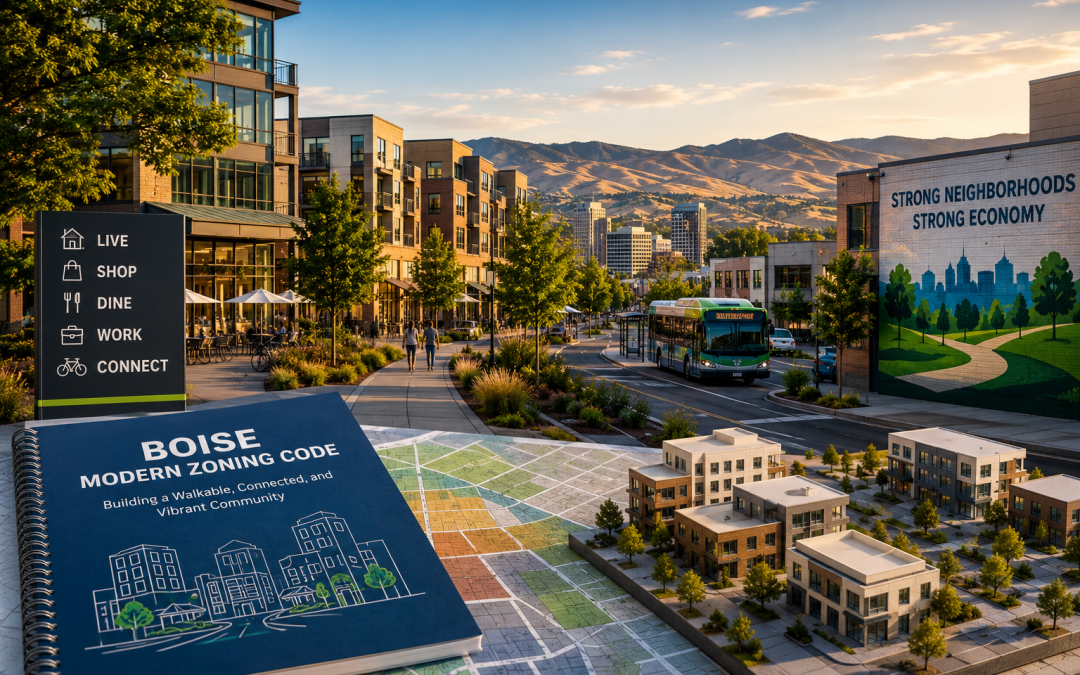
Over the past two years, Boise has been testing a new approach to growth that goes far beyond adding more housing. The city’s updated zoning code is encouraging neighborhoods where homes, businesses, parks, transit, and everyday services are located closer together. That shift could have lasting effects on Boise commercial real estate, future Boise development, and where retailers, developers, and investors choose to put their money.
According to reporting by Heide Brandes in the Idaho Business Review, Boise’s modern zoning code, adopted in late 2023, is already producing measurable changes in housing approvals, accessory dwelling units (ADUs), mixed-use development, and walkable neighborhoods. You can read the original Idaho Business Review article here: https://idahobusinessreview.com/2026/07/07/boise-new-zoning-code-walkability-housing-approvals/.
This article is based on that reporting while exploring what these planning changes could mean for Boise’s commercial real estate market over the next decade.
Growth Is Shifting Toward Walkable Neighborhoods
For decades, many cities—including Boise—were designed around the automobile.
The updated zoning code aims to create neighborhoods where people can accomplish more of their daily activities without needing to drive everywhere. Instead of separating homes from shopping, offices, restaurants, and services, new development encourages these uses to exist closer together.
During the first full year under the new zoning rules, Boise approved more than 1,800 housing units, with many located in areas intended for mixed-use growth.
Several early trends stand out:
- More than 1,800 housing units approved during 2024
- Significant growth in mixed-use residential development
- Accessory dwelling unit approvals increased from 36 to 130
- Nearly all approved housing sits within walking distance of public transit
- Developers added new sidewalks as part of private projects
These numbers suggest Boise’s development strategy is beginning to move from planning documents into actual construction.
Why This Matters for Boise Commercial Real Estate
Walkability is often viewed as a quality-of-life feature.
For commercial real estate, it’s also an economic strategy.
Businesses generally perform better when customers can easily reach them. Restaurants benefit from nearby residents. Coffee shops gain morning foot traffic. Small retailers often thrive when neighborhoods become more active throughout the day instead of emptying after commuters leave.
As more mixed-use corridors develop, retail leasing in Boise could increasingly favor neighborhood-serving businesses such as:
- Coffee shops
- Restaurants
- Medical clinics
- Fitness studios
- Grocery stores
- Professional services
- Personal care businesses
Developers may also discover that mixed-use projects create stronger long-term value by diversifying income across residential and commercial tenants.
Smaller Housing Could Create Bigger Investment Opportunities
One of the most noticeable results of the zoning update has been the rapid increase in accessory dwelling units.
ADUs may seem like a housing story, but they also affect commercial real estate.
Higher residential density can support additional neighborhood businesses without requiring massive apartment towers. Instead of concentrating growth in only a few locations, Boise’s approach encourages gradual increases across many neighborhoods.
That can create opportunities for:
- Small retail centers
- Neighborhood office space
- Medical users
- Local restaurants
- Service businesses
For commercial investors, population density often drives tenant demand. More residents living nearby generally creates more customers within walking distance.
Infrastructure Plays an Important Role
The zoning code is only one piece of the equation.
Boise continues investing in pathways, sidewalks, bike connections, and public spaces designed to improve mobility throughout the city. These improvements help support the broader goal of creating neighborhoods where walking, biking, and transit become practical options alongside driving.
At the same time, city leaders continue refining the zoning code based on public feedback, making adjustments as new development patterns emerge.
Rather than treating the code as a finished product, Boise is approaching it as an evolving framework that can adapt as the city grows.
Key Takeaways
- Boise adopted its modern zoning code in late 2023 after replacing regulations dating back to 1966.
- More than 1,800 housing units were approved during the first full year.
- Accessory dwelling unit approvals nearly quadrupled.
- Mixed-use corridors continue attracting new residential development.
- Most new housing approvals are located near public transit.
- The city continues investing in pathways, sidewalks, and neighborhood connectivity.
- Officials expect ongoing adjustments as the zoning code matures.
My Take
Commercial real estate follows people—and people increasingly want convenience.
As Boise continues to grow, developments that combine housing, retail, offices, healthcare, and everyday services within the same neighborhood may become some of the region’s strongest long-term investments.
For landlords, this could create new opportunities to lease smaller retail spaces to businesses serving nearby residents. For developers, mixed-use projects may become easier to finance as cities increasingly prioritize walkable growth. For investors, neighborhood commercial properties located along emerging mixed-use corridors could see stronger long-term demand.
The most interesting part of Boise’s zoning update isn’t simply that more housing is being approved. It’s that the city is intentionally creating places where businesses and residents can grow together. That combination could become one of the biggest drivers of Boise commercial real estate over the next decade.
Mike Gioioso (joy-OH-so) has for 16+ years been helping companies of all sizes buy, build, and lease perfect places for business in greater Boise, Idaho and beyond. www.streetsmartidaho.com mike@streetsmartidaho.com 208-209-9166
Tags: #boisecommercialrealestate, #boisedevelopment, #boisezoningcode, #mixedusedevelopment, #walkablecommunities, #walkableneighborhoods, #retailleasingboise, #boisehousingdevelopment, #accessorydwellingunits, #aduboise, #boisemixeduse, #commercialrealestateinvestment, #treasurevalleyrealestate, #boiseretail, #boiseofficemarket, #urbandevelopment, #smartgrowth