
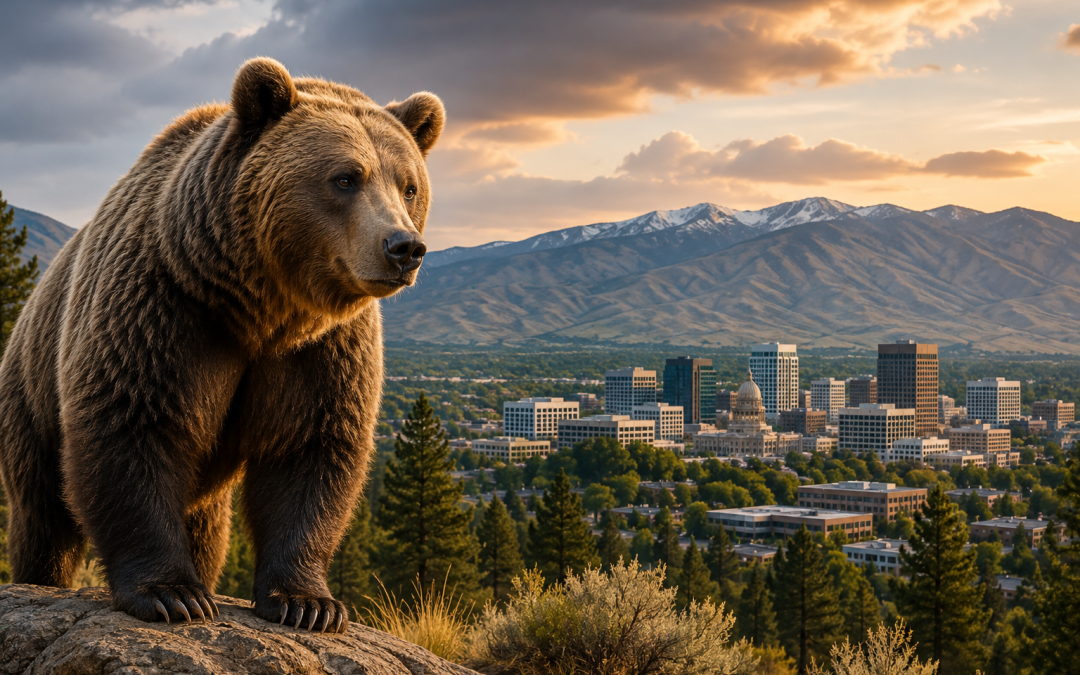
Idaho’s Outdoor Economy Has a Wild Side—and It Matters for Commercial Real Estate
When people talk about Idaho’s growth, they usually mention jobs, housing, population and new development.
But another part of Idaho’s identity has economic value too: its wild places.
From the mountains around Boise to the recreation destinations of central and northern Idaho, access to the outdoors helps attract residents, visitors and businesses. That makes a recent national ranking of dangerous wildlife more relevant to real estate than you might initially think.
According to reporting by IBR Staff in the Idaho Business Review, citing data compiled by World Population Review, the grizzly bear was identified as Idaho’s deadliest predator in a state-by-state national comparison. The original Idaho Business Review article provides the full national rundown.
The interesting commercial real estate story isn’t really about which animal ranks first. It’s about the continued connection between Idaho’s outdoor identity, recreation economy and development.
Idaho’s Wildlife Reflects a Bigger Economic Asset
The Idaho Business Review reported that Idaho joined neighboring Montana and Washington with the grizzly bear at the top of the ranking.
The results vary widely across the country.
Black bears led the list in Oregon and several other states. Moose ranked first in Colorado and parts of New England. Mountain lions took the top position in New Mexico, while coyotes appeared in several states.
Other areas had very different risks, ranging from rattlesnakes and spiders to sharks, alligators, ticks and mosquitoes.
But Idaho’s ranking reinforces something anyone familiar with the state already knows: much of Idaho remains genuinely wild.
That can be a challenge, but economically, it is also an asset.
Idaho’s mountains, rivers, lakes, forests and public lands support recreation and tourism while contributing to the quality of life that helps attract new residents.
And those people eventually need places to eat, shop, work and stay.
That’s where the connection to commercial real estate begins.
Outdoor Recreation Creates Commercial Demand
Boise commercial real estate isn’t isolated from Idaho’s outdoor economy.
Consider what happens when a region develops a reputation as an outdoor destination.
Visitors need hotels.
Restaurants and breweries gain customers.
Outdoor retailers sell equipment.
Gas stations and convenience stores capture traffic.
Property managers, contractors and service businesses support second homes and vacation properties.
Tourism-oriented communities can attract new investment in hospitality, retail and mixed-use development.
And some visitors eventually become residents.
The economic impact therefore extends well beyond campgrounds and trailheads.
Boise benefits from a similar relationship.
One of the region’s selling points is the ability to live in a growing metropolitan area while still having relatively easy access to outdoor recreation. That quality-of-life advantage can help employers recruit workers and can influence where entrepreneurs and remote workers choose to live.
More residents create additional demand for Boise development, retail leasing in Boise, office space, medical services, restaurants and other commercial uses.
Growth Creates a Development Balancing Act
There is another side to the story.
The same natural environment that makes Idaho attractive can create challenges as development pushes toward less-developed areas.
Growth at the edge of communities can place homes and businesses closer to wildlife habitat. Recreation destinations can also experience pressure from increasing visitor counts, traffic and development.
That means developers and investors need to think beyond the property lines.
Access, infrastructure, wildfire exposure, environmental restrictions, seasonal demand and proximity to public lands can all affect a site’s value and development potential.
This is particularly relevant outside the Boise metro in Idaho’s resort and recreation communities.
A property that appears inexpensive on a price-per-acre basis can become much more complicated once utilities, road access, environmental issues and development restrictions are considered.
For investors evaluating Idaho commercial real estate, understanding the surrounding land can therefore be just as important as understanding the building.
The Boise Connection: Quality of Life Drives Economic Growth
Boise’s outdoor reputation is part of its economic story.
People don’t choose communities based solely on wages or housing prices. They also evaluate lifestyle.
Trails, mountains, skiing, fishing, hunting, camping and other recreational opportunities are part of Idaho’s appeal.
That can influence commercial real estate indirectly but significantly.
A company considering Boise may view access to recreation as a recruiting advantage.
A restaurant operator may benefit from weekend and tourism traffic.
An outdoor retailer can build a customer base around recreation.
Hotels can capture travelers moving between Boise and Idaho’s recreation destinations.
Even traditional office and industrial employers can benefit when workers want to remain in the region because of its quality of life.
That’s why preserving the characteristics that attract people here matters to long-term economic development.
Local Insight: Idaho’s Open Space Has Real Economic Value
Commercial real estate tends to focus heavily on what can be built.
Sometimes we should also pay attention to what isn’t built.
Idaho’s forests, mountains, rivers and open spaces don’t show up as leasable square footage, but they contribute to the state’s economic value.
They help support tourism.
They attract residents.
They influence corporate recruiting.
They create demand for outdoor businesses.
And they help distinguish Boise from many competing metropolitan areas.
The fact that Idaho still has large predators is, in a strange way, evidence of the wild character that continues to differentiate the state.
That doesn’t mean wildlife should become part of every Boise commercial real estate analysis.
It does mean investors and developers should recognize that Idaho’s natural environment isn’t simply scenery surrounding the economy. In many places, it’s one of the reasons the economy exists.
As Boise and the Treasure Valley continue to grow, finding the right balance between development, recreation and preservation will become increasingly important.
Growth creates opportunity.
But maintaining the qualities that made people want to move here in the first place may be just as important to Idaho’s long-term commercial real estate market.
Mike Gioioso (joy-OH-so)
has for 16+ years been helping companies of all sizes buy, build, and lease perfect places for business in greater Boise, Idaho and beyond.
www.streetsmartidaho.com mike@streetsmartidaho.com 208-209-9166
Tags: #boisecommercialrealestate, #boiserealestate, #idahocommercialrealestate, #idahorealestate, #boisedevelopment, #idahodevelopment, #treasurevalleycommercialrealestate, #boiseinvestmentproperty, #idahoinvestmentproperty, #idahooutdooreconomy, #idahooutdoorrecreation, #boiseoutdoorrecreation, #idahotourism, #boisetourism, #idahorecreationeconomy