
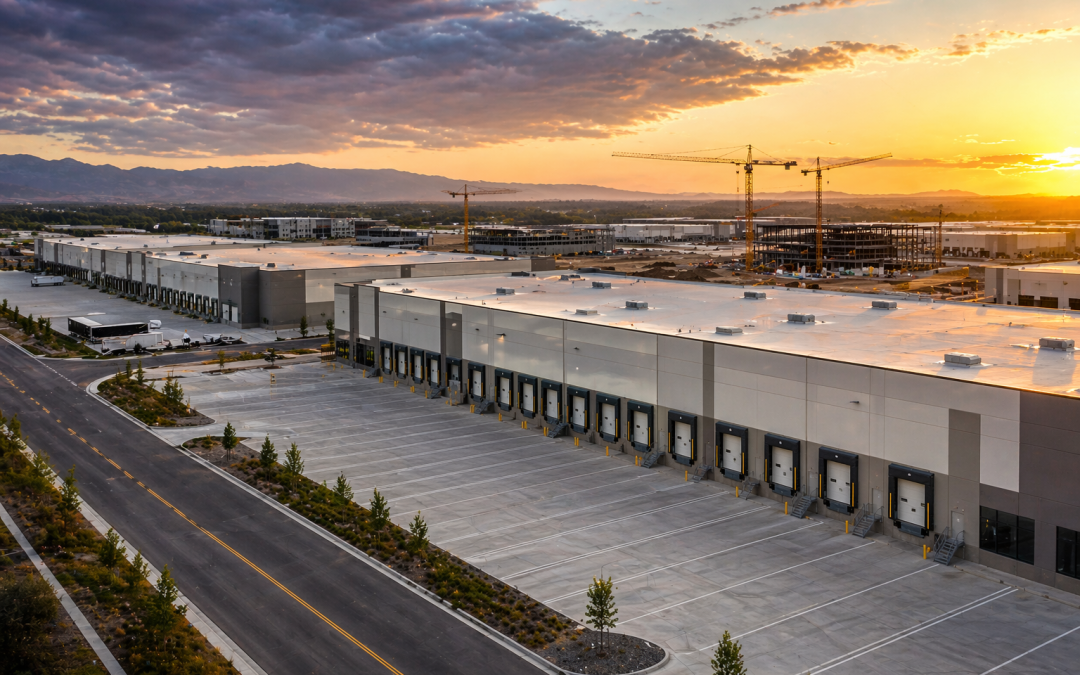
Logistics Oversupply Is Reshaping Western Markets — What Seattle’s Vacancy Surge Signals for Boise Industrial Real Estate
Industrial real estate doesn’t turn on a dime—but when it shifts, it sends signals fast.
Right now, one of the clearest signals is coming out of the Puget Sound—and if you’re paying attention to Boise commercial real estate, it’s worth a closer look.
According to reporting by Elliott Krivenko of CoStar Analytics (read the original article here: https://product.costar.com/home/news/1750411131), vacancy in the Seattle-area logistics market has climbed sharply, driven largely by a surge in newly built industrial space hitting the market without tenants lined up.
This isn’t just a Seattle story. It’s a preview of what can happen in growth markets—including Boise.
What’s Really Driving the Vacancy Spike
At first glance, rising vacancy might look like weakening demand.
But that’s not the full picture.
Here’s what’s actually happening:
- Developers responded aggressively to pandemic-era supply chain disruptions
- A wave of large logistics buildings was delivered—many without pre-leasing
- Tenant expansion slowed just as new supply hit the market
- Some occupiers even started giving back space, increasing sublease inventory
The result? A mismatch between new supply and current demand.
One of the most important takeaways:
Newer buildings are carrying the bulk of the vacancy.
In fact:
- Vacancy in older logistics buildings remains relatively stable
- Vacancy in buildings constructed this decade has jumped dramatically—well above market averages
- Large-box facilities (500,000+ SF) are sitting empty at higher rates due to their size and limited tenant pool
Why This Matters for Boise Industrial Development
Boise isn’t Seattle—but it often follows similar patterns, just on a smaller scale and with a lag.
And right now, this trend is highly relevant to Boise development, especially in the industrial sector.
1. Spec Development Comes With Real Risk
Over the past few years, Boise has seen:
- Increased industrial construction
- Larger-format warehouse and distribution buildings
- More investor interest in logistics and flex space
Seattle’s experience is a reminder:
Building without committed tenants can create short-term oversupply—even in strong markets.
For Boise developers, that means:
- Pre-leasing matters more than ever
- Phasing projects may be smarter than going all-in
- Product type and size need to match real tenant demand
2. Big Box Industrial Isn’t One-Size-Fits-All
Large logistics buildings can skew vacancy rates quickly.
In Seattle, a handful of big vacancies is enough to move the entire market.
In Boise, where absorption is smaller:
- A single large vacancy can have an outsized impact
- Tenant demand for 500,000+ SF space is still limited
- Mid-size industrial (20,000–100,000 SF) often has deeper demand pools
That’s a critical insight for anyone evaluating investment property or development opportunities.
3. Sublease Space Is the Quiet Pressure Point
Another key trend: rising sublease availability.
When tenants give space back:
- It competes directly with new construction
- It often comes at discounted lease rates
- It can slow absorption of new product
If this trend spreads, it could influence leasing velocity in Boise industrial real estate—especially if economic conditions soften.
Local Market Impact: What Boise Should Watch
While Boise’s fundamentals remain strong, this data raises a few important watchpoints:
- Is new industrial supply getting ahead of demand?
- Are larger buildings taking longer to lease?
- Will tenant expansion continue at the same pace?
So far, Boise has avoided major vacancy spikes—but markets rarely stay immune forever.
My Take: Boise Has an Advantage—If It Stays Disciplined
From a local perspective, Boise is still in a healthier position than larger coastal markets.
Why?
- Less speculative oversupply
- More balanced growth
- Strong in-migration and business expansion trends
But that advantage can disappear quickly if development outpaces demand.
Seattle’s situation isn’t a warning to stop building—it’s a reminder to build strategically.
The developers and investors who win in the next cycle will be the ones who:
- Align product with actual tenant needs
- Stay disciplined on timing and scale
- Watch leasing trends closely—not just headlines
Because in industrial real estate, today’s oversupply can become tomorrow’s opportunity—but only if you’re positioned correctly.
Mike Gioioso (joy-OH-so) has for 16+ years been helping companies of all sizes buy, build, and lease perfect places for business in greater Boise, Idaho and beyond.
www.streetsmartidaho.com mike@streetsmartidaho.com 208-209-9166
Tags: #boisecommercialrealestate, #boiseindustrialrealestate, #boisedevelopment, #industrialmarketboise, #boisewarehousespace, #logisticsrealestate, #seattleindustrialmarket, #pugetsoundindustrial, #industrialvacancyrates, #warehousevacancytrends, #speculativedevelopmentindustrial, #bigboxwarehouse, #distributioncentersboise, #boiseinvestmentproperty, #industrialleasingboise