
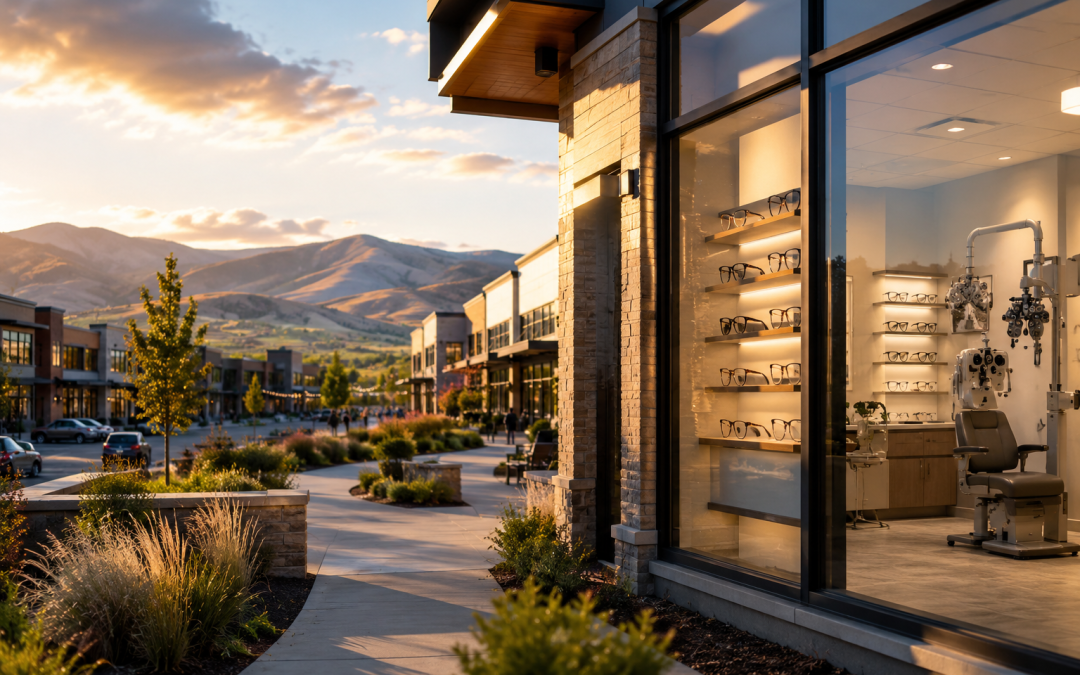
Why Idaho’s Eye Health Habits Could Create Growing Demand for Boise Medical and Retail Space
Health care demand in Idaho keeps evolving — and not always in the areas people expect.
A new nationwide survey suggests many Americans are delaying routine eye care, even as vision problems become more common with age and screen-heavy lifestyles. For Boise commercial real estate professionals, that trend could quietly shape future demand for medical office space, neighborhood retail, and health-focused development across the Treasure Valley.
According to reporting by Idaho Business Review staff in this recent article — “Many in Idaho overlook eye health despite vision needs” — a large share of Americans are skipping annual eye exams despite growing vision and health concerns.
The data may sound like a public health story on the surface, but it also highlights several important long-term trends tied to Boise development, medical retail expansion, and health care real estate demand.
Idaho’s Population Growth Is Increasing Health Care Pressure
Idaho continues attracting retirees, families, and remote workers from across the western United States. That growth is increasing demand for nearly every category of health care service — including optometry, ophthalmology, and vision-related care.
The article notes that more than 40,000 Idaho residents were identified as having a visual disability in reporting cited by the Idaho Commission for the Blind and Visually Impaired. Older adults represented a large portion of that group.
At the same time, the survey found many people still avoid annual eye exams:
- 22% said they skipped yearly optometrist visits
- 15% could not remember their last eye appointment
- Many respondents ranked eye care below mental health, exercise, nutrition, and dental care
That matters because Idaho’s population is aging while screen exposure keeps increasing across younger demographics.
From a Boise commercial real estate perspective, this supports continued long-term demand for:
- Medical office space
- Retail health care users
- Neighborhood wellness tenants
- Vision clinics and specialty providers
- Mixed-use developments anchored by health services
Health care tenants have already become one of the more stable categories in Boise commercial real estate over the last several years.
Why Eye Care Providers Often Perform Well in Retail Centers
One overlooked part of the story is how optometry groups increasingly function as retail tenants, not just medical tenants.
Many eye care providers now combine:
- Medical services
- Eyewear retail sales
- Insurance-driven recurring visits
- Family-oriented neighborhood convenience
That combination can make optometry users attractive for retail leasing in Boise.
Landlords often value these tenants because they generate repeat traffic and tend to remain in locations for longer periods compared to some traditional retailers.
As Boise continues expanding west toward Star and Kuna while infill development grows in Meridian and Nampa, neighborhood shopping centers may continue seeing increased interest from health-oriented users.
In many cases, medical and wellness tenants are helping stabilize retail centers that previously depended more heavily on soft-goods retailers.
Younger Consumers Could Shift Future Demand
One of the more interesting findings in the survey involved younger consumers.
The article notes Gen Z respondents were among the most likely to avoid yearly eye exams.
That may eventually create larger long-term vision care demand as younger workers spend more time using computers, phones, gaming systems, and digital devices.
For developers and investors, this points toward a broader trend already visible nationally:
health care services are increasingly moving closer to where people live and shop.
Instead of relying only on large hospital campuses, many providers now prefer:
- smaller neighborhood clinics
- retail pad locations
- mixed-use projects
- suburban medical office space
That trend could continue shaping Boise development patterns over the next decade.
Why This Matters for Boise Commercial Real Estate
The Treasure Valley’s growth story is not just about apartments, warehouses, and restaurants.
Health care demand is becoming one of the largest drivers of commercial space absorption across western growth markets.
Eye care may seem like a small category compared to hospitals or urgent care providers, but these services often represent steady, recurring consumer demand that can support both retail and medical office occupancy.
For Boise landlords, investors, and developers, the bigger takeaway may be this:
As Idaho’s population grows and ages, health-focused tenants will likely continue becoming a larger piece of the commercial real estate ecosystem.
That includes everything from dental groups and physical therapy clinics to optometrists and wellness-oriented retailers.
My Take
One thing I continue noticing in Boise commercial real estate is how much tenant demand is shifting toward daily-life convenience services.
Consumers increasingly want medical, wellness, fitness, and personal care services located close to home instead of across town.
That trend tends to benefit:
- neighborhood retail centers
- mixed-use projects
- suburban growth corridors
- smaller-format medical office developments
As Boise development continues pushing outward, health care-related tenants may quietly become some of the most reliable long-term occupiers in the market.
Mike Gioioso (joy-OH-so) has for 16+ years been helping companies of all sizes buy, build, and lease perfect places for business in greater Boise, Idaho and beyond.
www.streetsmartidaho.com mike@streetsmartidaho.com 208-209-9166
Tags: #boisecommercialrealestate, #boisedevelopment, #retailleasingboise, #boiseretail, #boisemedicaloffice, #medicalofficespace, #healthcarerealestate, #idahocommercialrealestate, #boiserealestate, #treasurevalleyrealestate, #meridianidaho, #nampaidaho, #kunaidaho, #staridaho, #mixedusedevelopment