
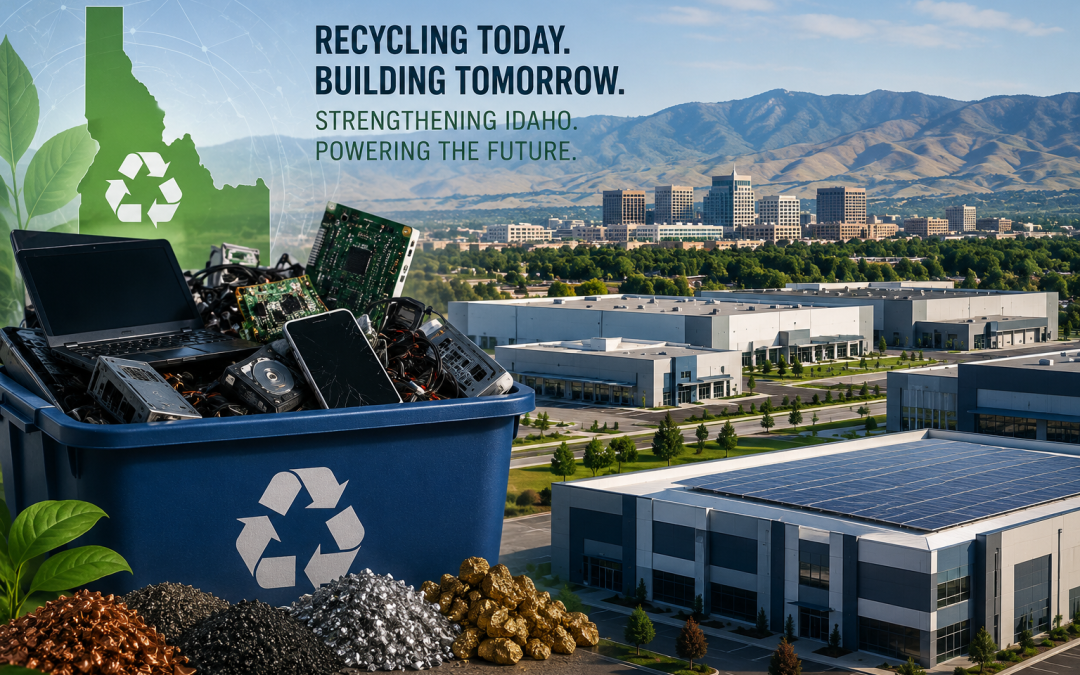
Why Idaho’s Push for E-Waste Recycling Could Eventually Influence Boise Industrial and Technology Real Estate
Most people see old computers, broken televisions, and outdated cellphones as trash.
But a growing partnership in Idaho is treating electronic waste very differently — as a future supply source for valuable industrial materials tied to energy, manufacturing, and national security.
According to reporting by Idaho Business Review staff in this article from Idaho Business Review about Idaho’s electronics recycling partnership, organizations including Idaho National Laboratory, Idaho State University, eCyclers of Idaho, and Sunnking Sustainable Solutions recently partnered on a public e-waste recycling event in Pocatello focused on recovering valuable materials from discarded electronics.
While the event itself was community-focused, the bigger story may be what it says about Idaho’s long-term role in advanced manufacturing, recycling infrastructure, energy storage, and critical mineral supply chains.
And that could eventually create ripple effects for Boise commercial real estate.
Idaho Is Quietly Positioning Itself Around Critical Materials
The materials recovered from electronic waste are not minor commodities.
According to the report, recycled electronics can contain:
- Gold
- Silver
- Copper
- Lithium
- Nickel
- Cobalt
- Palladium
- Graphite
Many of those materials are increasingly important for battery manufacturing, electric vehicles, energy storage systems, semiconductor production, and defense-related industries.
That matters because the United States is actively trying to reduce dependence on foreign supply chains for critical minerals.
As federal funding and private investment continue flowing into domestic energy and technology infrastructure, states with existing research institutions, recycling partnerships, and industrial capabilities could become more attractive for future development.
Idaho already has several pieces of that puzzle in place.
Between INL’s national research presence, growing manufacturing activity, university partnerships, and expanding industrial corridors across the Treasure Valley, the state is slowly building a reputation beyond agriculture and traditional logistics.
What This Could Mean for Boise Industrial Real Estate
For Boise development professionals and industrial investors, this trend may be worth watching closely.
Advanced recycling operations, battery-related manufacturing, and material recovery facilities typically require specialized industrial space with features like:
- Heavy power capacity
- Industrial zoning
- Transportation access
- Processing and storage areas
- Environmental compliance infrastructure
- Flex industrial configurations
Those requirements often align with the types of industrial projects increasingly being developed across the Boise metro area.
As industrial users evolve, Boise commercial real estate may continue seeing demand shift away from simple warehouse space toward more specialized facilities tied to technology, manufacturing, clean energy, and research applications.
That could influence:
- Industrial land pricing
- Flex space demand
- Utility infrastructure planning
- Tenant improvement costs
- Long-term industrial leasing strategies
It also reinforces a broader trend already visible across many western markets: industrial real estate is becoming more technologically sophisticated.
Sustainability Is Becoming a Bigger Real Estate Conversation
The event also highlights another growing commercial real estate theme — sustainability and waste reduction are becoming increasingly tied to economic development.
Companies, municipalities, and universities are paying closer attention to environmental standards, recycling systems, and material reuse strategies.
That can affect real estate decisions in several ways:
- Tenants increasingly evaluate sustainability initiatives when choosing locations
- Industrial operators may seek buildings with upgraded environmental systems
- Developers could face growing pressure to incorporate recycling and energy-efficiency features
- Communities may prioritize projects tied to domestic manufacturing and resource recovery
For retail leasing Boise professionals and commercial landlords, these shifts may seem indirect today, but long-term economic trends often start with small pilot programs and partnerships like this one.
Local Insight
One of the more interesting parts of this story is how it connects research institutions, universities, private companies, and sustainability goals into one ecosystem.
That collaboration model is becoming increasingly important in economic development.
Boise and the broader Treasure Valley have spent years attracting logistics, technology, healthcare, and advanced manufacturing users. If Idaho continues expanding its role in critical material recovery and energy-related industries, it could eventually support additional industrial growth throughout the region.
Not every recycling event changes the commercial real estate market.
But partnerships like this can signal where investment priorities, infrastructure spending, and future tenant demand may be heading over the next decade.
For Boise commercial real estate investors, that is the bigger takeaway.
Mike Gioioso (joy-OH-so) has for 16+ years been helping companies of all sizes buy, build, and lease perfect places for business in greater Boise, Idaho and beyond.
www.streetsmartidaho.com mike@streetsmartidaho.com 208-209-9166
Tags: #boisecommercialrealestate, #boiseindustrialrealestate, #boisedevelopment, #idahocommercialrealestate, #industrialdevelopment, #industrialrealestate, #criticalminerals, #ewasterecycling, #energystorage, #advancedmanufacturing, #boisebusiness, #treasurevalleyrealestate, #retailleasingboise, #commercialrealestate, #idahodevelopment, #industrialleasing, #supplychain