What the World Cup’s Impact on Seattle Reveals About the Power of Sports-Driven Development
Not every major real estate story starts with a building.
Sometimes it starts with an event.
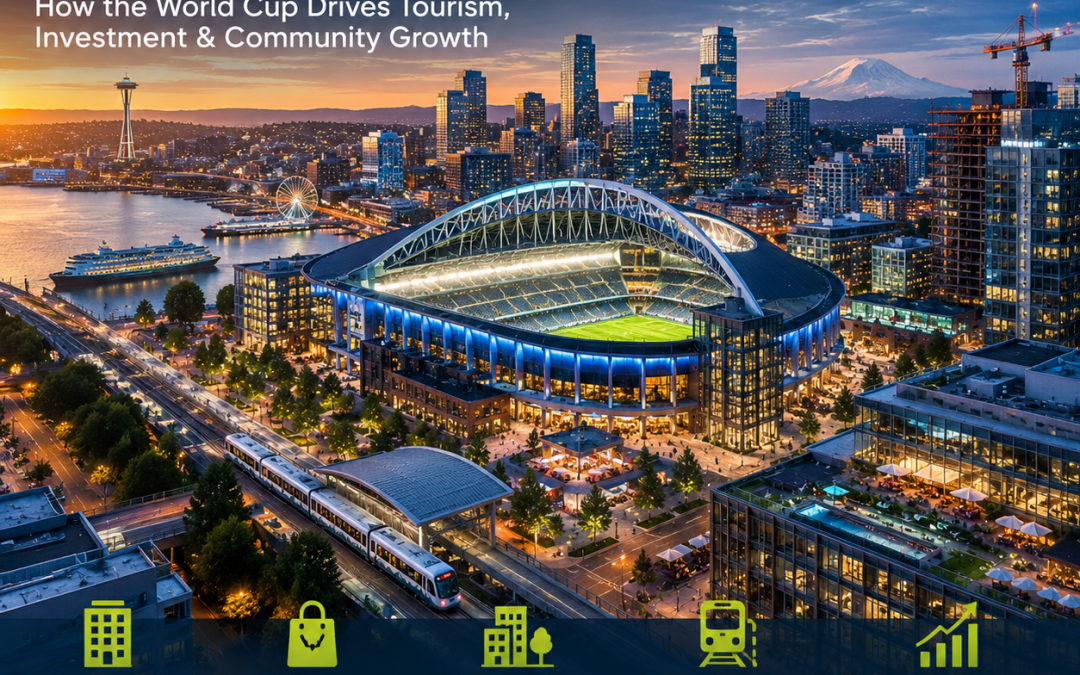
As Seattle prepares to host multiple matches during the 2026 FIFA World Cup, the city is expected to welcome hundreds of thousands of visitors, generate significant tourism spending, and showcase its economy on a global stage.
According to reporting by Randyl Drummer of CoStar News, Seattle’s six World Cup matches are projected to generate hundreds of millions of dollars in economic activity for the region while highlighting the city’s infrastructure, hospitality assets, and international appeal. The original CoStar article can be found here:
https://product.costar.com/home/news/1753554120
While Boise is not hosting World Cup matches, the larger lesson for Boise commercial real estate is clear: major sports and entertainment events can become powerful economic development tools that influence tourism, investment, infrastructure, and long-term growth.
Events Can Shape Cities Long Before Opening Day
One of the most interesting aspects of Seattle’s World Cup story is that the economic impact extends far beyond the matches themselves.
Large international events often create years of investment before visitors ever arrive.
Seattle already benefits from:
- Major sports venues
- Convention infrastructure
- A large hotel inventory
- International tourism
- Global corporate headquarters
- Established transportation networks
The World Cup simply amplifies those advantages.
Historically, many cities have used major events to accelerate infrastructure improvements, attract investment, and increase international visibility.
Seattle’s own skyline was influenced by another major global event: the 1962 World’s Fair. That event helped establish landmarks and development patterns that continue shaping the city today.
For commercial real estate professionals, this illustrates how destination events can influence development decisions for decades.
Tourism Creates Demand Across Multiple Property Types
When people think about sports events, they often focus on stadiums.
The real estate impact is much broader.
Visitors need places to sleep, eat, shop, and gather.
That demand benefits:
Hotels
Seattle’s downtown hotel market contains thousands of rooms that support business travel, conventions, cruise passengers, and special events. Major sporting events create additional occupancy and revenue opportunities for hospitality owners.
Retail and Restaurants
Visitors spend money well beyond the stadium gates. Restaurants, bars, coffee shops, retailers, and entertainment venues often experience increased activity during major events.
Mixed-Use Development
Walkable districts that combine hotels, restaurants, offices, entertainment venues, and residential units tend to benefit the most from event-driven tourism.
Transportation Infrastructure
Airports, roads, transit systems, parking facilities, and pedestrian improvements often receive additional investment when cities prepare for large-scale events.
The World Cup demonstrates how a single event can positively affect multiple commercial real estate sectors simultaneously.
Why Boise Should Pay Attention
Boise’s future growth may not come from hosting a World Cup.
But the underlying principles remain highly relevant.
The Treasure Valley continues investing in amenities that attract visitors, businesses, and new residents.
Examples include:
- Boise State athletics
- The Idaho Central Arena district
- The Ford Idaho Center
- Downtown Boise events
- Regional tournaments and youth sports
- Convention and conference activity
- Outdoor recreation tourism
As Boise grows, event-driven visitation could become an increasingly important component of the local economy.
Cities that attract visitors often see stronger demand for hotels, restaurants, retail centers, entertainment districts, and mixed-use projects.
That creates opportunities for developers, investors, and property owners.
Infrastructure Often Determines Future Growth
Another takeaway from Seattle’s experience is the importance of infrastructure.
Large events expose both strengths and weaknesses within a region.
Transportation systems, hospitality capacity, public spaces, and venue quality all influence how effectively a city can capitalize on tourism demand.
As Boise continues expanding, investments in transportation, public gathering spaces, sports facilities, and event infrastructure may have benefits that extend well beyond individual events.
These projects can improve quality of life while also supporting economic development.
My Take
The most valuable lesson from Seattle’s World Cup opportunity is not soccer.
It’s visibility.
Major events give cities a chance to showcase themselves to investors, visitors, businesses, and future residents.
Boise is already building a reputation as one of the fastest-growing and most desirable markets in the Mountain West. Continued investment in sports, entertainment, tourism, and public infrastructure could help strengthen that position even further.
Commercial real estate demand often follows attention. The communities that attract visitors today frequently become the investment destinations of tomorrow.
Seattle’s World Cup moment highlights how powerful that relationship can be.
Mike Gioioso (joy-OH-so) has for 16+ years been helping companies of all sizes buy, build, and lease perfect places for business in greater Boise, Idaho and beyond. www.streetsmartidaho.com mike@streetsmartidaho.com 208-209-9166
Tags: #boisecommercialrealestate, #economicdevelopment, #sportstourism, #commercialrealestate, #boisedevelopment, #tourismdevelopment, #hospitalityindustry, #hoteldevelopment, #mixedusedevelopment, #retailleasingboise, #commercialproperty, #investmentproperty, #destinationmarketing, #urbandevelopment, #infrastructure