
Portland’s Biggest Retail Leases Offer Clues for Boise’s Next Wave of Tenant Demand
Retail isn’t disappearing. It’s getting more specialized.
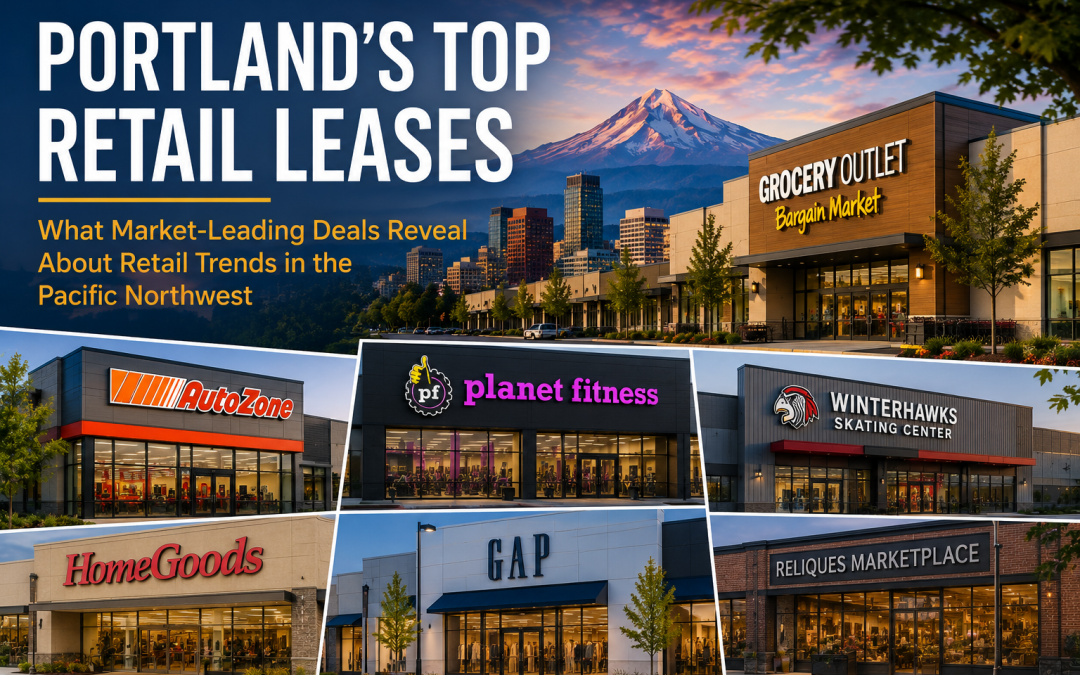
Some of the largest recent leases around Portland weren’t small boutiques or traditional mall stores. They involved an auto-parts hub, a fitness center, grocery, home furnishings, recreation and experiential retail.
That’s worth paying attention to in Boise commercial real estate.
According to CoStar Research’s August 3 report on its second-quarter 2026 Power Broker Quarterly Deal Awards, major Portland-area retail leases included AutoZone, Planet Fitness, Grocery Outlet, HomeGoods, Gap and several regional concepts. The original CoStar News article provides the individual transactions and brokers recognized by CoStar.
These deals happened in Oregon and southwest Washington, but the tenant mix provides useful clues about what’s driving physical retail across the Pacific Northwest—and what landlords and developers should be watching in Boise, Meridian, Nampa and Caldwell.
Big Retail Spaces Are Finding New Uses
One thing jumps out immediately from CoStar’s list: these weren’t tiny leases.
AutoZone took approximately 60,300 square feet in Vancouver, Washington.
Planet Fitness leased about 37,000 square feet in Eugene.
Winterhawks Skating Center renewed approximately 36,100 square feet in Beaverton.
Grocery Outlet signed for roughly 24,600 square feet in Bend, while HomeGoods leased about 24,600 square feet in Gresham.
Those five transactions alone represent nearly 183,000 square feet of retail occupancy.
But what’s more important than the square footage is what these tenants actually do.
AutoZone’s Vancouver location is designed as a hub-format operation, combining traditional retail with greater distribution capabilities.
Planet Fitness represents service and fitness.
Winterhawks Skating Center is recreation and entertainment.
Grocery Outlet sells an everyday necessity.
HomeGoods operates in value-oriented home furnishings.
This is a good snapshot of what modern retail demand looks like.
The strongest shopping centers aren’t necessarily filled exclusively with stores selling clothes and merchandise. Increasingly, they’re mixtures of retail, services, food, fitness, recreation, medical and other uses that give consumers multiple reasons to visit.
That trend has direct implications for retail leasing in Boise.
Value, Fitness and Experiences Keep Pulling Customers Offline
Consumers can buy almost anything online.
What they can’t easily download is a workout, skating session, vehicle repair, grocery trip or physical treasure hunt through a store filled with changing merchandise.
Several of Portland’s notable leases fall into categories that benefit from exactly that advantage.
Planet Fitness requires customers to physically visit.
Winterhawks Skating Center is entirely experience-based.
Grocery Outlet depends partly on customers discovering changing bargains.
HomeGoods has a similar treasure-hunt component, where merchandise and inventory constantly change.
AutoZone combines products with immediate automotive needs and local distribution.
Even two vintage concepts appearing on CoStar’s list—Retropolitan in Portland and Reliques Marketplace in Vancouver—show how physical retail can succeed by offering discovery and experiences that are difficult to recreate through conventional e-commerce.
Retropolitan leased approximately 17,300 square feet for a marketplace featuring more than 70 independent vendors.
Reliques Marketplace took approximately 14,500 square feet in downtown Vancouver.
These aren’t traditional national-chain retail models.
They’re destinations.
And that matters.
For Boise retail landlords, the question increasingly isn’t simply, “Who can sell products from this space?”
A better question may be:
What businesses give customers a reason to physically come here?
That opens the tenant pool considerably.
What This Means for Boise Retail Leasing
The Treasure Valley has many of the same consumer trends driving these Portland-area transactions.
Population continues to spread across Boise, Meridian, Kuna, Star, Nampa and Caldwell. New residential development creates demand for shopping and services, but different categories expand at different speeds.
Several tenant types highlighted by CoStar deserve attention in Boise commercial real estate.
Fitness
Large-format gyms can absorb spaces that are difficult for traditional retailers to use. They generate frequent customer visits and can create activity during mornings, evenings and weekends.
The challenge is parking, HVAC requirements, sound, tenant-improvement costs and compatibility with neighboring businesses.
Grocery and value retail
As household budgets remain important to consumers, discount-oriented concepts can be positioned well.
Grocery tenants can also provide powerful traffic generation for neighborhood shopping centers.
Automotive
Boise’s continued geographic expansion increases dependence on vehicles.
Auto parts, repair, tires, service and related automotive concepts remain relevant, particularly along major commuter corridors.
Home furnishings
Treasure Valley housing growth creates natural demand for furniture, décor, home improvement and related businesses.
Recreation and entertainment
Indoor sports, children’s activities, fitness, pickleball, skating and similar concepts can turn otherwise challenging large-format spaces into destination properties.
Vintage and resale
The Portland transactions also show that secondhand and curated merchandise is moving beyond small thrift stores. Marketplace-style formats can occupy surprisingly large spaces when enough vendors are brought together.
For landlords, the lesson is straightforward: don’t define a vacant space too narrowly.
A former big-box store doesn’t necessarily need another big-box retailer.
Large Vacancies Can Become Opportunities
This is particularly relevant when evaluating older shopping centers.
A 20,000- to 40,000-square-foot vacancy can initially look like a major problem.
There aren’t hundreds of traditional retailers looking for spaces that size.
But broaden the search to include fitness, medical, entertainment, education, automotive, specialty grocery, indoor recreation and marketplace concepts, and the picture changes.
That doesn’t mean every use works financially.
Converting retail space for a gym or entertainment tenant can require substantial improvements. Plumbing, electrical capacity, HVAC, ceiling height, parking and zoning can all become major considerations.
Lease structure becomes critical too.
If a landlord is contributing significant tenant improvement dollars, the tenant’s credit, lease term and long-term viability matter.
That’s where good underwriting becomes just as important as simply getting the space leased.
Local Insight: Retail Is Becoming More About Frequency
One of the biggest things I watch in Boise retail leasing is visit frequency.
How often does a tenant bring customers to the property?
A customer might buy furniture a few times in a decade.
But they could visit a gym four times a week.
They might buy groceries every week.
A family could attend sports practice multiple times per week.
Someone maintaining a vehicle may visit an auto-related business several times throughout the year.
That traffic can benefit neighboring tenants.
It’s why today’s best tenant mix isn’t necessarily about assembling the most recognizable collection of retail brands.
It’s about creating different reasons to visit throughout the week.
A grocery store generates one type of traffic.
Fitness generates another.
Restaurants bring lunch and dinner traffic.
Medical and service businesses create weekday visits.
Entertainment can strengthen evenings and weekends.
Put those pieces together correctly and you can create a shopping center that remains active far beyond traditional retail hours.
That’s especially important as Boise development moves farther into suburban growth areas.
New shopping centers in Meridian, Star, Kuna, Nampa and Caldwell have an opportunity to build these mixed tenant ecosystems from the beginning.
Older centers can reposition themselves around the same idea.
Portland’s recent leases reinforce something we’re already seeing throughout commercial real estate: physical retail isn’t simply competing with the internet anymore.
The strongest tenants are often selling convenience, value, service, entertainment or experiences that the internet can’t fully replace.
For Boise landlords and developers, finding those uses—and putting them in the right locations—could be one of the most important retail leasing opportunities of the next several years.
Mike Gioioso (joy-OH-so) has for 16+ years been helping companies of all sizes buy, build, and lease perfect places for business in greater Boise, Idaho and beyond.
www.streetsmartidaho.com mike@streetsmartidaho.com 208-209-9166
Tags: #boisecommercialrealestate, #boiseretailleasing, #retailleasingboise, #boiseretailrealestate, #boisedevelopment, #idahocommercialrealestate, #meridiancommercialrealestate, #nampacommercialrealestate, #treasurevalleycommercialrealestate, #portlandretailrealestate, #pacificnorthwestcommercialrealestate, #boiseinvestmentproperty, #experientialretail, #bigboxretail, #shoppingcenterleasing