
What a Southern California Co-Warehousing Deal Could Mean for Boise Industrial Real Estate
Industrial real estate has been one of the biggest success stories in commercial real estate over the past decade. But as markets mature and new supply catches up with demand, investors and developers are beginning to rethink what industrial space should look like.
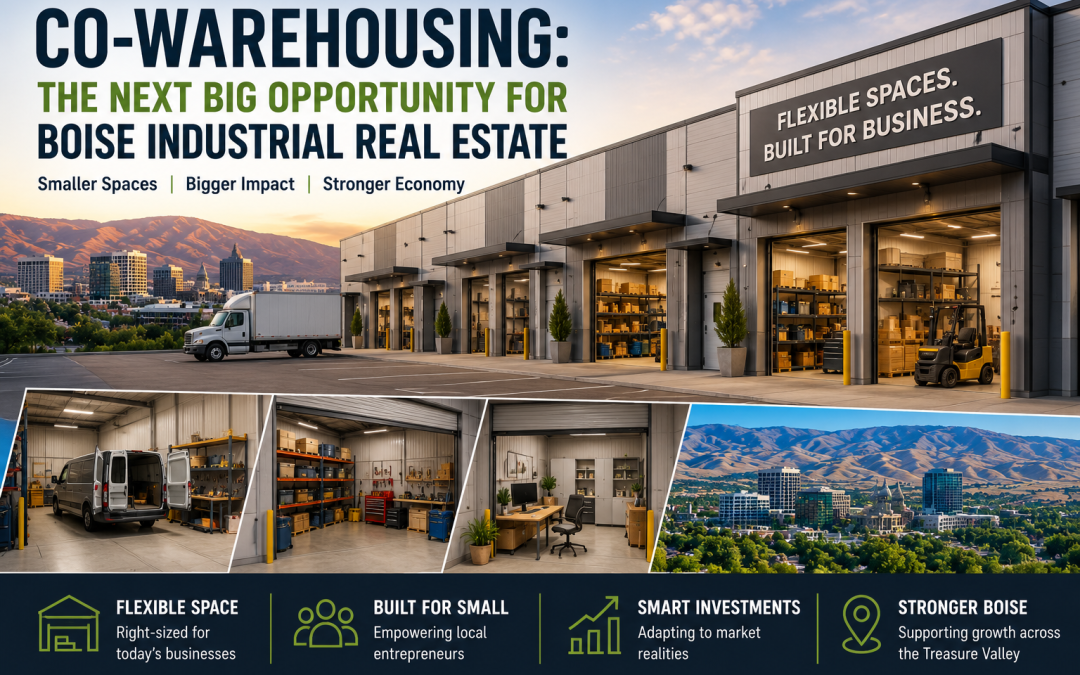
According to reporting by Brannon Boswell in CoStar News, industrial landlord Rexford Industrial Realty recently sold a redevelopment site in Southern California rather than moving forward with a planned speculative warehouse project. Instead, the buyer plans to convert the property into a co-warehousing campus designed specifically for smaller businesses.
While this transaction occurred in Los Angeles, the trends behind it may offer valuable insights for Boise commercial real estate investors, developers, and industrial property owners. You can read the original CoStar News article here: https://product.costar.com/home/news/1615748395
The biggest takeaway is not the sale itself.
It’s the growing realization that industrial demand is changing, and smaller businesses may represent one of the next major opportunities in warehouse real estate.
Industrial Growth Is Entering a New Phase
For much of the past five years, industrial development focused heavily on large logistics facilities serving e-commerce, distribution, and regional fulfillment operations.
Many developers pursued speculative warehouse projects assuming tenant demand would remain exceptionally strong.
Today, however, industrial markets across the country are becoming more selective.
According to the CoStar report, industrial availability nationally has increased as new buildings have been delivered faster than tenants can absorb them. At the same time, financing costs remain elevated, forcing developers and investors to be more disciplined when evaluating projects.
Instead of building simply because they can, many owners are increasingly asking a different question:
Where is the strongest unmet demand?
That shift in thinking is creating opportunities beyond traditional warehouse models.
Small Businesses May Be the Most Underserved Industrial Tenants
One of the most interesting aspects of the Southern California transaction is the buyer’s strategy.
Rather than targeting one large warehouse user, the company plans to divide the property into more than 100 smaller industrial suites.
The concept, often called co-warehousing, functions similarly to coworking office space.
Businesses lease smaller warehouse units while sharing common infrastructure and amenities.
Typical users include:
- Trades contractors
- E-commerce businesses
- HVAC companies
- Plumbers and electricians
- Last-mile logistics operators
- Service providers
- Startup manufacturers
- Product distributors
These tenants often need space ranging from a few hundred square feet to a few thousand square feet.
In many markets, those options are surprisingly difficult to find.
Why Boise Industrial Real Estate Could See Similar Demand
This trend is particularly relevant for Boise development and industrial investors.
Throughout the Treasure Valley, many industrial projects continue targeting larger users. While those tenants remain important, there is also growing demand from smaller businesses seeking flexible industrial space.
Across Boise, Meridian, Nampa, Caldwell, and Kuna, many local entrepreneurs face challenges finding warehouse space that fits their size and budget requirements.
Examples include:
- Construction contractors
- Landscaping companies
- Local distributors
- E-commerce operators
- Specialty manufacturers
- Service-based businesses
Many do not need 20,000 square feet.
They need 500 to 3,000 square feet.
That segment of the market often falls into a gap between traditional self-storage and conventional industrial buildings.
As the Treasure Valley economy continues diversifying, demand for smaller industrial bays could become increasingly important.
What This Means for Investors and Developers
The Southern California transaction highlights a broader lesson for commercial real estate investors.
The highest returns may not always come from building the largest project.
Sometimes value comes from serving tenants that larger landlords overlook.
Potential opportunities in Boise commercial real estate could include:
- Micro-industrial developments
- Flexible warehouse campuses
- Contractor-focused industrial parks
- Industrial condominium projects
- Multi-tenant warehouse conversions
- Hybrid warehouse and office concepts
These property types may appeal to thousands of local businesses that need functional space but cannot justify large warehouse footprints.
As industrial vacancy gradually rises nationally, specialized products serving underserved tenant categories may become increasingly attractive.
Why This Matters for Boise Commercial Real Estate
Several key themes emerge from this transaction:
Flexibility Is Becoming More Valuable
Businesses increasingly want space that can scale with their operations rather than committing to oversized facilities.
Smaller Users Are Driving Economic Growth
Many of the fastest-growing companies begin as small warehouse users before expanding into larger facilities.
Capital Is Becoming More Selective
Developers are paying closer attention to project economics and tenant demand before breaking ground.
Industrial Innovation Continues
The next generation of industrial real estate may look very different from the massive distribution centers that dominated headlines during the pandemic-era boom.
My Take
One of the biggest industrial opportunities in the Treasure Valley may not be another massive warehouse project.
It may be creating space for the thousands of smaller businesses that power Idaho’s economy every day.
As Boise commercial real estate continues evolving, I expect to see more demand for flexible industrial products, smaller bay configurations, and properties that cater to contractors, service companies, and entrepreneurial businesses.
The Los Angeles transaction highlighted by CoStar News may seem far removed from Idaho.
But the underlying lesson applies here as well.
When markets mature, the biggest opportunities often come from identifying the tenants everyone else is overlooking.
For industrial investors, that may be one of the most important trends to watch over the next several years.
Mike Gioioso (joy-OH-so) has for 16+ years been helping companies of all sizes buy, build, and lease perfect places for business in greater Boise, Idaho and beyond.
www.streetsmartidaho.com mike@streetsmartidaho.com 208-209-9166
Tags: #boiseindustrialrealestate, #boisecommercialrealestate, #industrialdevelopment, #warehousespace, #industrialinvestment, #commercialrealestate, #boisedevelopment, #treasurevalleyrealestate, #industrialproperty, #warehouseinvesting, #commercialdevelopment, #industrialleasing, #flexspace, #industrialmarket, #smallbayindustrial, #microwarehouse