
Why Janicki Industries’ Potential $800 Million Idaho Expansion Could Be a Game-Changer for Commercial Real Estate
Major economic development projects do not come around often.
When they do, the impact typically extends far beyond the company making the investment.
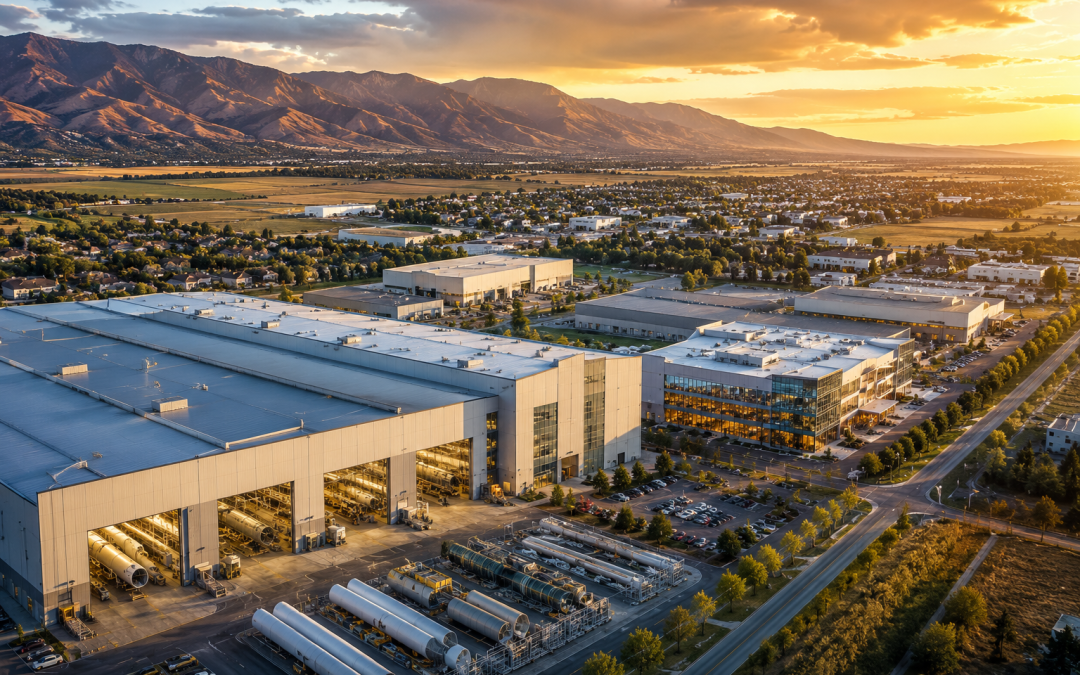
A proposed manufacturing campus by Janicki Industries could become one of the most significant economic development announcements Idaho has seen in years. According to reporting by Steve Lombard in the Idaho Business Review, the Washington-based aerospace supplier is evaluating locations in the Twin Falls-Jerome area for a potential $800 million manufacturing expansion that could eventually support more than 1,000 jobs.
The original Idaho Business Review article can be found here:
https://idahobusinessreview.com/2026/05/22/janicki-industries-considers-twin-falls-jerome-expansion/
While the project is located in the Magic Valley rather than the Boise metro area, the implications could ripple throughout Idaho’s commercial real estate market.
A Manufacturing Project on a Massive Scale
Janicki Industries is a major aerospace manufacturing supplier serving companies such as Boeing and Airbus. The company currently operates facilities in Washington and Utah and has narrowed its search for a new campus to two finalists: the Twin Falls-Jerome region of Idaho and Great Falls, Montana.
The proposed project is substantial:
- Approximately $800 million in total investment
- Roughly 2 million square feet of manufacturing space
- Between 100 and 200 acres required
- Potential for more than 1,000 manufacturing and engineering jobs
- Planned operational timeline within five years
- Long-term employment growth projected over a ten-year period
For perspective, projects of this scale are rarely just industrial developments. They often become economic catalysts that influence housing, retail, infrastructure, workforce development, and future business recruitment.
Why Southern Idaho Made the Short List
One of the most interesting aspects of the project is why the Magic Valley emerged as a finalist.
The region offers several advantages that increasingly appeal to large employers:
Workforce Development
A major factor highlighted throughout the selection process is workforce training.
The College of Southern Idaho continues to play an important role in preparing workers for manufacturing, technical, and industrial careers. Both Twin Falls and Jerome leaders emphasized the institution’s ability to adapt training programs to meet employer needs.
In today’s labor market, workforce pipelines can be more important than tax incentives.
Available Industrial Land
Large industrial users face a growing challenge throughout the western United States: finding sites big enough to support modern manufacturing facilities.
Janicki’s requirement for 100 to 200 acres illustrates how difficult these site-selection searches have become.
The Magic Valley still offers development opportunities that are increasingly difficult to find in more built-out metro areas.
Housing Affordability
Perhaps the most revealing factor is housing.
Company leadership specifically pointed to the ability for future employees to achieve homeownership as a major consideration.
As housing affordability continues to challenge many western markets, communities that can provide attainable housing often gain a competitive advantage when recruiting employers.
What This Means for Idaho Commercial Real Estate
Even if the facility ultimately lands in Twin Falls or Jerome, the impact extends well beyond those city limits.
Large manufacturing projects create demand across multiple commercial real estate sectors.
Industrial Development
The most obvious beneficiary would be industrial real estate.
A project of this size often attracts:
- Suppliers
- Logistics companies
- Equipment vendors
- Specialized contractors
- Distribution operations
- Ancillary manufacturing users
Over time, successful industrial anchors frequently create clusters of related businesses nearby.
Retail Growth
One thousand new jobs translates into thousands of additional consumers participating in the local economy.
Restaurants, grocery stores, fitness centers, healthcare providers, childcare facilities, entertainment concepts, and service-oriented retailers typically follow major employment growth.
This is the same pattern that has fueled much of Idaho’s retail expansion over the past decade.
Housing Demand
New manufacturing jobs create housing demand at multiple price points.
Workers need apartments, entry-level homes, move-up housing, and executive housing.
That demand supports residential development, which then creates additional opportunities for retail leasing, medical office growth, and neighborhood commercial development.
Why Boise Commercial Real Estate Professionals Should Pay Attention
At first glance, a project in Twin Falls may seem disconnected from Boise commercial real estate.
The reality is quite different.
Idaho increasingly competes as a statewide economic platform rather than as a collection of isolated markets.
When Idaho attracts a major aerospace manufacturer, it strengthens the state’s reputation among site selectors, investors, developers, and corporate decision-makers nationwide.
Success in the Magic Valley can help generate future opportunities in the Treasure Valley.
Many of the same factors that attracted Janicki—business-friendly policies, workforce quality, strategic western location, and relative affordability—are also strengths that continue driving Boise development.
The project also highlights an emerging trend worth watching: advanced manufacturing.
For years, Idaho’s growth narrative has focused heavily on population growth, technology, agriculture, and logistics. Aerospace and advanced manufacturing could become increasingly important pieces of Idaho’s long-term economic story.
Local Insight
One of the biggest commercial real estate challenges facing Idaho today is balancing growth with affordability.
What stands out most about Janicki’s site-selection process is that housing costs were reportedly part of the conversation.
That should serve as a reminder for economic development leaders throughout Idaho.
Companies are no longer evaluating sites based solely on taxes, utilities, and transportation access. They are increasingly asking whether employees can afford to live there.
Communities that successfully combine workforce development, industrial land availability, infrastructure, and attainable housing will likely have the strongest competitive position moving forward.
If Janicki ultimately chooses Idaho, the announcement could become one of the most significant economic development wins in recent state history—and another signal that Idaho continues attracting projects that once would have automatically gone elsewhere.
Mike Gioioso (joy-OH-so) has for 16+ years been helping companies of all sizes buy, build, and lease perfect places for business in greater Boise, Idaho and beyond.
www.streetsmartidaho.com mike@streetsmartidaho.com 208-209-9166
Tags: #boisecommercialrealestate, #idahocommercialrealestate, #boisedevelopment, #economicdevelopment, #twinfallsidaho, #jeromeidaho, #magicvalley, #industrialrealestate, #manufacturingjobs, #aerospacemanufacturing, #siteselection, #commercialdevelopment, #economicgrowth, #retailleasingboise, #industrialdevelopment